
























Scientists Capture Rare Hidden State of Metallocene "Sandwich" Molecules, Revealing Missing Formation Step
Summary
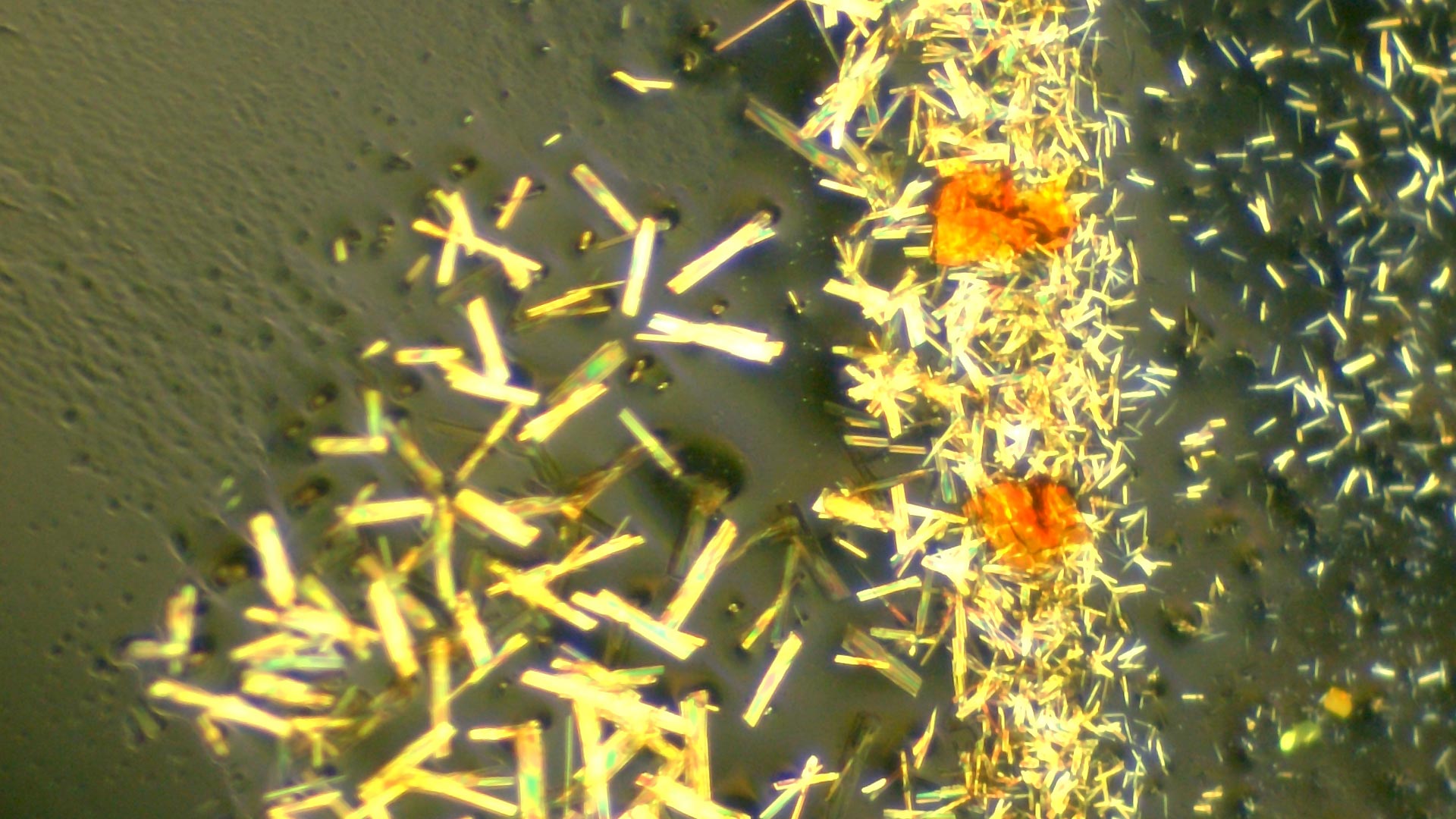
Scientists have captured a rare hidden state of metallocenes, a famous class of "sandwich" molecules in organometallic chemistry. These compounds, featuring a metal atom between two carbon-based rings, have been used for over 70 years in catalysis, materials science, and energy research. The discovery reveals a long-missing step in their formation process, providing new insights into molecular structure and behavior.
Source
 bskyScientists Capture Rare Hidden State of Metallocene "Sandwich" Molecules, Revealing Missing Formation Stepscitechdaily.com
Key quotes
· 3 pulledScientists caught a famous 'sandwich' molecule in a rare hidden state, uncovering a long-missing step in its formation.
For more than 70 years, metallocenes have been among the most important molecules in organometallic chemistry.
These compounds feature a metal atom positioned between two carbon-based rings, creating a structure often described as a molecular sandwich.
You might also wanna read


Nobel Prize in Chemistry 2025 Awarded for Development of Metal-Organic Frameworks
The 2025 Nobel Prize in Chemistry was awarded to Susumu Kitagawa, Richard Robson, and Omar M. Yaghi for their development of metal-organic f
 nobelprize.org·8mo ago
Understanding Stone-Wales Transformations in Carbon Molecules
The article discusses Stone-Wales transformations in carbon molecules like buckminsterfullerene and graphene, explaining how a 90° rotation
johncarlosbaez.wordpress.com·11mo ago
Room-Temperature Phosphorescent Host–Guest System Enables Dynamic Organic Radical Complex Emission
This article discusses the development of a room-temperature phosphorescent host–guest system that enables dynamic emission from organic rad
 chinesechemsoc.org·5d ago
Reflections on 2024 Bio-ML Predictions: Generative Chemistry and Molecular Dynamics Challenges
The article reflects on the author's 2024 predictions about bio-ML (biological machine learning) from a 2026 perspective, focusing on genera
 owlposting.com·5mo ago
Atomically precise carbon structure fabrication demonstrated using inverted-mode STM mechanosynthesis
Researchers demonstrate atomically precise mechanosynthesis of carbon structures on a hydrogen-passivated Si(100) surface using inverted-mod
 arxiv.org·29d ago
Metal-catalyzed deep-sea reactions may explain how phosphate became essential to life's origins
Evolutionary biologist William Martin proposes a new scenario explaining how life came to depend on phosphate, a molecule essential for DNA
 scim.ag·7d ago
Comments
Sign in to join the conversation.
No comments yet. Be the first.