
























Rethinking AI governance in higher education: From compliance to adaptive frameworks
By
eSchool Media Contributors
Summary
This article argues that higher education institutions are developing AI governance frameworks focused on compliance, risk management, and technology control, but these approaches are becoming insufficient as AI evolves from a controlled software tool to an abundant, continuously available intelligent system. The author contends that governance must shift from a compliance-centric model to one that addresses the fundamental changes AI brings to institutional operations, decision-making, and educational delivery.
Source

 bskyRethinking AI governance in higher education: From compliance to adaptive frameworksecampusnews.com
Key quotes
· 3 pulledThese efforts are necessary, but they are also increasingly insufficient because they are built around an assumption that governance is primarily about controlling technology and managing risk.
While this may have been adequate in the past, AI fundamentally changes the equation.
Institutions are no longer simply governing software platforms or isolated systems.
You might also wanna read
Governance Primitive for Institutional AI Deployment: Addressing Authority Constraints in High-Stakes Systems
The article discusses the institutional trust problem in AI deployment, particularly why AI agents fail to gain adoption in high-stakes inst


Discussion on Institutional Resistance and Compliance Strategies in Political Contexts
The article appears to be a discussion about AI research institutions potentially abandoning safety concerns, though the provided content fr
 news.ycombinator.com·4mo ago
The Impact of AI on Democratic Institutions: Rule of Law, Universities, and Free Press
The article examines how AI threatens the foundational institutions of democratic societies—the rule of law, universities, and a free press.
 cyberlaw.stanford.edu·5mo ago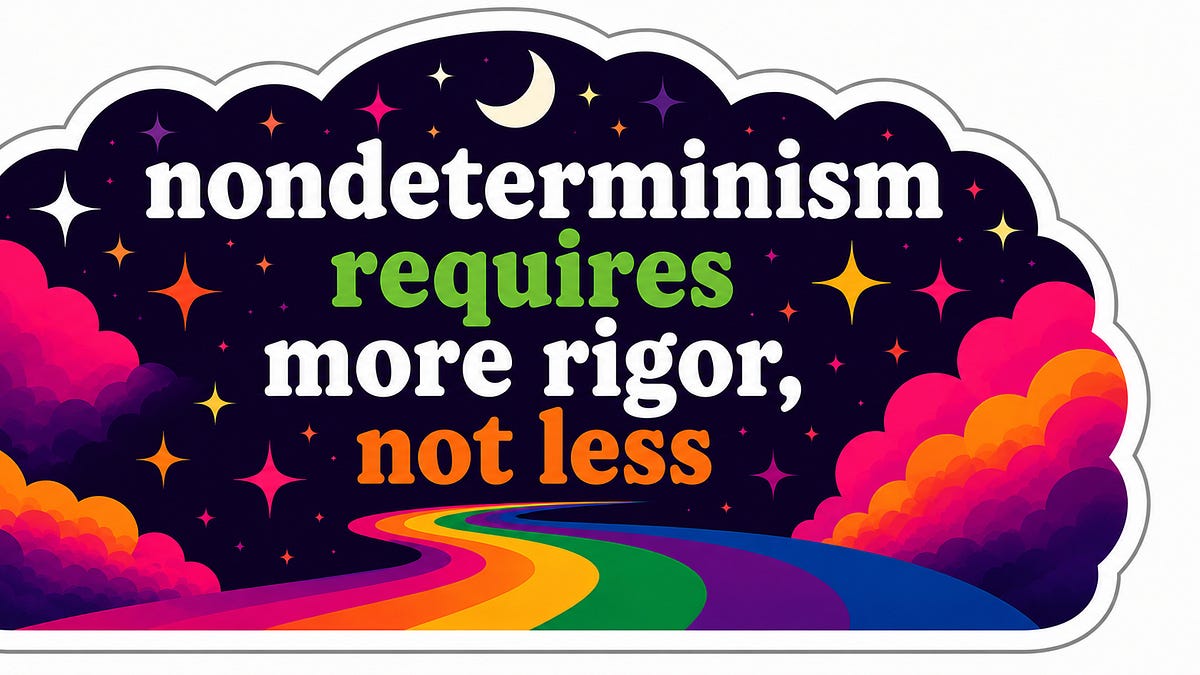
AI in software engineering demands stricter discipline, not relaxed standards
The article argues that AI adoption in software engineering requires more discipline, not less. Drawing parallels to the shift from handcraf
 charitydotwtf.substack.com·18d ago
AI in software engineering demands stricter discipline, not relaxed standards
The article argues that AI adoption in software engineering requires more discipline, not less. Drawing parallels to the shift from handcraf
charitydotwtf.substack.com·18d ago
AI-Driven Persuasion Technologies and Democratic Governance: How Reduced Persuasion Costs Enable Strategic Polarization
This academic article examines how AI-driven persuasion technologies are transforming democratic governance by dramatically reducing the cos
 arxiv.org·7mo ago
The Organic Nature of Learning: Why Spontaneity Outperforms AI-Optimized Education
The article explores the organic and often unpredictable nature of real learning, contrasting it with structured, AI-optimized educational a
 nisheethvishnoi.substack.com·11mo ago
Comments
Sign in to join the conversation.
No comments yet. Be the first.