
























Julius Sumner Miller's Classic Science Show "Why Is It So?" Now Available Free Online
By
Colin Marshall
Summary
This article profiles Julius Sumner Miller, a physicist and television host who preceded Bill Nye with his classic science show "Why Is It So?" (1962–73). It highlights Miller's lament about declining academic rigor in education—a quote from half a century ago that still resonates today. The piece discusses his unique, theatrical approach to teaching physics through dramatic demonstrations, and notes that complete episodes of his show are available to watch free online.
Source
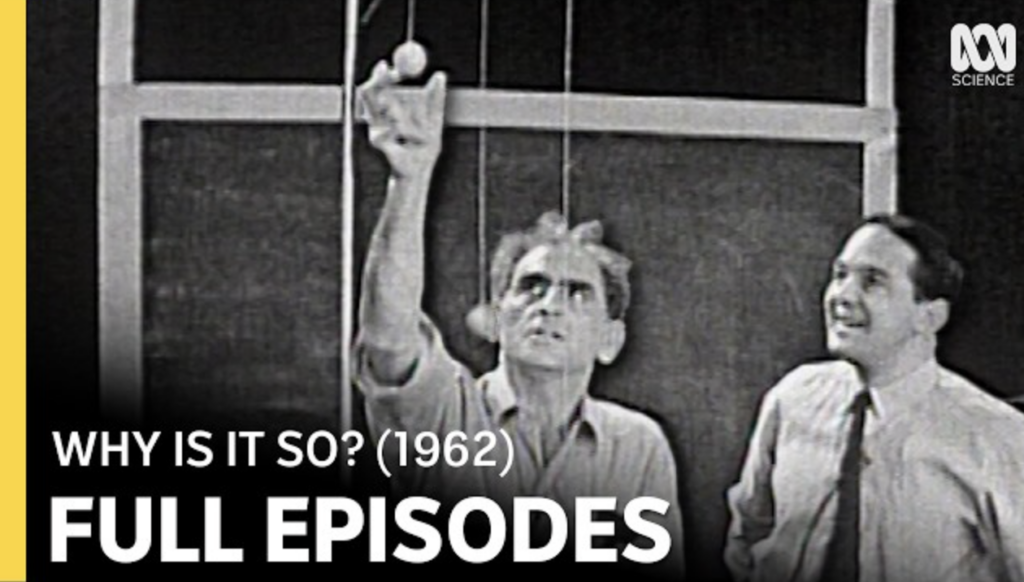
 bskyJulius Sumner Miller's Classic Science Show "Why Is It So?" Now Available Free Onlineopenculture.com
Key quotes
· 3 pulledWe are approaching a darkness in the land. Boys and girls are emerging from every level of school with certificates and degrees, but they can't read, write or calculate.
We don't have academic honesty or intellectual rigor.
The quote may sound like a familiar lament today, but it's actually drawn from an interview conducted about half a century ago with the physicist and television host Julius Sumner Miller.
You might also wanna read


Caltech Launches Online Edition of The Feynman Lectures on Physics
Caltech's Division of Physics, Mathematics and Astronomy and The Feynman Lectures Website present an online edition of the classic physics t
Richard Feynman's Analysis of Physics Education Challenges in Latin America
Richard Feynman's 1963 keynote speech addresses the fundamental challenges of physics education in Latin America, framing it as part of the

Open Access Book Features 99 Best Physics Demonstrations with Educational Strategies
This article introduces an open access book that presents 99 of the best physics demonstrations from the Dutch "ShowdeFysica" series, transl
 interactivetextbooks.tudelft.nl·9mo ago
Exactitude in Science – Borges (1946) [pdf]

The Rise of Conspiracy Physics and Epistemic Collapse in Academic Science
The article discusses the phenomenon of 'conspiracy physics' where online streamers are building large audiences by attacking academic physi

Tom Lehrer, Song Satirist and Mathematician, Dies at 97
Tom Lehrer, the renowned song satirist and mathematician who gained fame in the 1950s-60s for witty songs lampooning marriage, politics, rac
 apnews.com·11mo ago
Comments
Sign in to join the conversation.
No comments yet. Be the first.