
























Bacteria Can Store and Pass Down Memories, Study Finds, With Implications for Antibiotic Resistance
This article explores the emerging field of research showing that bacteria and other single-celled organisms can store information, learn from past experiences, and pass down memories to future generations. The piece discusses how this phenomenon, observed since the early 2000s, challenges traditional assumptions about memory requiring a brain or nervous system. The research has significant implications for understanding and combating antibiotic resistance, as bacteria may 'remember' past exposures to antibiotics. Additionally, the findings could provide clues about how memory works in more complex organisms, including humans, potentially suggesting that memory mechanisms may be rooted in fundamental cellular processes shared across all life forms.
Key quotes
Memory is foundational to our human experience. By tracking and storing our experiences, it helps us navigate the world and is deeply intertwined with consciousness, allowing us to recall the moments that make up who we are.
But recent studies have shown that even single-celled organisms, such as bacteria, can store knowledge over time and learn from past experiences.
This growing field of research could help us stamp out antibiotic resistance and even unlock clues into how our own memories are stored.
From the article
You might also wanna read


Transgenerational Epigenetic Inheritance: Evidence for Inherited Pathogen Avoidance in C. elegans
This article discusses transgenerational epigenetic inheritance, specifically focusing on evidence that learned avoidance of pathogenic bact
 elifesciences.org·7mo ago
Scientists fear that microplastics may be helping bacteria outsmart antibiotics
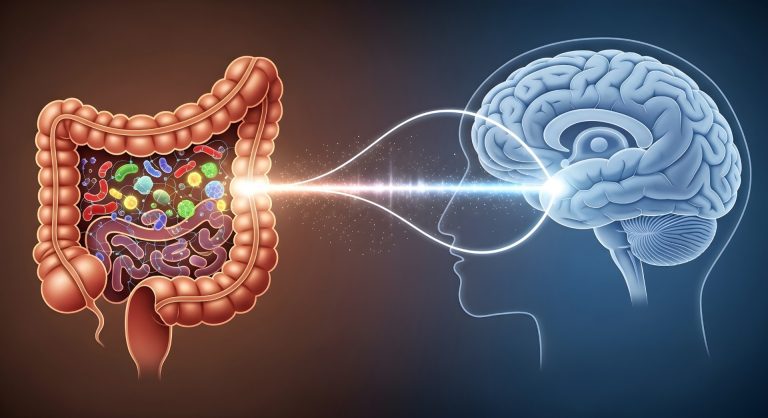
Stanford Study: Restoring Gut-Brain Communication Reverses Cognitive Decline in Aging Mice
Stanford Medicine researchers discovered that aging-related changes in gut bacteria composition trigger an inflammatory response that impair
 med.stanford.edu·3mo ago
Pre-treatment bacterial cell states shape antibiotic-induced transcriptional reprogramming and survival
Study in Nature finds blood stem cells retain lasting memory of past inflammation
Researchers have discovered a previously unknown subset of human blood stem cells that retain a lasting "memory" of past inflammation, accor
 imm.ox.ac.uk·1mo ago
Comments
Sign in to join the conversation.
No comments yet. Be the first.