





















Attention Residuals: A Drop-in Replacement for Standard Residual Connections in Transformers
By
GaggiX

Pulled from the oven just right. Trustworthy, fact-dense, deeply satisfying.
Summary
Attention Residuals (AttnRes) is a novel architectural modification for Transformers that replaces standard residual connections with attention-based mechanisms. Instead of uniform additive accumulation of previous layer outputs, AttnRes enables each layer to selectively attend to and aggregate earlier representations through learned, input-dependent attention over depth. The approach comes in two variants: Full AttnRes where each layer attends over all previous outputs, and Block AttnRes which groups layers into blocks to reduce memory requirements from O(Ld) to O(Nd). This drop-in replacement aims to improve Transformer performance by allowing more sophisticated information flow between layers.
Key quotes
· 3 pulledThis is the official repository for Attention Residuals (AttnRes), a drop-in replacement for standard residual connections in Transformers that enables each layer to selectively aggregate earlier representations via learned, input-dependent attention over depth.
(a) Standard residuals with uniform additive accumulation. (b) Full AttnRes: each layer attends over all previous outputs. (c) Block AttnRes: layers are grouped into blocks, reducing memory from O(Ld) to O(Nd).
Standard residual connections accumu
You might also wanna read

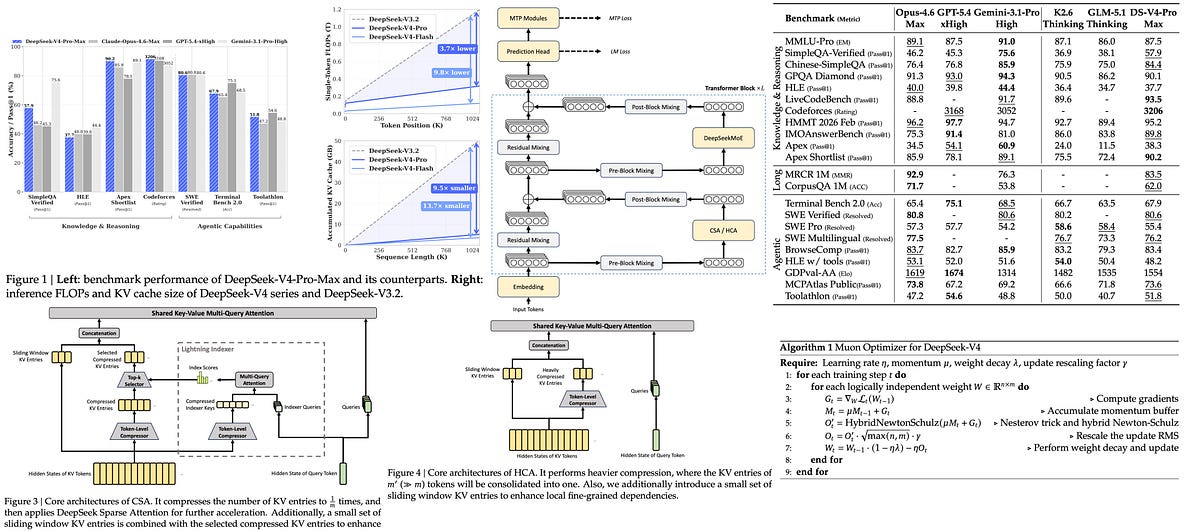
DeepSeek-V4: Hybrid Sparse-Attention Architecture Enables Efficient Million-Token Context Inference
DeepSeek-V4 introduces a hybrid sparse-attention architecture combined with on-policy distillation across domain specialists, enabling 1M-to
 artgor.medium.com·18h ago
Orthrus: A Dual-Architecture Framework for Fast, Lossless LLM Inference via Diffusion Decoding
Orthrus is a dual-architecture framework that combines autoregressive LLMs with diffusion models to enable fast, lossless parallel token gen
 github.com·16d ago
Hybrid Attention Mechanism Achieves 51x Speedup in Language Model Inference
A developer has created a hybrid attention mechanism for language models by modifying PyTorch and Triton internals. The approach changes the
 news.ycombinator.com·1mo ago
Investigating the RYS Method: Testing Layer Duplication Across Modern LLMs
This article explores the RYS (Repeat Your Self) method discovered in Part 1, where duplicating seven middle layers in Qwen2-72B without wei
 dnhkng.github.io·2mo ago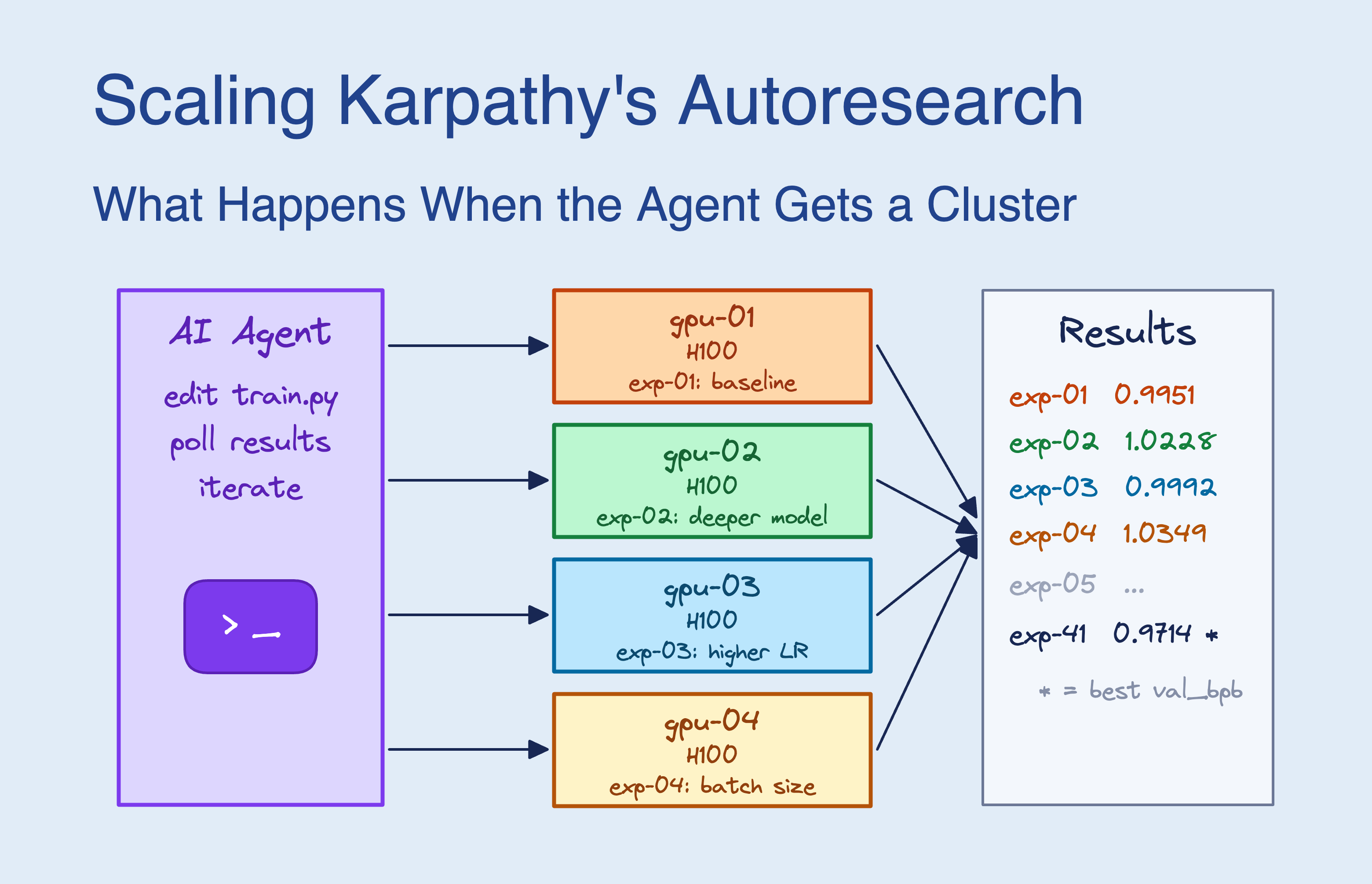
Scaling Karpathy's Autoresearch: Parallel GPU Processing Enables New AI Experimentation Strategies
The article describes an experiment where researchers scaled Andrej Karpathy's autoresearch system by giving it access to 16 GPUs on a Kuber
 blog.skypilot.co·2mo ago
LLM Circuit Finder: Duplicating Specific Layers in Transformer Models Improves Reasoning Performance Without Training
The article describes a GitHub project called 'llm-circuit-finder' that implements a method for discovering and exploiting 'reasoning circui
github.com·2mo ago