
























Why Telescopes Are Placed in Space: Overcoming Earth's Atmospheric Limitations
By
Brandon Holloman
Summary
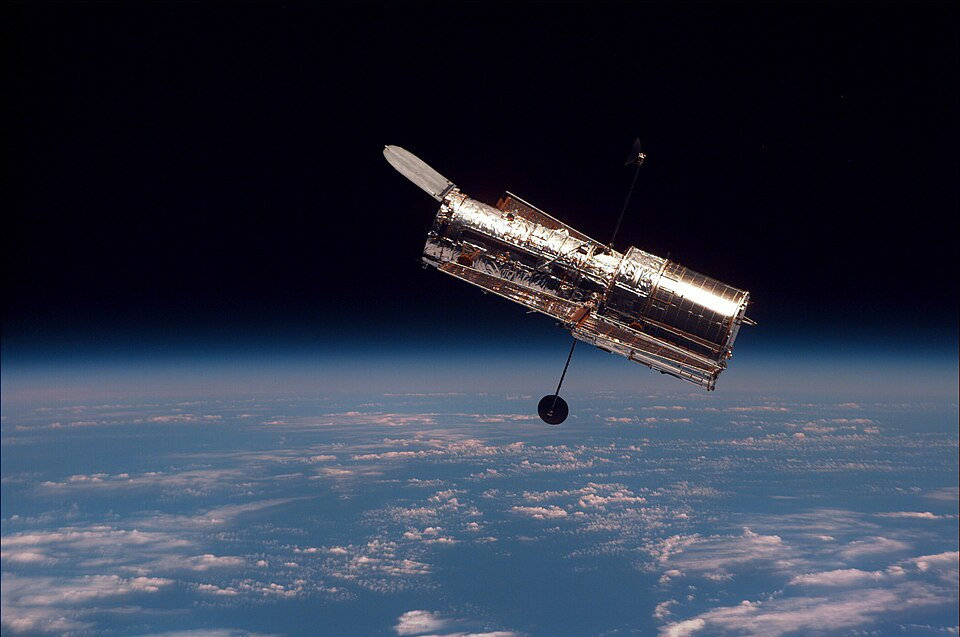
This article explains why telescopes are placed in space rather than on Earth. It discusses how ground-based telescopes face limitations from atmospheric distortion, light pollution, and weather, while space telescopes like Hubble and James Webb can capture clearer, unobstructed views of the universe across multiple wavelengths. The article covers the advantages of space-based observation, including access to infrared, ultraviolet, and X-ray light that doesn't penetrate Earth's atmosphere.
Source
 bskyWhy Telescopes Are Placed in Space: Overcoming Earth's Atmospheric Limitationsamidthestarstours.com
Key quotes
· 3 pulledAs powerful as telescopes were getting, factors that seemed inescapable on Earth got more and more in the way.
There was one clear solution: make a telescope that's not on Earth.
It may seem superfluous to launch an entire telescope into space, but there are actually a lot of advantages.
You might also wanna read

NASA's Telescope Detects Potential Alien Life Signature, but U.S. Space Exploration at Risk
Scientists used NASA's James Webb Space Telescope to potentially detect a signature of alien life on a distant planet, sparking debate and s
theatlantic.com·1y ago
Funding Shortfalls Impact Operations of James Webb and Hubble Space Telescopes
The James Webb Space Telescope and Hubble Space Telescope are facing a reduction in operations due to funding shortfalls, as announced at a
astronomy.com·11mo ago
Best deep space telescopes of 2026: A guide to viewing galaxies, nebulas, and star clusters
A guide to the best telescopes for deep space observation, covering equipment suitable for viewing star clusters, galaxies, and nebulas. The
 space.com·15d ago
Comments
Sign in to join the conversation.
No comments yet. Be the first.