
























Study reveals how aging and early life adversity shape DNA methylation across tissues in macaques
By
Noah Snyder-Mackler
Summary
This study examines how aging and early life adversity (ELA) affect DNA methylation (DNAm) across different tissues in rhesus macaques from the semi-free-ranging Cayo Santiago island population. Researchers found that early life adversity often affected the same genetic sites across tissues, even though different types of adversity impacted different sites. In contrast, aging effects were more heterogeneous across tissues. The research helps disentangle the complex interplay between natural aging and stressful early life experiences on epigenetic marks.
Source

 Twitter / XStudy reveals how aging and early life adversity shape DNA methylation across tissues in macaquesscience.org
Key quotes
· 3 pulledBoth aging and stressors are known to affect epigenetic marks such as DNA methylation.
Early life adversity often affected the same genetic sites across tissues despite individual sources of adversity affecting different sites, whereas aging effects were more heterogeneous.
Age and early life adversity (ELA) are key determinants of health, but whether they affect similar physiological mechanisms across tissues is unknown.
You might also wanna read

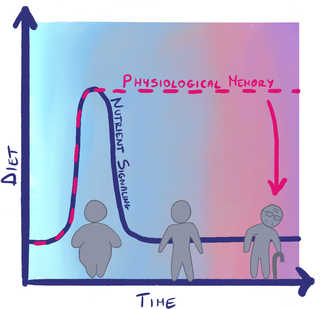
Toward a life-course biology of aging: How early-life conditions shape late-life health and longevity
This article proposes a "life-course biology of aging" framework, arguing that aging is not solely determined by current conditions but is s
 plos.io·26d ago
Study reveals DNA methylation changes in BRCA1 gene may help identify breast cancer risk
Scientists at The Jackson Laboratory, in collaboration with GRAIL, have published a study exploring how DNA methylation changes in the BRCA1
 jax.org·21d ago
Transgenerational Epigenetic Inheritance: Evidence for Inherited Pathogen Avoidance in C. elegans
This article discusses transgenerational epigenetic inheritance, specifically focusing on evidence that learned avoidance of pathogenic bact
 elifesciences.org·7mo ago
Multiomics analysis of the molecular and single-cell responses of rice after deep-space flight on Chang’e-5

Stanford Medicine Study Uncovers Biomolecular Shifts in 40s and 60s
A Stanford Medicine study reveals significant biomolecular changes in individuals in their 40s and 60s, impacting molecules and microorganis
med.stanford.edu·1y agoSingle-nucleus epigenomic dysregulation unmasks genetic risk-associated neurodegenerative glia states
Comments
Sign in to join the conversation.
No comments yet. Be the first.