
























Study finds smaller solar sails more efficient for station-keeping around small asteroids
By
[Submitted on 24 Jun 2026]
Summary
This study examines the use of different solar sail sizes for station-keeping spacecraft orbiting irregularly shaped asteroids. A rational agent using a decision tree optimization algorithm calculates necessary sail orientation to maintain orbit, accounting for non-ideal reflective properties and non-uniform gravitational fields. Results show smaller sails require fewer attitude changes but cannot maintain station on larger asteroids, while for sufficiently small asteroids, sails smaller than those on recent missions may be more appropriate. The findings suggest current solar sail technology is capable of enabling successful asteroid reconnaissance missions.
Source

 Twitter / XStudy finds smaller solar sails more efficient for station-keeping around small asteroidsarxiv.org
Key quotes
· 5 pulledResults reveal a relation between sail and asteroid sizes and the attitude change frequency.
Smaller sails can sustain station-keeping with fewer attitude changes. However, they are not able to achieve this goal on larger asteroids.
For sufficiently small asteroids, sails smaller than those used on recent missions may be more appropriate for station-keeping.
These findings suggest that current solar sail technology is already capable of enabling successful asteroid reconnaissance missions.
The employment of solar sails enable a greater number of missions and target asteroids, given it is a cheaper propulsion method.
You might also wanna read

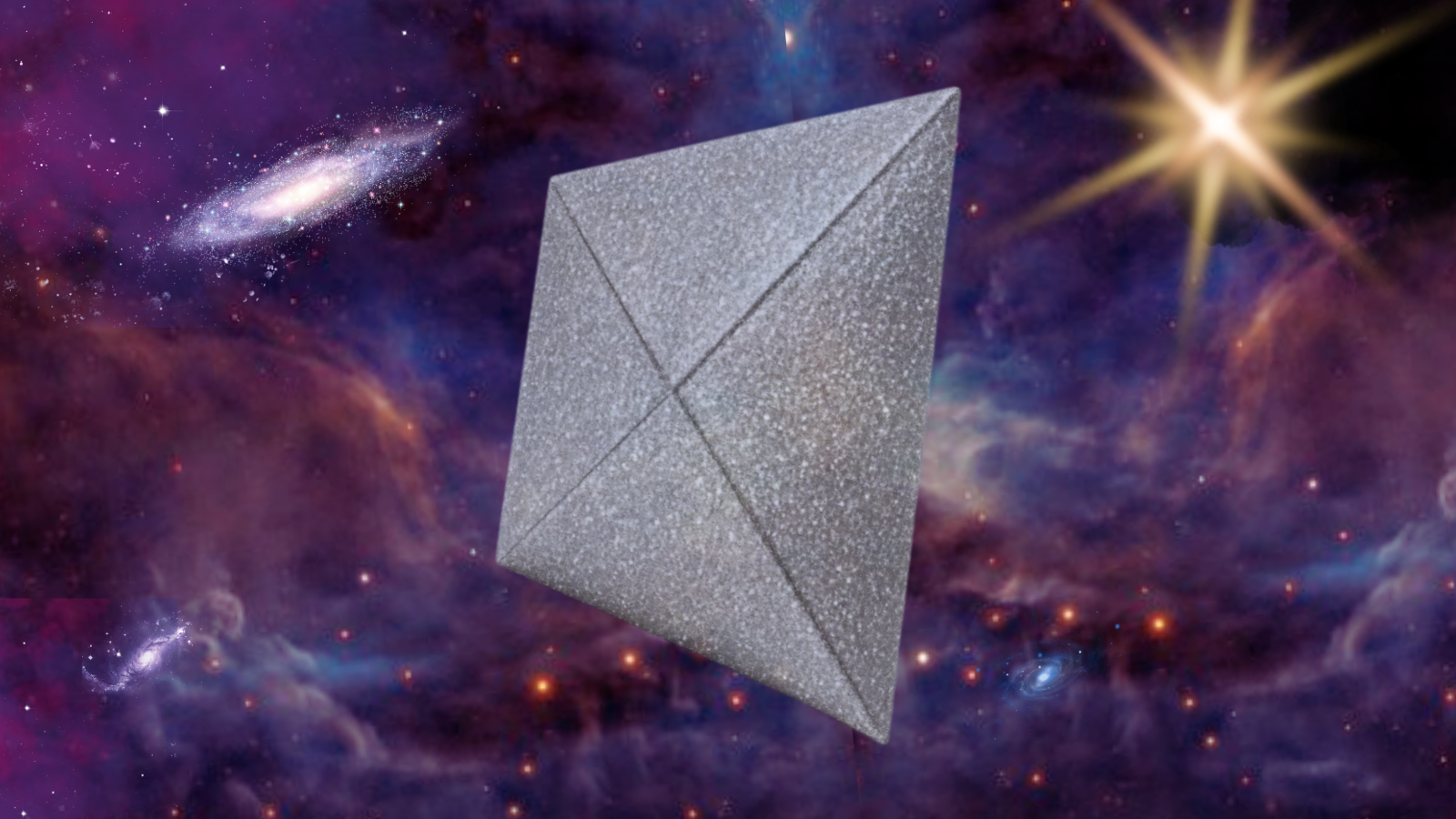
How solar sails could propel humanity to interstellar space
This article explores the concept of solar sails as a realistic propulsion method for interstellar space travel. It discusses how solar sail
 space.com·25d ago
Experimenteller Satellit misst großflächige GPS-Störungen von Osteuropa bis zum Nahen Osten
Der Artikel berichtet über starke GPS-Störungen, die von Osteuropa bis in den Mittleren Osten reichen, verursacht durch die Kriege in der Uk
 heise.de·3d ago
Space-Based AI Infrastructure: Leveraging Solar Energy for Computational Power
The article explores the concept of building AI infrastructure in space to leverage the Sun's abundant energy. It discusses how solar panels
 research.google·7mo ago
Novel Stable and Low-Energy Earth-Moon Cycle Orbits [pdf]
Akin's Laws of Spacecraft Design [pdf]
Feasibility Study of a Mission to Sedna Using Advanced Propulsion Concepts
The study assesses the feasibility of a mission to Sedna using advanced propulsion concepts: Direct Fusion Drive (DFD) and solar sail. DFD e
arxiv.org·11mo ago
Comments
Sign in to join the conversation.
No comments yet. Be the first.