
























BEACON nanoparticles show promise as mucosal vaccine adjuvant for genital herpes
By
Akiko Iwasaki
Summary
This article describes the development of BEACONs (Bioactive Enhanced Adjuvant Chemokine Oligonucleotide Nanoparticles), a novel adjuvant for mucosal vaccination against genital herpes (HSV-2). The researchers combined CpG oligodeoxynucleotides with the CXCL9 chemokine via electrostatic interactions to create nanoparticles that trigger localized immune responses in the reproductive tract mucosa. The vaccination strategy involved priming mice with intramuscular injections of mRNA lipid nanoparticles encoding HSV-2 glycoproteins (gB or gD), followed by boosting. This approach addresses a key challenge in developing an HSV-2 vaccine: generating effective local immunity through tissue-resident immune responses.
Source

 Twitter / XBEACON nanoparticles show promise as mucosal vaccine adjuvant for genital herpesscim.ag
Key quotes
· 3 pulledNo vaccine currently exists for genital herpes, caused by herpes simplex virus 2 (HSV-2), in part because of the challenge of triggering localized immune responses in the reproductive tract mucosa.
Bhagchandani et al. generated an adjuvant called bioactive enhanced adjuvant chemokine oligonucleotide nanoparticles (BEACONs) that combines CpG oligodeoxynucleotides (CpG ODNs) with the CXCL9 chemokine through electrostatic interactions.
Mice were primed initially by intramuscular injection with mRNA lipid nanoparticles encoding HSV-2 glycoprotein B (gB) or gD and were boosted intra
You might also wanna read


mRNA-LNP Platforms Show Promise for Inducing Immune Tolerance in Peanut Allergy Treatment
This article discusses the development of mRNA-lipid nanoparticle (LNP) platforms designed to induce antigen-specific immune tolerance for p
 pubs.acs.org·15d ago
Personalized mRNA vaccine shows promise in preventing melanoma recurrence when combined with immunotherapy
An 80-year-old melanoma patient, Connie Franciosi, participated in a clinical trial testing an mRNA cancer vaccine (mRNA-4157/V940) combined
 share.google·21d ago
Personalized mRNA vaccine combined with Keytruda shows 49% reduction in melanoma recurrence risk
An 80-year-old melanoma patient, Connie Franciosi, participated in a clinical trial testing an mRNA cancer vaccine (mRNA-4157/V940) combined
npr.org·5d agoPersonalized mRNA vaccine combined with Keytruda shows 49% reduction in melanoma recurrence risk
An 80-year-old melanoma patient, Connie Franciosi, participated in a clinical trial testing an mRNA cancer vaccine (mRNA-4157/V940) combined
npr.org·5d ago
Personalized mRNA Cancer Vaccine Shows 49% Risk Reduction at 5-Year Follow-up
Moderna and Merck report promising 5-year follow-up results for their personalized mRNA cancer vaccine combined with Keytruda immunotherapy.
 arstechnica.com·4mo ago
Flagellin in biotechnology: biosensors, nanomaterials, and nanorobots beyond bacterial motility
This review article discusses recent advances in using flagellin (the bacterial flagellar filament protein) for biotechnology applications b
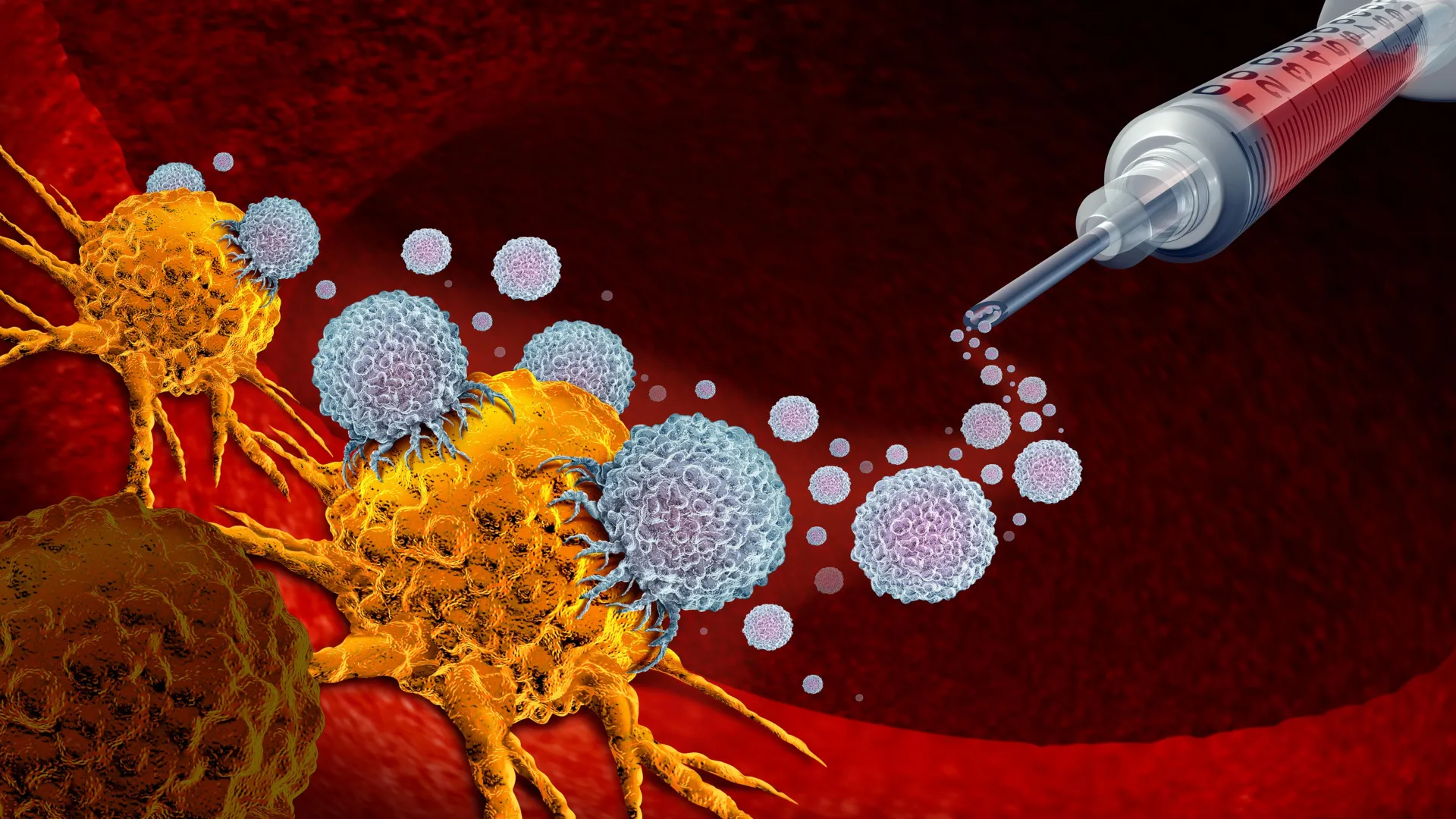
Experimental mRNA cancer vaccine shows tumor-fighting promise in mouse study
An experimental mRNA cancer vaccine developed by the University of Florida, published in Nature Biomedical Engineering, showed promising res
Comments
Sign in to join the conversation.
No comments yet. Be the first.