
























How Time-Space Synesthesia Lets Some People Visually and Physically Perceive Time
By
Katie Neith
Summary
This article explores synesthesia, a neurological phenomenon where senses blend together, with a focus on time-space synesthesia — a rare form where individuals can visualize, feel, or even "see" time as physical shapes, spatial arrangements, or tactile sensations. It explains how some people perceive days of the week, months, or years as having distinct locations in space around them, often visualized as ribbons, spirals, or calendars. The piece delves into the science behind the condition, how it shapes perception and memory, and what it reveals about the human mind's capacity for sensory cross-wiring.
Source

 Twitter / XHow Time-Space Synesthesia Lets Some People Visually and Physically Perceive Timepopular-mechanics.visitlink.me
Key quotes
· 3 pulledFor some people, these questions have simple and obvious answers.
They experience extraordinary sensory crossovers due to synesthesia, a neurological phenomenon that causes two or more senses to mix in complex ways and present concurrently.
These curious sensations can help shed light on some mysteries of the human mind.
You might also wanna read

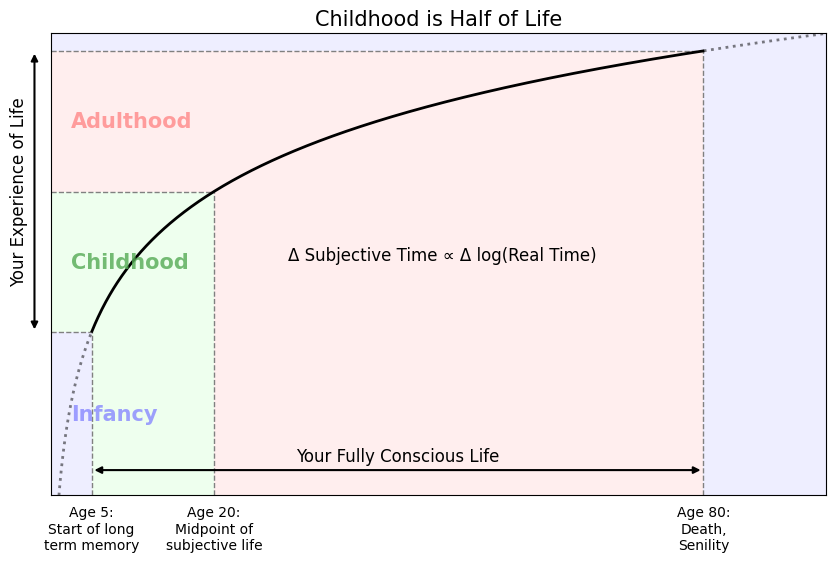
The Logarithmic Perception of Time: How Childhood Dominates Our Subjective Life Experience
The article explores the subjective experience of time across different life stages, proposing that we perceive time logarithmically rather
 moultano.wordpress.com·6mo ago
Neuroscientist challenges decades-old model of how vision and thinking work in the brain
Neuroscientist Nuttida Rungratsameetaweemana is challenging the long-held conventional view that vision is a passive, feed-forward process w
 engineering.columbia.edu·3d ago
Neuroscientist challenges decades-old model of how vision and thinking work in the brain
Neuroscientist Nuttida Rungratsameetaweemana is challenging the long-held conventional view that vision is a passive, feed-forward process w
engineering.columbia.edu·3d ago
Heartbeat timing influences brain's sensory processing, potentially affecting neuroscience research
A growing body of research suggests that the heartbeat subtly influences how the brain processes sensory information, potentially skewing re
 science.org·14d ago
Why Physical Reality May Be a Collective Construction of Consciousness
This article explores the philosophical and scientific argument that physical reality is not an objective, fixed entity but rather a collect
mimetra.com·1mo ago
The mental number line is not universal: How culture shapes the way we map numbers in our minds
This article explores the SNARC effect (Spatial-Numerical Association of Response Codes), a psychological phenomenon where people associate
 theconversation.com·1mo ago
Aphantasia and Hyperphantasia: How the Absence or Vividness of Mental Imagery Shapes Memory and Identity
This article explores aphantasia (the inability to visualize mental images) and hyperphantasia (extremely vivid mental imagery), examining h
 newyorker.com·8mo ago
Comments
Sign in to join the conversation.
No comments yet. Be the first.