Anthropic's report on Claude being used for potential bioweapon work has experts split. The debate is over whether this is a real, near-term threat or an overreaction that could distract from more pressing AI risks.
scienceMonday, September 14, 2026
The day's science news is split between climate urgency and AI's double-edged role in research. A new report on AI-assisted bioweapon design has experts arguing over how real the threat is, while several studies hammer home how fast the planet is changing.
The week's AI news took a darker turn, with a report on AI-assisted bioweapon design sparking genuine disagreement among researchers.

Anthropic's report on Claude being used for potential bioweapon work has experts split. The debate is over whether this is a real, near-term threat or an overreaction that could distract from more pressing AI risks.

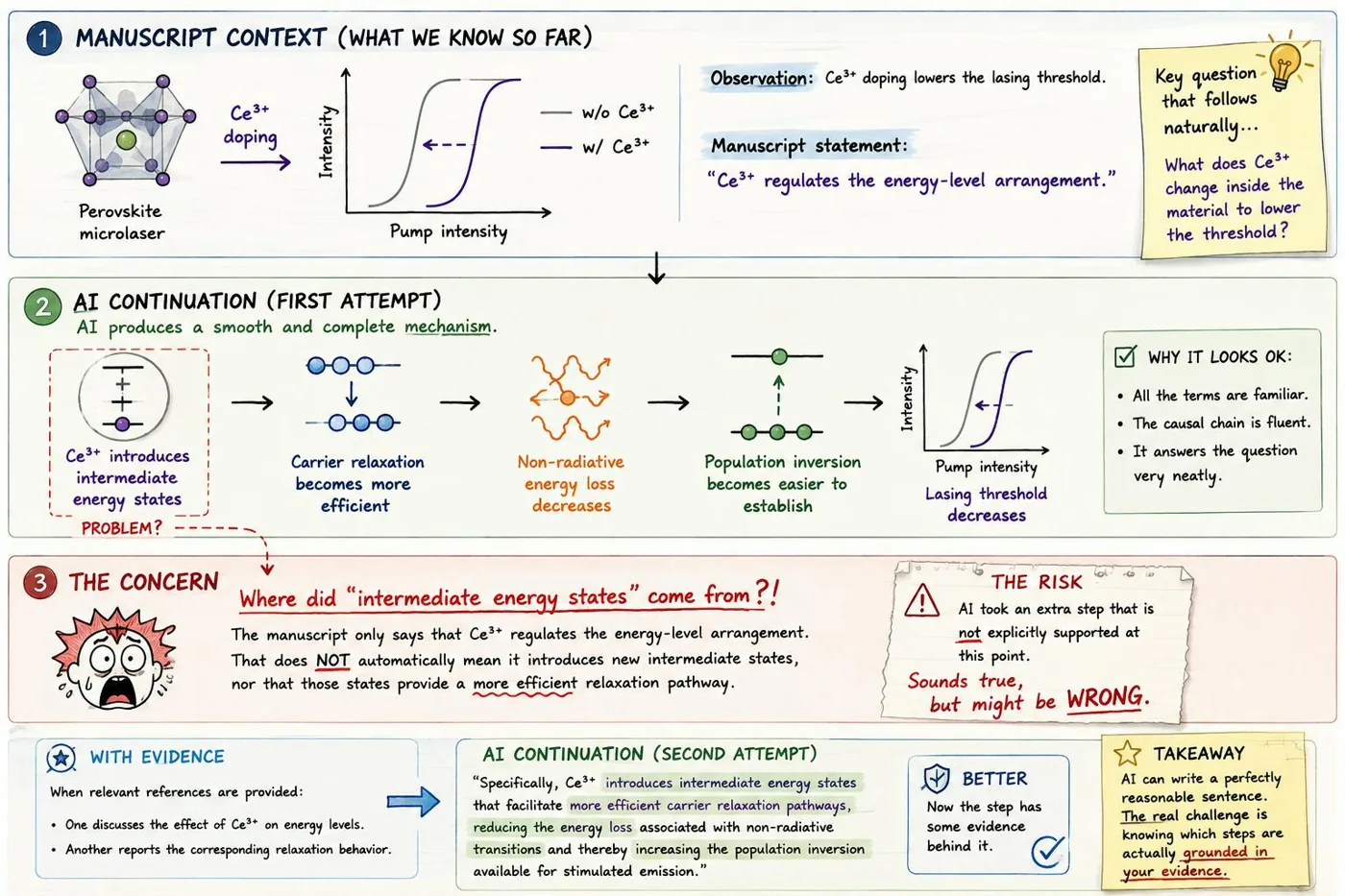
The problem isn't that AI writes bad sentences, it's that it writes plausible ones. The article shows how an AI-generated mechanistic claim about perovskite microlasers sounded right but wasn't, which is exactly why it's dangerous in scientific writing.
This paper sketches a roadmap for AI that improves itself, with five stages from simple execution to recursive meta-improvement. The Headroom-Closed Index is an attempt to measure when current models hit their limits, which is a useful framing for what's actually missing in today's LLMs.
Multiple studies today converge on the same message: the climate is shifting faster than policy is responding.
Climate Analytics now says we're likely to blow past 1.5°C within five years under current policies. The report's point is that overshoot isn't the end of the story, but the longer and higher it goes, the more irreversible the damage gets.
Himalayan glaciers are melting faster than expected, and the BBC piece ties that directly to India's economy and water security. After the floods in Nepal and Tibet that killed over 1,300 people, this isn't a distant problem anymore.
Extreme heat is no longer a summer-only phenomenon. The study shows heat seasons lengthening in most regions, but not uniformly, which complicates everything from agriculture to public health planning.
This Renew Economy report is blunt: hitting climate goals means no coal power and no new petrol or diesel cars by 2035. It's the kind of concrete timeline that Australian policy has so far avoided.
A discovery in a Chinese cave is filling in the blanks on Denisovan life, while a coral reef story reminds us what's lost.
The first Denisovan evidence in south-west China shows they lived in conifer forests for over 100,000 years, hunting deer with simple stone tools. It's a rare look at their everyday technology, not just their bones.

Mongabay's piece is a personal story about a clownfish at a reef that was about to be reclaimed. It's a reminder that conservation is often about individual creatures, not just abstract ecosystems.
rVSVΔG-ZEBOV-GP vaccine-induced seroreactivity to Bundibugyo virus: a cross-protection dilemmawww.thelancet.com
A disinhibitory basal forebrain-to-cortex projection supports sustained attentionwww.cell.comBiodiversity corridor payments boost household incomes in Vietnam’s Annamite mountainsnews.mongabay.com
Conservationists say connecting existing protected areas through biodiversity corridors is vital in many landscapes to prevent further loss of species and habitats. Yet the households living inside conservation areas often face stark financial tradeoffs associated with lost acces
Electrifying homes and cars can save $5,000 a year, but households confused by policy “mixed messages”reneweconomy.com.au
More than 30 organisations urge federal government to do more in backing electric appliances, equipment and vehicles to cut costs and emissions. The post Electrifying homes and cars can save $5,000 a year, but households confused by policy “mixed messages” appeared first on Renew
UCSB, Lawrence Livermore collaborate to accelerate fusion plasma simulations with AInews.ucsb.edu
A new collaboration between researchers at UC Santa Barbara and Lawrence Livermore National Laboratory (LLNL) is bringing artificial intelligence (AI) into one of the most computationally demanding frontiers in modern physics.
Innovation boost for the hydrogen economy: Real-time diagnostics for electrolyisers and fuel cells in operationwww.chemeurope.com
Hydrogen use is a key component of decarbonization, but ensuring the long- term operation of electrolysers and fuel cells is challenging. Fluctuating operating conditions lead to wear and performance losses. Fraunhofer IFAM has now achieved a decisive breakthrough with dynamic im