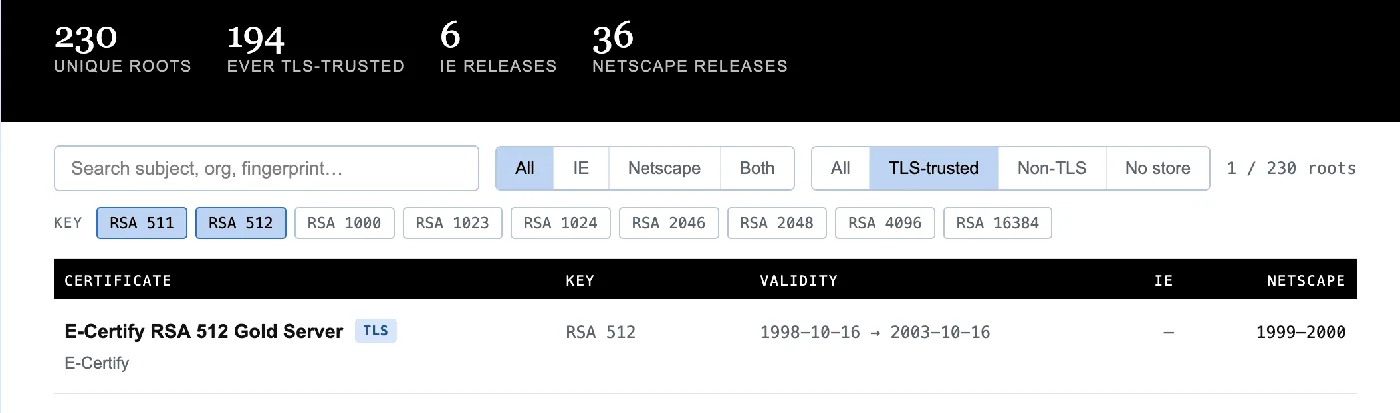
The author claims to have factored the RSA keys of a certificate authority, underscoring how 1024-bit keys deprecated a decade ago are now trivially insecure for well-resourced attackers. It's a concrete reminder that cryptographic decay isn't theoretical.
scienceTuesday, September 8, 2026
RSA keys fall, batteries cut curtailment
Today's science roundup is a tale of two scales. At the microscopic level, a researcher demonstrates just how vulnerable old RSA keys have become, while at the grid scale, batteries are proving they can slash solar waste. The through-line is about systems we thought were secure or efficient turning out to have hidden weaknesses or untapped potential.
Cracks in the code
Two stories today challenge assumptions about how secure and efficient our systems really are.
Batteries cut large-scale solar curtailment in half during a record month for PV output in Australia. The data makes a strong case that storage is the missing piece for renewable grids, not just a nice-to-have.
Clean energy moves
The renewable sector sees both a landmark sale and a materials breakthrough.
A pioneering Australian renewable energy retailer is up for sale, with its founder and major shareholder shopping for buyers. It's a sign the sector is maturing into a consolidation phase.
Stanford researchers claim an improved method for producing sustainable hydrogen, targeting the CO2-heavy processes that dominate today. If it scales, it could shift a major industrial emissions source.
Health and behavior
From fruit fly memory to the psychology of wealth, science keeps finding surprises in everyday life.

Fruit flies use memory to track odor plumes, encoding the angle needed to return to a tasty scent. It's a neat demonstration that even tiny brains build spatial memories for navigation.
Also today15
250A. In 2014 an Unprecedented Controlled Field Study Was Initiated to Test a Game Economic Theory. In Secret.raminshokrizade.substack.com- How well do agents use test/verification techniques?danluu.com
Two Habits are Better than Onemineralmatters.substack.com
APOD: 2026 September 8 – Hubble: Decagon Around Saturn’s South Polescience.nasa.gov
The Otherworldly Geology of Vasquez Rocksscience.nasa.gov
Bed Rotting: Self-Care Trend or Mental Health Concern? What Therapists Actually Thinkwww.therapistsinbaltimore.com
EBOLA BUNDIBUGYO VIRUS DISEASE OUTBREAK Democratic Republic of the Congowww.afro.who.int
EBOLA BUNDIBUGYO VIRUS DISEASE OUTBREAK Democratic Republic of the Congo
Sustainable Chemistry Changemakers: Without Scales a Recycling Solution for Hard-to-Recycle Plastic Packagingwww.chemeurope.com
For its contribution to Sustainable Chemistry, Without – then operating under the name Without by Ashaya – was recognised by the International Sustainable Chemistry Collaborative Centre (ISC3) as Start-up of the Month in May 2023. Since then, the Indian company has evolved signif
A Small Materials Tweak Could Make Laser-Cladded Coatings Harder to Crackwww.azom.com
Rare-earth oxides such as cerium oxide, lanthanum oxide, and yttrium oxide can improve laser-cladded metal coatings by refining grains, purifying the molten pool, strengthening interfaces, and altering solidification behavior. The review finds that these effects can increase hard
Designing Drugs for Moving Targetsyesilscience.com
Traditional computer-aided drug design treats proteins like frozen statues, but human biology moves, making most early-stage drug candidates useless in the real world. The post Designing Drugs for Moving Targets first appeared on Yesil Science .
Lanterns Locates “The Weenie” and Quits Beating About the Bushreactormag.com
The episode is, in fact, full of weenie jokes The post <i>Lanterns</i> Locates “The Weenie” and Quits Beating About the Bush appeared first on Reactor .
Are rich people really worse behaved? Here’s the science – podcastwww.theguardian.com
Who’s more likely to steal sweets from a child? According to science, it’s the rich. A study seemingly confirming our suspicions about the moral behaviour of the wealthy was one of the winners of the 2026 Ig Nobel prizes, which honour research that makes you laugh and then think.
New methods to contextualize autism-linked genes, and morewww.thetransmitter.org
Here is a roundup of autism-related news and research spotted around the web for the week of 7 September.
Toxic Dust and PTSD May Accelerate Brain Aging in 9/11 First Responderswww.the-scientist.com
Exposure to dust and trauma at Ground Zero has been linked to long-term PTSD, higher dementia rates, and accelerated brain aging in rescue workers.
Postdoc Portrait: Letícia Perticarrara Ferezin Explores Precision Medicine and Geneticswww.the-scientist.com
This postdoctoral researcher explores how genetic variation and social determinants influence personalized health outcomes.
More roundups that day
Overmono, Armand Van Helden headline Australian summer

Arm's Mali G2-Ultra NX GPU is the big story today, promising desktop-class graphics on phones through AI-native rendering.
Telluride's secret Holmes doc steals the show