All Topics
All Topics
Technology
Technology
AI
AI
Business
Business
Entertainment
Entertainment
News
News
Programming
Programming
Science
Science
Design
Design
Environment
Environment
Finance
Finance
Crypto
Crypto
Politics
Politics
Sports
Sports
Education
Education
Gaming
Gaming
Art
Art
Music
Music
Health
Health
Security
Security
Books
Books
Food
Food
Travel
Travel
Personal
Personal
Bluesky
Twitter

programmingSunday, August 23, 2026

AI agents get their own terminal grid

The day's programming news is split between two camps: developers building practical tools to manage multiple AI agents at once, and a growing unease about what that means for the culture of software. A new desktop app runs five coding agents side by side in isolated panes, while a longer essay argues that authoritarian patterns are baked into how we write code.

Sources
+7

Multi-agent tooling

The agent workflow problem is shifting from 'can an agent write code?' to 'how do you run several of them at once without chaos?' Two new tools tackle that.

#01shortsingh.comAug 23
0
NestMux runs five AI coding agents simultaneously in isolated terminal panes

NestMux is a desktop app that runs Claude Code, Codex, Gemini CLI, and others in a grid of real terminals, each with its own HOME directory and git worktree. The key design choice, isolated environments with node-pty, prevents agents from stepping on each other in shared repos. It's a pragmatic answer to the 'agent swarm' problem that doesn't require a new orchestration framework.
#02gitkraken.comAug 23
0
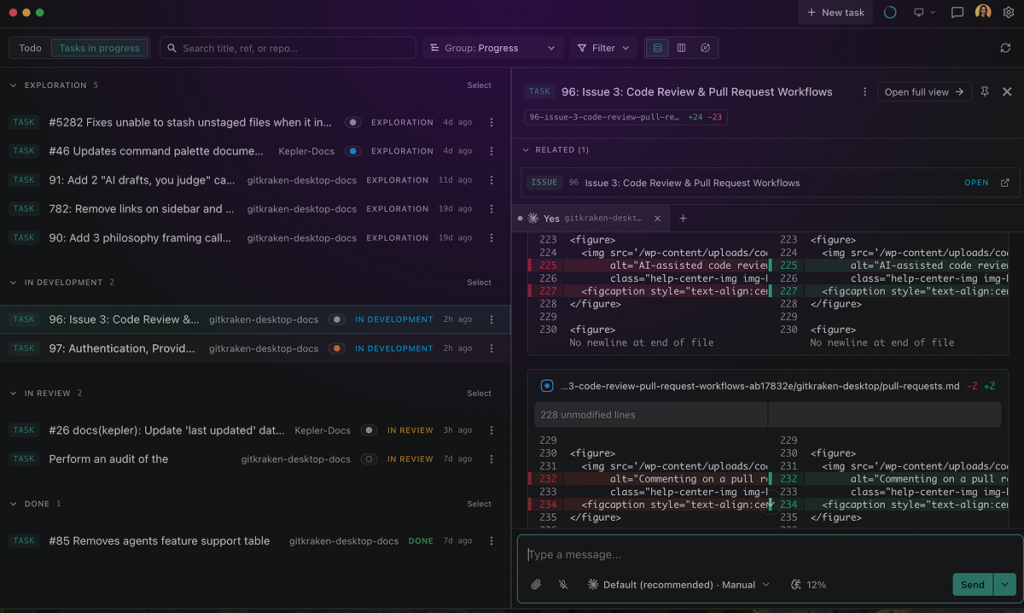
Kepler: One place to run every agent, from idea to merged

Kepler's biggest update since public preview frames the hard part as 'not writing the code anymore' but managing the agents who do. The tool positions itself as a single place to go from idea to merged PR. It's competing directly with the workflow gap that NestMux also targets, but from a more opinionated, GitKraken-integrated angle.

by Jonathan SilvaRead original

Culture and craft

Meanwhile, two pieces push back on the narrative that LLMs have made programming trivial, one from a cultural angle, one from a practical one.

#03zedshaw.comAug 23
0
Authoritarianism of Code

Zed Shaw argues that software development culture is deeply authoritarian, and that even developers who see themselves as anti-authoritarian internalize those patterns. The essay offers a framework for evaluating practices and communities on an authoritarian-to-totalitarian spectrum. It's a long, deliberately provocative piece that lands in the middle of the current debate about AI-generated code and human agency.

#04lucumr.pocoo.orgAug 23
0
Fast and Hard Code

Armin Ronacher pushes back on the 'programming is solved' meme by arguing that language familiarity and friction have decreased, but language choice itself matters less than before. The real shift is that developers can now rewrite code in unfamiliar languages with LLM help. It's a measured take that neither hypes nor dismisses the AI moment.

Model milestone

And a single benchmark-style post makes the case that open-weights models are now capable of work that used to require a frontier API.

#05www.xda-developers.comAug 23
0
I gave Qwen 3.8 27B a reverse-engineering job I assumed needed a frontier model, and it finished in 30 minutes

A developer gave Qwen 3.8 27B a complex reverse-engineering task and got results in 30 minutes on a local workstation. The base performance was modest, but optimizations with SGLang and speculative decoding pushed it to usable speeds. The implication is that open-weights models are crossing a threshold where they can handle work previously reserved for API-only frontier models.

Also today15

More roundups that day