
























The shifting goalposts in arguments for human superiority over AI
There is a weird collection of arguments for appraising the value of humans and their creative artifacts. It usually goes something like this: In the age of AI, we should still prefer humans in…
Read the full articleYou might also wanna read

Why AI Should Extend Human Will, Not Replace It
AI built for autonomy crowds people out, making us passive observers of what’s coming. We’re building toward a different future.
 thinkingmachines.ai·6d ago
Why AI Should Extend Human Will, Not Replace It
AI built for autonomy crowds people out, making us passive observers of what’s coming. We’re building toward a different future.
thinkingmachines.ai·6d agoWhy AI Should Extend Human Will, Not Replace It
AI built for autonomy crowds people out, making us passive observers of what’s coming. We’re building toward a different future.
thinkingmachines.ai·6d agoWhy AI Should Extend Human Will, Not Replace It
AI built for autonomy crowds people out, making us passive observers of what’s coming. We’re building toward a different future.
thinkingmachines.ai·6d agoWhy AI Should Extend Human Will, Not Replace It
AI built for autonomy crowds people out, making us passive observers of what’s coming. We’re building toward a different future.
thinkingmachines.ai·6d agoWhy AI Should Extend Human Will, Not Replace It
AI built for autonomy crowds people out, making us passive observers of what’s coming. We’re building toward a different future.
thinkingmachines.ai·6d ago
AI's New Frontier: Enhancing Human Experience
Artificial intelligence is entering a phase where the focus is on aligning with human needs and behaviors. This shift will redefine innovati

Inside the symposium where AI researchers debate creating humanity's 'worthy successor'
Here’s how humanism should respond to transhumanism, posthumanism, and AI successionism.
 vox.com·1mo ago
Humans vs. AI: The Search for Semantic Soul
A recent study pits human creativity against AI in semantic searches. It reveals the gap between human exploration and algorithmic predictab
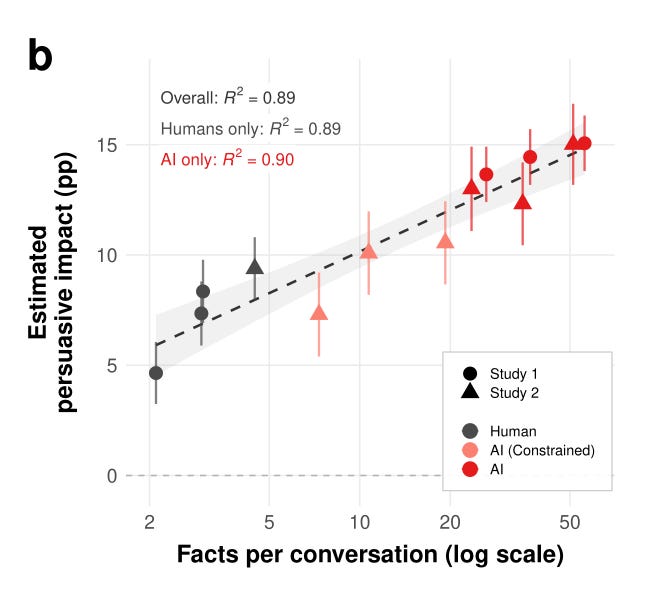
AI systems surpass human persuasiveness in new study measuring behavioral change
Quick review of a compelling new report
 tomstafford.substack.com·24d ago
Why Human Judgment Becomes a Competitive Advantage in an AI-Driven Marketing World
In a world where execution is increasingly free, clarity of mind becomes the most defensible asset a business can own.
 forbes.com·1mo ago
Comments
Sign in to join the conversation.
No comments yet. Be the first.