
























WSU model could help track deadly viruses to their source
Washington State University researchers developed a new modeling approach that can help identify the animal origins of emerging viruses. The tool could improve disease surveillance, outbreak…
Read the full articleYou might also wanna read


Wastewater surveillance: A powerful but limited tool for tracking infectious diseases
Measuring the genetic diversity of viruses in wastewater could improve disease control
 doi.org·20d ago
New genomic method to track disease outbreaks globally
Phylo-Plex, a new computational method, has been developed by Wellcome Sanger Institute scientists and their collaborators to allow cost-eff

Scientists discover hidden “footprints of death” that may help viruses spread
Scientists have uncovered a surprising new twist in what happens when cells die. As dying cells break apart, they leave behind tiny “footpri

Study finds viral adaptation in animal reservoirs is not a necessary precursor for human epidemics and pandemics
Phylogenetic-based selection analysis of viral evolution before and after spillover reveals that viral adaptation in the host reservoir is n
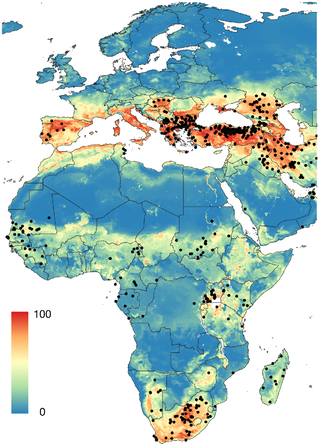
Ecological modeling reveals Crimean-Congo hemorrhagic fever virus circulates through broad networks of ticks and vertebrates
Author summary Crimean–Congo haemorrhagic fever virus (CCHFV) is a tick-borne pathogen causing severe disease in humans across Africa, Asia,
 journals.plos.org·1mo ago
Smart Analysis and Decision-Making for Emerging Infectious Diseases
Conditions : Emerging Infectious Diseases; COVID-19; Influenza; Mpox (Monkeypox); Dengue Fever; Chikungunya Fever; Avian Influenza Intervent
Comments
Sign in to join the conversation.
No comments yet. Be the first.