
























China sends artificial human embryos to Tiangong space station to study reproduction in space
Space wreaks havoc on the adult human body, so it’s safe to assume it can probably do a number on an embryo and newborn.
Read the full articleYou might also wanna read
Chinese scientists have bad news on having babies in space. But there is a silver lining
If the future of humanity lies in the vast expanse of space, could humans actually perpetuate the species beyond Earth? As a team of Chinese


Chinese scientists have bad news on having babies in space. But there is a silver lining
If the future of humanity lies in the vast expanse of space, could humans actually perpetuate the species beyond Earth? As a team of Chinese

Chinese Astronauts Conduct Second Spacewalk to Enhance Tiangong Space Station
China’s Shenzhou-20 astronauts complete second spacewalk to enhance Tiangong space station Two Chinese astronauts conducted an extravehicula
spacenews.com·1y agoNew Space Biomedical Institutes Are Using ISS Research to Advance Human Health
Research aboard the International Space Station is fueling a new era of space medicine, with leading institutions translating microgravity d
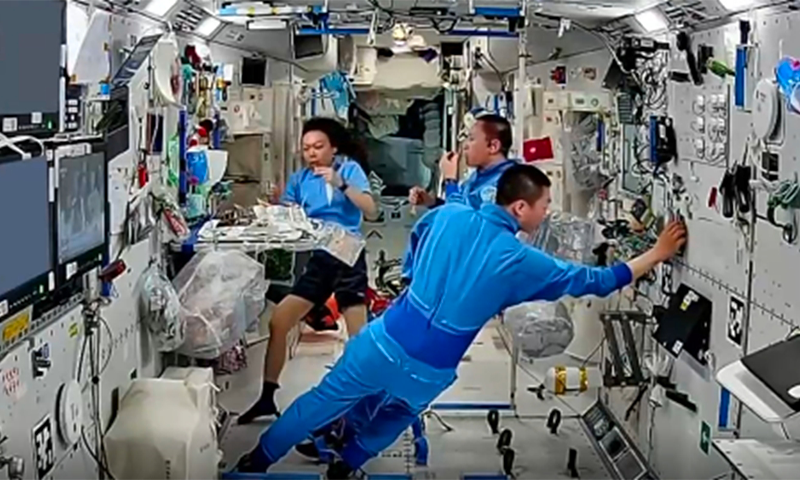
Shenzhou-23 crew conducts space science experiments and bakes pumpkin aboard Tiangong station
After spending one month aboard China's Tiangong space station, the Shenzhou-23 crew has continued a range of space science experiments, inc

Scientists create first early human eggs from stem cells in fertility breakthrough
A look inside the biology, engineering, and validation behind a major scientific milestone.
 conception.bio·16d ago
Comments
Sign in to join the conversation.
No comments yet. Be the first.