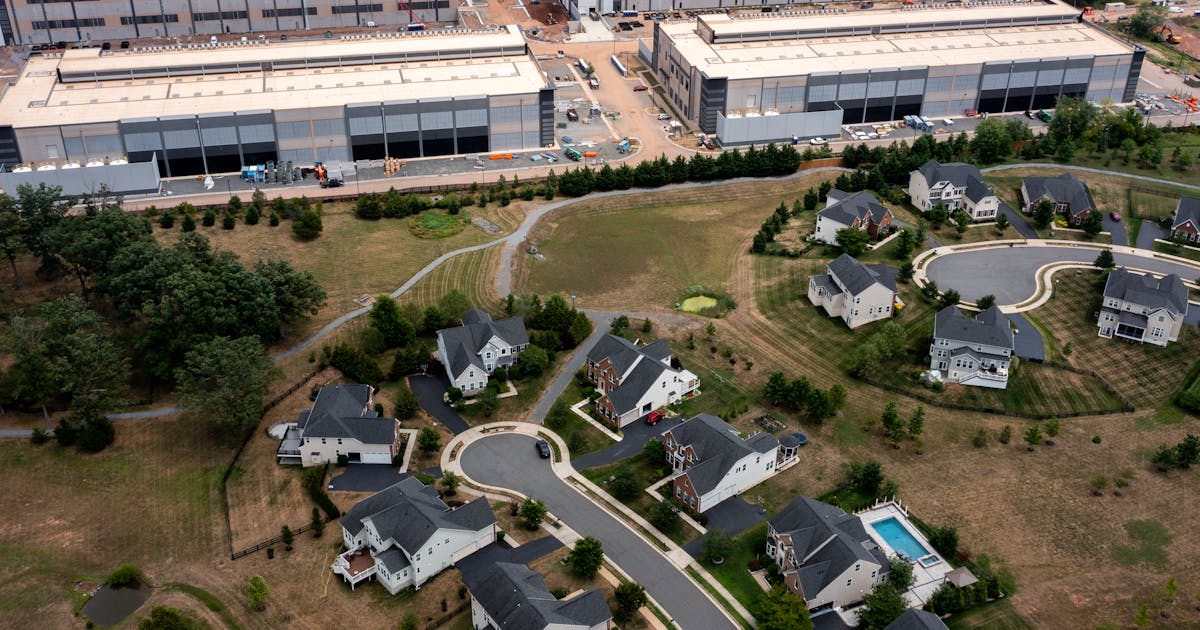
This week’s conversation is with Grant Gutierrez, head of community impacts at carbon management company Carbon Direct. This week Carbon Direct published a white paper Gutierrez authored on opposition around data centers he’s studied. His research reinforces much of what Heatmap Pro has uncovered , but I was particularly intrigued by a topline finding – that transparency is the most common thread in the 46 data center fights he looked into. Was he seeing what I’ve been seeing ? So I asked him to hop onto a Zoom call and let me know his thoughts. The following conversation was lightly edited for clarity. If you were to explain the findings in your white paper to someone at a bar… how would you put it? What I would say is that we were really interested in the kinds of concerns communities were articulating as they were opposing or resisting data center development in the U.S. To answer and explore those questions, we developed our own data center cancellation tracker where we looked for cases where we could find a strong correlation between cancelation or withdrawal status and opposition. Then we did high-level analyses of the demographics surrounding those data centers, using standard best practices from environmental justice methodologies and pulling sociodemographic and environmental burden characters from EPA’s EJScreen tool. We were mostly looking at public records. Press materials. City council meeting minutes. Things you wouldn’t have to dig too hard to find. The kinds of communities we saw successfully resisting data centers tracked across the demographic middle of the United States – slightly more middle income, slightly more white than a majority of the American community, but mostly what you’d consider the average American community. What is the intended audience of this paper and what are you hoping to communicate? I think it’s important for data center developers and the capital behind them is that they need to move their engagement to early stage, responsible design. A second audience is regulators, city councils, and local zoning commissions about how to engage with developers and advocate for the right disclosure requirements from industry. The key topline message is that developers who treat community engagement as a permitting formality instead of a critical early stage input are burdening communities, breaking trust. This is resulting in reputational risk for developers, stranded assets, losing capital – and the loss of future opportunities as developers want to build 21st century infrastructure. Walk me through what you saw evaluating these projects. What’s the development pattern that leads to such opposition? We saw five key themes. Some of them you might expect – concerns around natural resources, water impacts, electricity rates, land. The rural character came up quite consistently. And then there was a lack of transparency through the use of NDAs. The NDA example I was surprised to see was the most consistent in all of our case studies. Communities are largely concerned with the process that unfolds as much as the impacts. That’s a very important signal that transcends political lines. Communities want to be heard, involved in the process. They want large infrastructural development with impacts to listen to their concerns. When those decisions are made behind NDAs or with no transparency or equitable engagement, communities quickly mobilize and organize at a hyperlocal level and are successful in opposing these data centers. I know there are a number of companies out there – without naming names – that are putting responsible development principles forward. The ones we advocate for across our business, whether we’re working in carbon removal or other things. I see companies leading and saying, if we’re involved in this infrastructure, we are not going to sign an NDA. Those who are pushing forward renewable energy commitments, community benefit agreements, and local public-private partnerships are leading with transparency and equity in their engagements. How any of this carries in the broader industry is yet to be seen. In your report you point to various ways opposition can crop up to a project. One of those ways was due to the presence of co-located gas – you note that gas power at a data center engendered environmental opponents, which then strengthened those fighting a data center. Can you elaborate on whether you think a new gas power presence is making it harder to get a data center built? The case you’re pointing to, that’s the Ballico case where on top of the data center there was a 3,500 megawatt co-located gas plant. That quickly led to major community concerns and a partnership with the Southern Environmental Law Center, which became the legal anchor for thinking through the opposition here and commissioned the technical evidence, and provided the legal [support] there. You see a broad coalition coalesce around not only the data center concern but the climate concerns that arise. I wouldn’t be surprised if we saw a repeated concern around the expansion of fossil energy and combustion sources going hand in hand with community opposition and organizing on data centers. But that remains to be seen. What in your research have you seen when you compare opposition to data centers and campaigns against, let’s say, fossil fuels? Or mining? Or renewables? What I think about with data centers is they’re the highways of the 21st century. As we know through the highway projects in the U.S., there were major disproportionate impacts on communities of color. I think there’s potential for data centers if they follow that playbook to have that same impact. When it comes to comparing these, that’s something I have not done yet. But I think there’s a few things happening. I think the scale and scope of the buildout is taking the American public by surprise. Articulation around impacts to natural resources and electricity prices in a heightened political climate and a difficult economy. It’s also the existential problem AI introduces, which is the role AI plays in society. This is unique compared to other kinds of extraction, which feed technologies already at play. How do you feel about the fact that so many of us in energy, environment and climate are now talking about data centers all the time? Never in my career, working in carbon removal and nature based solutions, I never thought data centers would be a major focus in my career as an environmental justice advocate and social scientist. Data centers are probably emerging to be one of the biggest environmental justice problems of our time so while it’s not something I planned to work on, I am emboldened to see the response from the nonprofit community and others trying to wrap their heads around this. What is the right kind of information? What does the public need to know? How do we advocate for our communities and build the world we would like to build? While data centers are moving fast, I’m encouraged to see communities organizing and advocating for their own needs as well. Over the next few years, the story will tell itself. Last question – what was the last song you listened to? DtMF by Bad Bunny.


























 newrepublic.com·16d ago
 thebrockovichreport.com·1mo ago
 action.eko.org·14d ago
 axios.com·16d ago
Comments
Sign in to join the conversation.
No comments yet. Be the first.