
























Why Biden’s Climate Law Is Stickier Than It Seems
From the article
We passed a major milestone over the weekend: the one-year anniversary of President Trump’s One Big Beautiful Bill Act. That piece of legislation — which curtailed the wind and solar tax credits, ended incentives for electric vehicle buyers, and terminated a lot of green industrial policy — was signed into law on July 4, 2025. It also formally ended the era of decarbonization and climate policy experimentation that began when the United States passed the Inflation Reduction Act roughly three years earlier. Now we’re far enough out to begin assessing the Trump law’s impact. And a fascinating new report , published today by the MIT Center for Energy and Environmental Policy Research, argues that the damage … is not as bad as one might fear — at least in the electricity sector. The power sector has retained most of the quantifiable benefits associated with Biden’s climate law and Environmental Protection Agency rules, the new report asserts, and about two-thirds of the reductions in heat-trapping pollution expected under Biden’s policies will still happen under Trump’s. The report is called “ Glass Half Full ,” but its author, Lily Bermel, told me that her own conclusions went even further: “It’s not barely half full,” she said. “It’s like three-quarters full.” We had the exclusive on the new report at Heatmap — check out our full story for more coverage, including interviews with critics of the analysis. Bermel also joined me on our Shift Key podcast to discuss her findings and what they suggest for the future of climate policy. But in this more discursive space, I want to address head-on a question I think Bermel’s report raises: Was the Inflation Reduction Act worth it? If two-thirds of the emissions cuts expected under President Biden's policies are going to happen anyway (at least from the power sector), what was the point of those policies? I posed this question directly to Bermel. She pointed me to a different source of MIT data: the Clean Investment Monitor , which tracks clean energy and industry investment in the United States across a range of sectors. That data shows that wind, solar, and storage investment did increase in the United States after the IRA passed, she said. “What the IRA did for wind and solar was good and impactful, but ultimately no longer necessary and worth the bang for buck,” she told me. (She added that the law’s other policies — such as its incentives for “clean firm” power plants such as geothermal that can run all day — did not go far enough.) Ben King, a director at the Rhodium Group (which collaborates with MIT on the Clean Investment Monitor data), made another point when we chatted about the MIT report over the weekend. The new report compares visions of what the energy system will look like after Trump’s policies and Biden’s policies. But both of those scenarios contain a lot of the IRA’s policies, he said, because the solar and wind tax credits remain available in some form until the end of this decade. There simply is no version of the future that doesn’t have a lot of the IRA in it. And that should, perhaps, reframe how we compare the emissions trajectories under Trump’s and Biden’s policies. It might sound like good news that 67% of the emissions cuts expected under Biden’s policies could still materialize under Trump’s. But it might also invite a certain nihilism — if most of the cuts were going to happen anyway, why did we have a big political fight over climate policy in the first place? So it’s worth stating clearly that any fight over emissions or climate policy is partly about the emissions cuts that have not happened yet. Had the Inflation Reduction Act’s tax credits — or the EPA’s climate rules — been preserved, then emissions cuts might have gone even deeper than we once anticipated. In this way, there is always something proleptic about discussing emissions policy — really, you are trying to secure additional emissions reductions. To put this another way, Bermel’s model suggests that the United States will build the same amount of offshore wind under Trump’s policies as it would under Biden’s (about 6 gigawatts). That happens, she said, because offshore wind is driven by state policy as much if not more than federal policy — and the state policy environment was souring even before Trump took office. But had Kamala Harris won in 2024, then Trump’s war on wind would never have happened, and states may have worked harder to salvage their offshore wind investments — or gone on to build even more. There is no world, in other words, where Biden’s policies would have stood alone. Their success was always provisional, and their potential victory was always an invitation to further gains.
Continue reading on HeatmapYou might also wanna read


Clean Energy Buildout Persists Despite Trump Administration's Rollback Efforts
The article discusses how despite Donald Trump's return to the White House and his administration's efforts to roll back climate policies, t
 heatmap.news·1d ago
Clean Energy Buildout Persists Despite Trump Administration's Rollback Efforts
The article discusses how despite Donald Trump's return to the White House and his administration's efforts to roll back climate policies, t
Heatmap·1d ago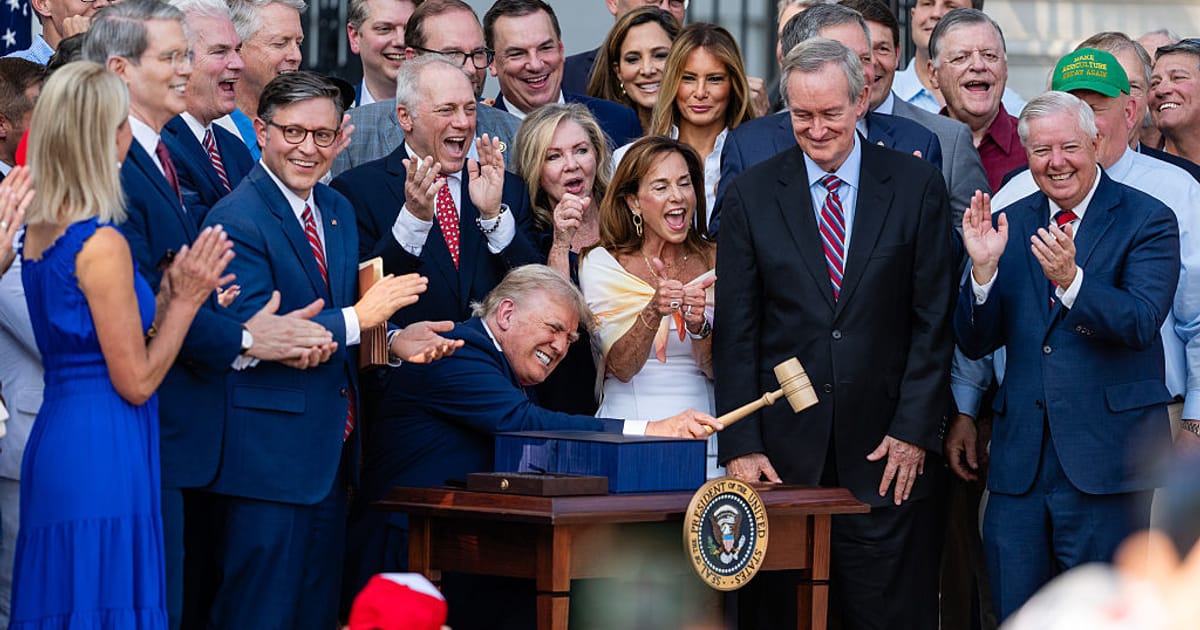
One year on, Trump's clean energy tax credit repeal fails to halt renewable growth
One year after President Donald Trump signed a bill that eliminated clean energy tax credits, the renewable energy sector has proven resilie
 canarymedia.com·5d ago
What the “One Big Beautiful Bill” means for WA energy prices
omny.fm·11mo ago
Trump administration rollback of clean energy tax credits disrupts Philadelphia-area renewable projects
The article reports on how Trump administration policies and congressional Republican efforts are rolling back expanded federal clean energy
 spotlightpa.org·12d ago
GOP Bill Adds Surprise Tax That Could Cripple Wind and Solar Power
nytimes.com·1y ago

Why New York is rolling back its climate goals amid concerns
 qz.com·15d ago
Comments
Sign in to join the conversation.
No comments yet. Be the first.