
























When the killing of journalists disrupts nothing: a conversation with safety expert Elena Cosentino
By
[email protected]
1mo agoen
Source
Reuters InstituteWhen the killing of journalists disrupts nothing: a conversation with safety expert Elena Cosentinoox.ac.ukThe International News Safety Institute’s director on the new normal for journalists in conflict zones. In 2025, journalists were killed in such numbers, and with such frequency, that the violence no longer altered the behavior of states, militaries, or media institutions. Killing the Messenger 2025 , a report published by the International News Safety Institute (INSI), documents a year in which the deaths of reporters produced neither accountability nor restraint. Despite international legal protections, those responsible faced near-total impunity . In its starkest conclusion, the report finds that the killings “disrupted nothing,” failing to change military conduct, diplomatic relations, or media practice. At least 168 journalists and media workers died while doing their jobs last year, according to the report, many of them deliberately targeted. Most were local reporters, often working without insurance, institutional backing, or meaningful protection. Journalists were killed across conflicts and political crises from Sudan to Ukraine , Mexico , and Iran . Nowhere was that toll higher than in Palestine, where INSI recorded 68 journalist deaths. When measured against the territory’s size, population, and the duration of the war, the report found a level of loss that exceeded every comparable modern conflict, forming a “mountain of journalist killings.” That normalisation of violence is a central concern of INSI’s Annual Report 2025 , which argues that the world crossed a threshold not because risks suddenly intensified, but because they began to register with “less surprise, less outrage, less urgency.” In that indifference, the report suggests, journalism itself has been quietly reshaped. Newsroom safety planning, once confined to distant war zones, has become inseparable from the practice of reporting anywhere. Founded more than two decades ago by a small group of news outlets after a series of devastating losses, INSI is not an advocacy group but a safety collective of over 50 leading news organisations , built on the premise that competition stops where survival begins. Through confidential coordination, shared intelligence, and its annual documentation of journalist deaths, the institute has become one of the profession’s few mechanisms for collective self-defence. As Elena Cosentino , INSI’s director, writes in the annual report, protecting journalists is no longer a side project of journalism. “It is the condition for its survival.” In this Q&A, Cosentino discusses how newsroom safety has been reshaped by drone warfare, online harassment, and near-total impunity for the killing of journalists, and why collective action has become essential to journalism’s survival. The conversation has been lightly edited for clarity and length. Elena Cosentino Q. What specific shifts did you observe last year that pointed to a normalisation of attacks on journalists? A. Gaza is what dramatically changed the equation in the most obvious way. Things have been getting worse for years, but Gaza was the… Read more
You might also wanna read


Yosemite drops 2026 reservation system, sparking gridlock and calls from senators to reinstate it
Yosemite National Park eliminated its visitor reservation system for the 2026 season, a system originally implemented in 2020 to manage reco
 bit.ly·14m ago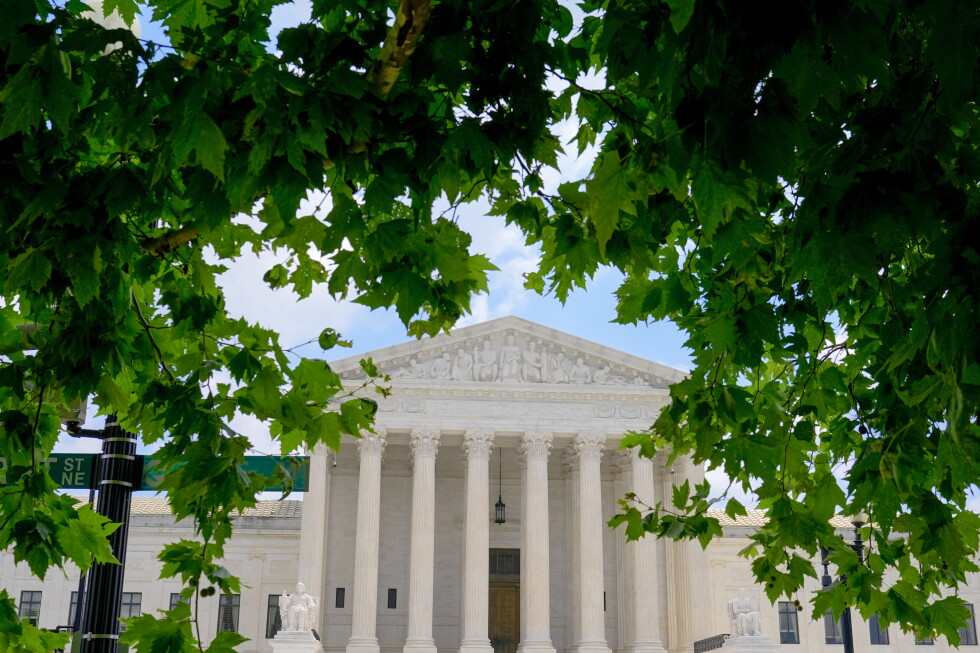
Supreme Court allows Texas age-verification law for app downloads to take effect
The U.S. Supreme Court declined to block Texas from enforcing the Texas App Store Accountability Act, a state law requiring app stores to ve
 apnews.com·15m ago
Opposition to NDAA Section 1217 and Israel Military Aid Over Integration Concerns
The article argues against Section 1217 of the NDAA, which would create an "executive agent" role permanently integrating Israeli weapons te
 resist.bot·23m ago
UK's NCSC unveils 'Cyber Shield' — autonomous AI system to defend government networks
Britain's National Cyber Security Centre (NCSC) has announced Cyber Shield, a sovereign national defense initiative that leverages agentic A
 hendryadrian.com·24m ago
Governor Newsom announces appointments 7.7.2026
DriveClean·1h ago
North Korea's Kim Jong-un Visits Kumsusan Palace on Kim Il-sung's 32nd Death Anniversary
Seoul Economic Daily·1h ago
Comments
Sign in to join the conversation.
No comments yet. Be the first.