
























An analysis of C++ compiler devirtualization optimization capabilities and corner cases
Someone recently asked me about devirtualization optimizations: when do they happen? when can we rely on devirtualization? do different compilers do devirtualization differently? As usual, this led…
Read the full articleYou might also wanna read
Silent foe or quiet ally: Brief guide to alignment in C++. Part 3 -- Elizaveta Zhegalova
We continue our deep dive into memory mechanics. If you are just joining us, I recommend reviewing the foundations first. The first part cov

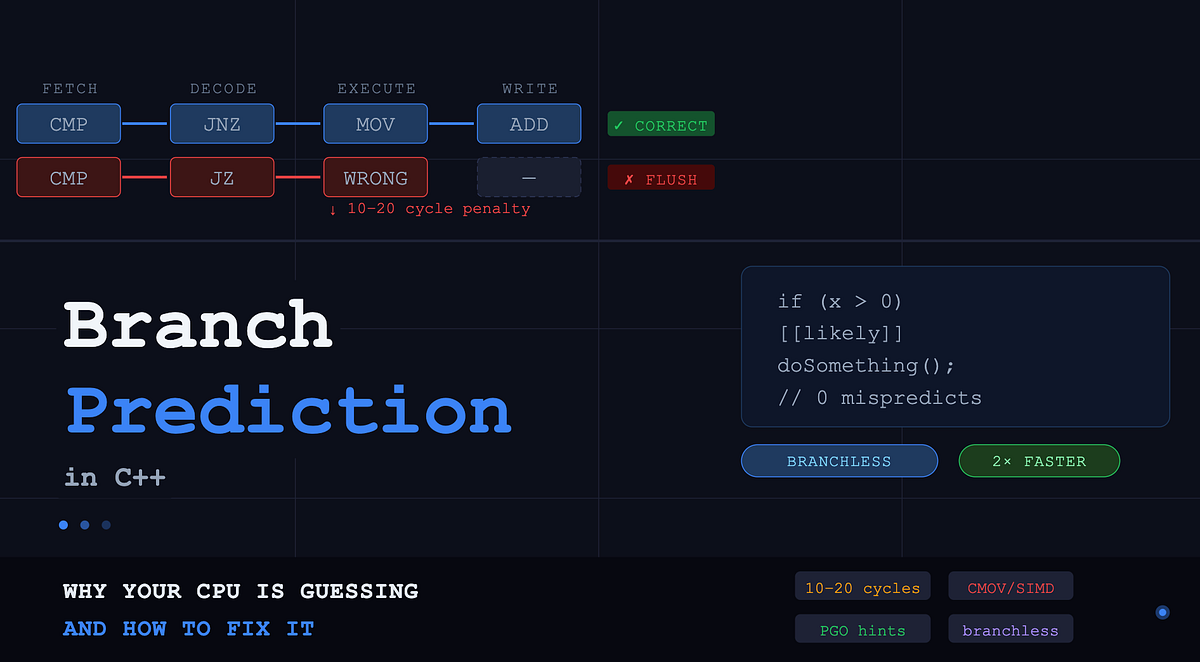
Understanding CPU Branch Prediction and Branchless Programming in C++
Stop letting CPU mispredictions slow down your code. This guide covers C++ branch prediction internals, branchless programming patterns, and
 towardsdev.com·24d ago
C++ More C++26 reflection at compile-time -- Andreas Fertig
In today's post, I like touch-up on C++26's static reflection. In case you haven't seen, I wrote a first post C++26 reflection at compile-ti
Evolving a Translation System with Reflection in C++
A nice example of C++26 reflection moving from theory into something practical. Evolving a Translation System with Reflection in C++ By GitH
Comments
Sign in to join the conversation.
No comments yet. Be the first.