
























Post-menopausal ovaries may shift identity and contribute to inflammation, mouse study suggests
We used to think post-menopausal ovaries sat inert in the body, but evidence from mice suggests they may instead turn into an organ with a role in inflammation
Read the full articleYou might also wanna read


Study suggests ovaries may gain immune function after menopause, challenging long-held beliefs
Mouse and human data suggest ovaries develop a new function after reproductive duties end
 science.org·14d ago
Daily briefing: Ovaries start a second job after menopause
Nature, Published online: 26 June 2026; doi:10.1038/d41586-026-02065-8 The organs might begin a role in the immune system after egg producti

Ovarian aging as a systemic regulator of female healthspan: A call for paradigm shift in geroscience
Classifying ovaries solely as reproductive organs has obscured their role as systemic regulators of female physiology. This Perspective disc
 plos.io·1mo ago
Study links post-menopause memory decline to loss of estrogen production in brain tissue
A largely overlooked space between cells in women’s brains may hold the key to understanding memory loss tied to estrogen decline after meno
 news.northwestern.edu·1mo ago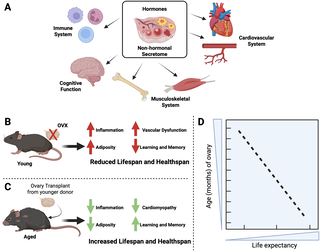
Ovarian biology as a blueprint for rejuvenation: Exploring germline immortality and somatic longevity
Oocytes give rise to embryos that begin life with restored developmental potential and youthful molecular organisation. This Essay reframes
plos.io·1mo agoWhy Women's Health Changes After Menopause and the Screenings You Need
Menopause marks the end of reproductive years, but it also marks the beginning of a new phase of health that can last 30 years or more. Chan
Comments
Sign in to join the conversation.
No comments yet. Be the first.