
























UX Hierarchy in 2026: How AI Overlays and Spatial Computing Are Replacing Static Scan Patterns
By
Noah Davis
Summary
The article discusses how web design scanning patterns have evolved in 2026, moving beyond the traditional F-pattern and Z-pattern eye-tracking models. With the rise of agentic interfaces, spatial computing, and AI overlays, users now "sift" content rather than passively scan it. Interfaces have become "liquid glass" that responds to gaze in real-time, fundamentally changing how designers must approach layout and information hierarchy. The static scan patterns of the early 2020s are obsolete as users have become scanner-interactors who expect adaptive, responsive interfaces.
Source

 Webdesigner DepotUX Hierarchy in 2026: How AI Overlays and Spatial Computing Are Replacing Static Scan Patternswebdesignerdepot.com
Key quotes
· 3 pulledWe no longer design for a viewer; we design for a scanner-interactor who expects the interface to meet them halfway.
The F-pattern is officially dead: in 2026, users don't just read your page—they 'sift' it through AI overlays and interact with 'liquid glass' interfaces that respond to their gaze in real-time.
For decades, designers relied on the reliable F-pattern and Z-pattern, which were essentially static maps of where eyes fell on a fixed screen.
You might also wanna read

The Open Web Is Being Replaced by Centralized AI Interfaces
The article argues that the open, decentralized Web as we know it—where users search, browse, publish, and discover freely—is being graduall
minid.net·19d ago

Agentic AI positioned as next major computing paradigm shift after GUI, browser, and smartphone
The article argues that agentic AI represents the next major technological paradigm shift, comparable in impact to the graphical user interf
 time.com·29d ago
The Shift from Web Pages to AI Components in Information Access
The article argues that traditional web pages are becoming obsolete as AI-powered components and applications provide more immediate, person
Google I/O 2026 marks shift from search tool to AI decision agent, argues marketing analyst
Veronika Höller's blog post argues that Google's I/O 2026 announcements represent a fundamental shift in how search works — transforming it
 ppc.land·1mo ago
Google I/O 2026 marks shift from search tool to AI decision agent, argues marketing analyst
Veronika Höller's blog post argues that Google's I/O 2026 announcements represent a fundamental shift in how search works — transforming it
ppc.land·1mo ago
Designing for AI Agents and Humans: Rethinking the Concept of "User" in Interface Design
The article explores how AI agents are increasingly interacting with digital interfaces alongside human users, challenging traditional UX de
 nngroup.com·21d ago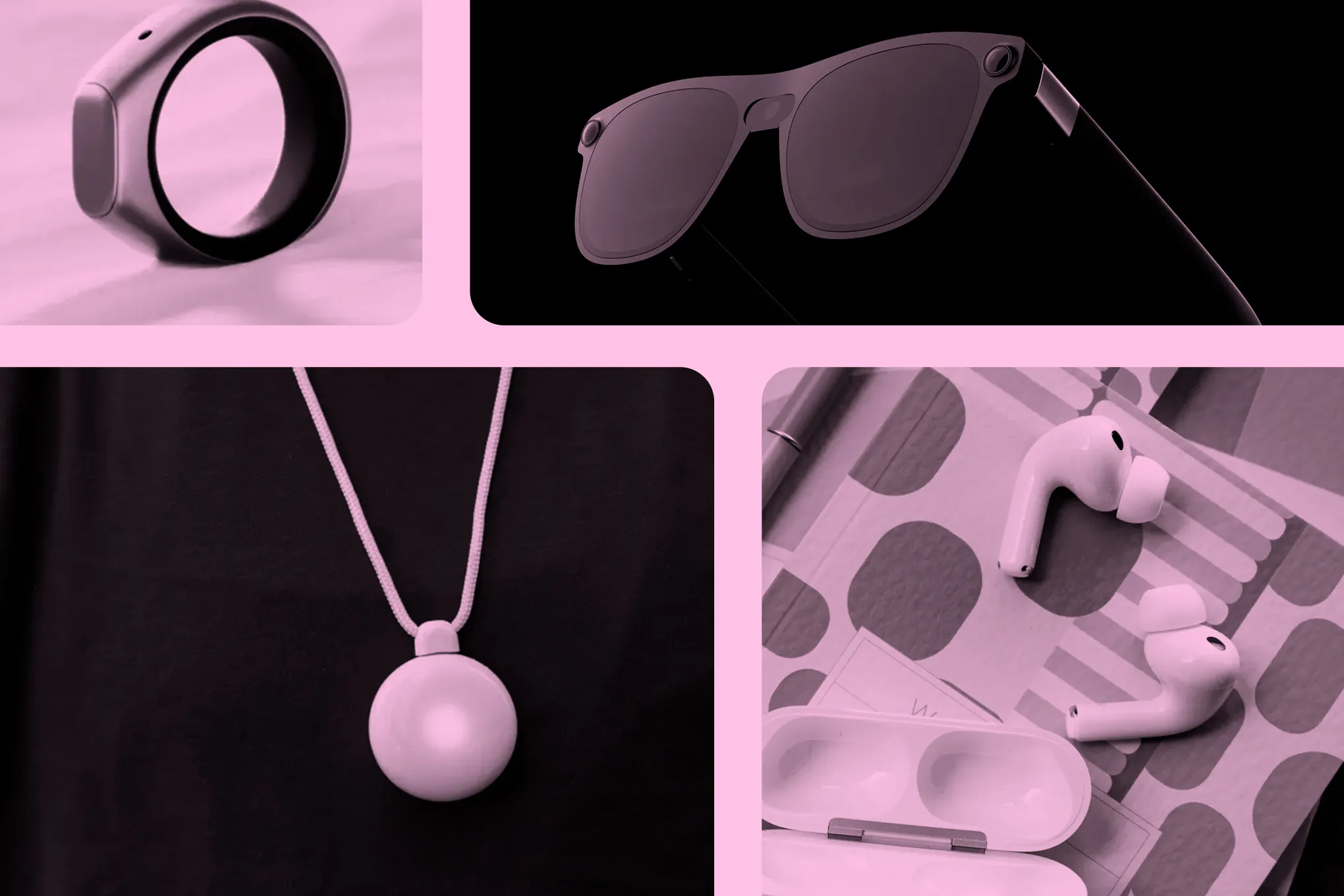
Wearable Technology's 2025 Shift: From Health Tracking to AI Integration
The article discusses how 2025 marked a significant shift in wearable technology from primarily health and fitness applications to becoming
 The Verge·6mo ago
Comments
Sign in to join the conversation.
No comments yet. Be the first.