
























PostgreSQL Double Buffering: Why OS RAM and Buffer Cache Compete and How the 25% Rule Helps
Learn how PostgreSQL double buffering wastes RAM, increases latency, and hurts query performance — plus the 25% shared_buffers rule to fix it.
Read the full articleYou might also wanna read


Protecting PostgreSQL from the OOM Killer: A Guide to Strict Memory Overcommit
In this blog post, we will explain how strict memory overcommit protects your database from catastrophic OOM (out of memory) kills. We will
 ubicloud.com·13d ago
PostgreSQL work_mem Configuration Pitfalls: How Low Memory Settings Can Cause Catastrophic Outages
My friend Henrietta Dombrovskaya pinged me on Telegram. Her production cluster had just been killed by the OOM killer after eating 2 TB of R
mydbanotebook.org·4mo ago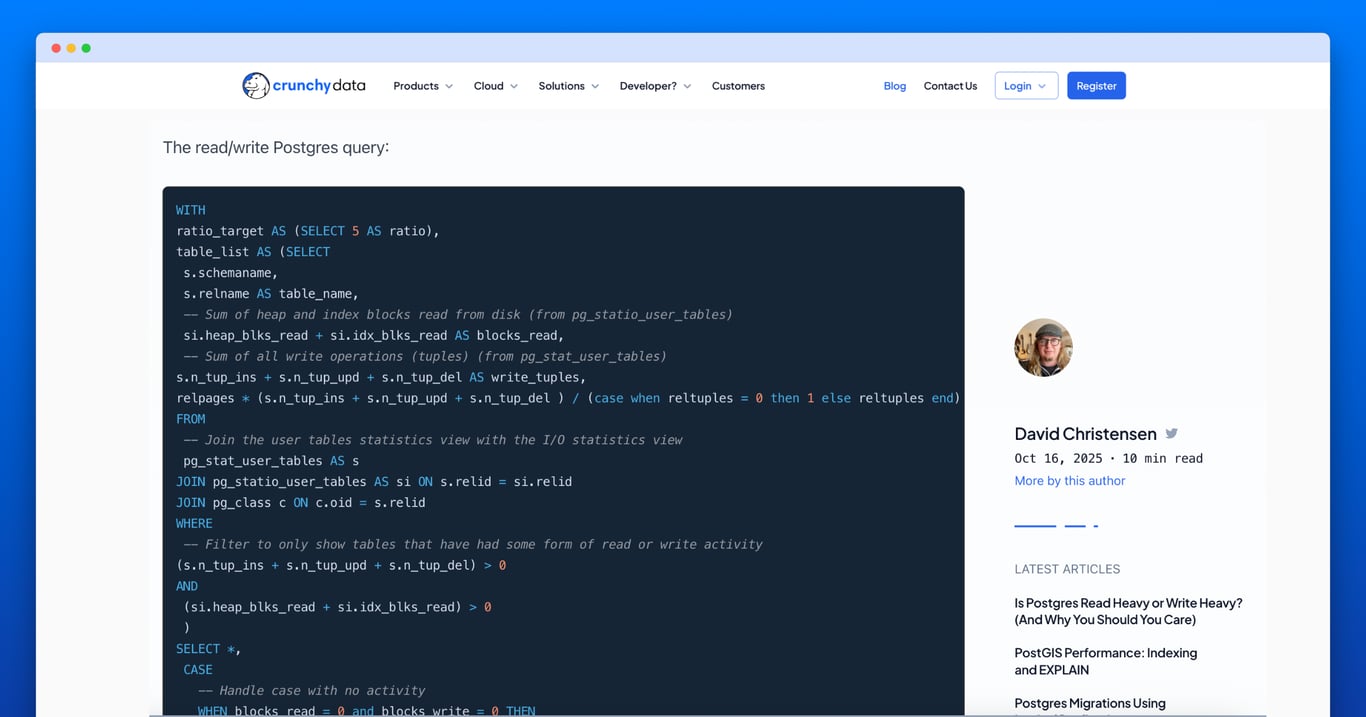
Analyzing PostgreSQL Database Workloads: Read-Heavy vs Write-Heavy Patterns and Optimization Strategies
A query to find out if Postgres is read heavy or write heavy and tips for optimizing Postgres for both read and write workloads.
PostgreSQL 19 to switch default TOAST compression to LZ4 for faster performance
This week's database news covers three notable developments across the SQLite and PostgreSQL ecosystems. SQLite developers are debating the

Benchmarking Redis vs PostgreSQL for caching: An experimental comparison
There are books & many articles online, like this one arguing for using Postgres for everything. I thought I’d take a look at one use case -
 dizzy.zone·9mo ago
Improving Postgres Write Performance: Challenges with Replication
Zero-ETL search and analytics for Postgres
paradedb.com·1y ago
Comments
Sign in to join the conversation.
No comments yet. Be the first.