
























Implementing Adaptive Bitrate Streaming With Dash.js in React
HTML `` is the de facto element we turn to for embedding video content, but it comes with constraints. For example, it downloads the video file linearly over HTTP, which leads to performance hiccups…
Read the full articleYou might also wanna read
How Bitrate, Resolution, and Codecs Shape Your Video Streaming Quality
A new explainer on media streaming clarifies the distinct roles of resolution and bitrate in determining video quality, noting that a high-r


Video Ingest and Streaming on AWS: A Serverless Pipeline from Upload to HLS
Build an event-driven pipeline that turns a raw video upload into an adaptive HLS stream — with subtitles and thumbnails included. What Does

Reimagining the Web Streams API: A Proposal for Modern JavaScript Streaming
The Web streams API has become ubiquitous in JavaScript runtimes but was designed for a different era. Here's what a modern streaming API co
 blog.cloudflare.com·4mo ago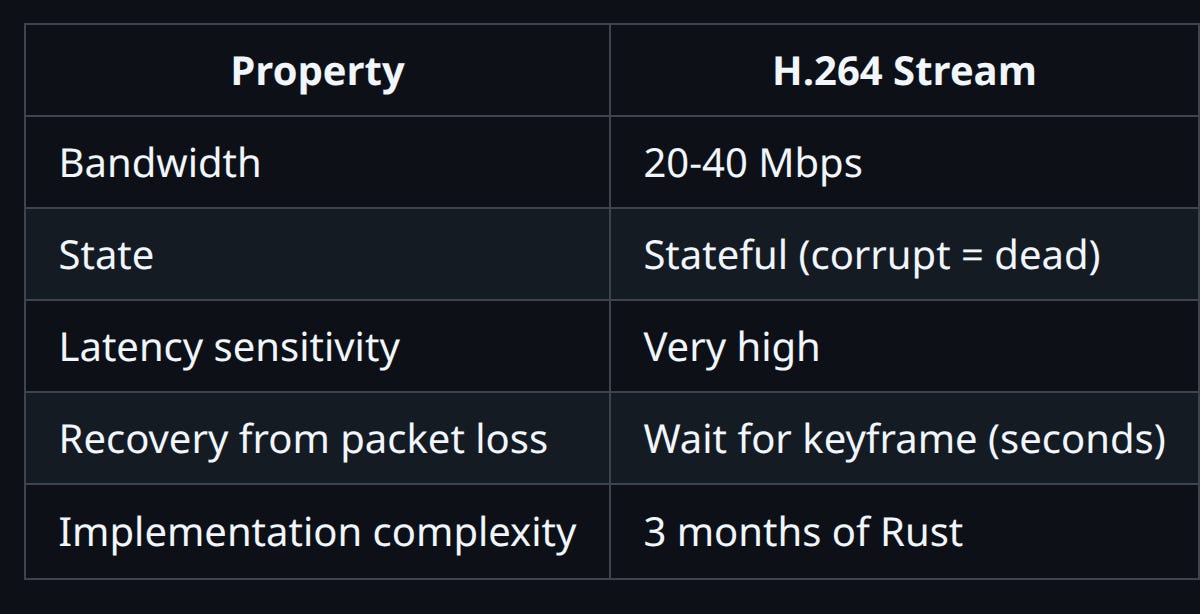
How JPEG Screenshots and Simple Technology Outperformed Our Advanced H.264 Streaming Pipeline
Or: How JPEG Screenshots Defeated Our Beautiful H.264 WebCodecs Pipeline
 blog.helix.ml·6mo ago
A New Streaming API for Node v0.10

Exploring YouTube audio streaming in Emacs with ready-player
I've been a happy ready-player user for some time now. I consider the Emacs package fairly feature-complete, for my needs anyway. Well almos
 xenodium.com·24d ago
Comments
Sign in to join the conversation.
No comments yet. Be the first.