
























Triggering the Untriggered: The First Einstein Probe-Detected Gamma-Ray Burst 240219A and Its Implications
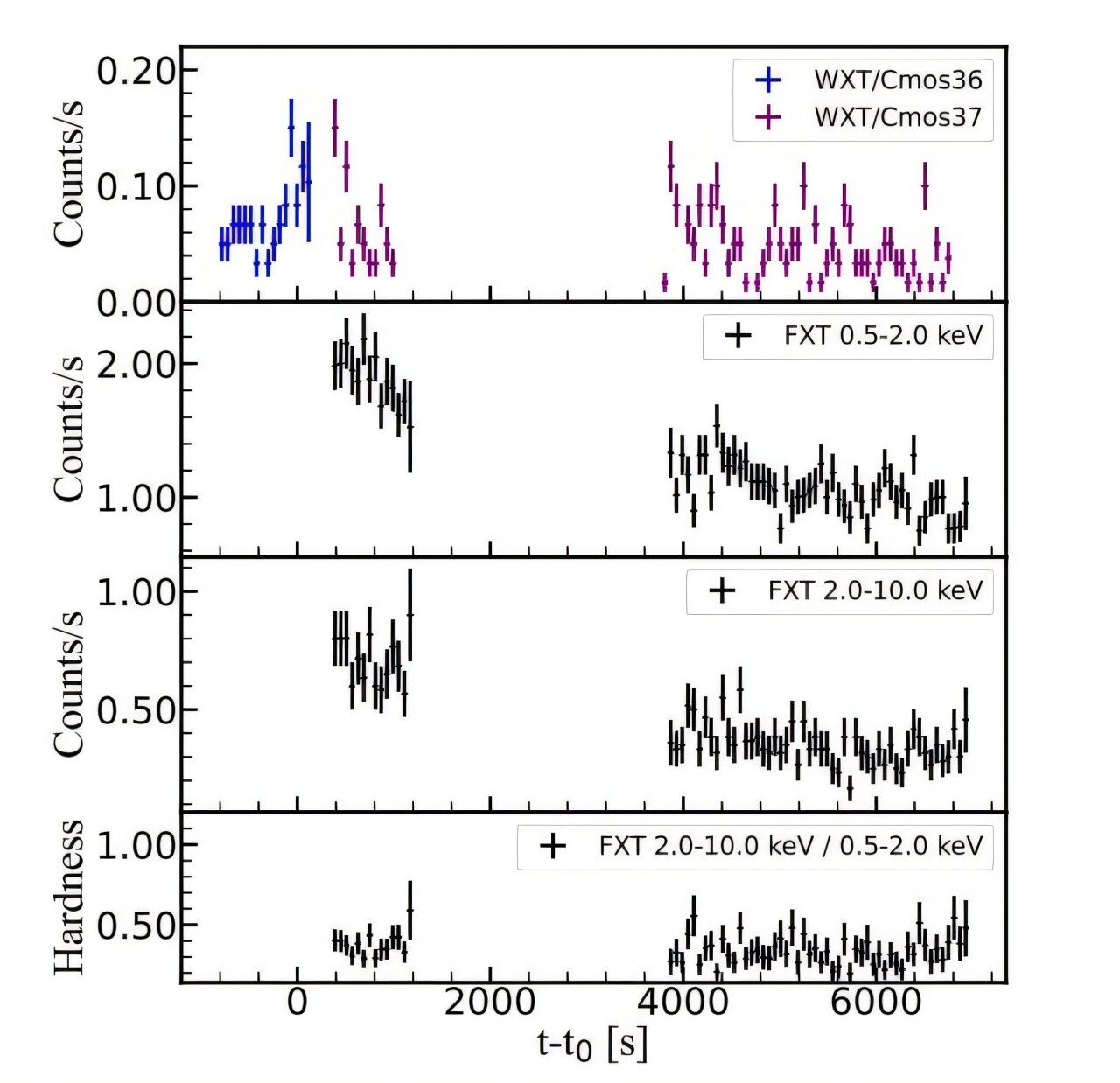
Yi-Han Iris Yin et al 2024 ApJL 975 L27 In February 2024, the Einstein Probe spotted an X-ray flare that was later linked to a gamma-ray burst that had been observed by the Fermi Gamma-ray Burst…
Read the full articleYou might also wanna read

Einstein Probe Detects X-ray Flare from Nearby Star 150 Light Years Away
Using the Einstein Probe (EP), astronomers have detected a new X-ray transient event, which turned out to be an X-ray flare from the star PM
 phys.org·6mo ago
Einstein Probe may have caught a black hole tearing apart a white dwarf for the first time
Astronomers may have witnessed one of the rarest and most dramatic cosmic events ever seen: a long-sought intermediate-mass black hole rippi
Astronomers witness the birth of a magnetar for the first time
A strange "chirping" signal from a distant supernova has revealed the birth of a magnetar, confirming that these incredibly magnetic neutron
Researchers Propose White Dwarf–Black Hole Interactions to Explain Record-Breaking Gamma-Ray Burst GRB 250702B
The gamma-ray burst GRB 250702B displayed several unusual behaviors that researchers are still finding ways to explain.
 AAS Nova·1mo ago
Researchers Propose White Dwarf–Black Hole Interactions to Explain Record-Breaking Gamma-Ray Burst GRB 250702B
The gamma-ray burst GRB 250702B displayed several unusual behaviors that researchers are still finding ways to explain.
aasnova.org·1mo ago
Gamma-Ray Bursts: How Cold War Satellites Accidentally Discovered the Universe's Most Powerful Explosions
The most powerful events in the known universe – gamma-ray bursts (GRBs) – are short-lived outbursts of the highest-energy light. They can e
 go.nasa.gov·14d ago
Gamma-Ray Bursts: How Cold War Satellites Accidentally Discovered the Universe's Most Powerful Explosions
The most powerful events in the known universe – gamma-ray bursts (GRBs) – are short-lived outbursts of the highest-energy light. They can e
go.nasa.gov·14d ago
MIT astronomers detect earliest known flickering quasar from cosmic dawn era
Scientists detected a quasar flickering from the very early universe, a time known as the “cosmic dawn,” just 850 million years after the Bi
 news.mit.edu·1mo ago
Comments
Sign in to join the conversation.
No comments yet. Be the first.