
























Titan's Resource Potential: Hydrocarbons, Water, and In-Situ Utilization for Space Exploration
This article examines the resource availability on Saturn's moon Titan, highlighting its unique environment as the only moon with a substantial atmosphere (N2 and CH4) and abundant surface hydrocarbons (CxHy) in liquid and solid forms, along with accessible oxygen from crustal water. It discusses how these resources could be used for food, fuel, and building materials to support long-duration space missions or habitats, while noting the challenge of depleted heavy elements and metals at the surface. The article compares Titan's in-situ resource utilization (ISRU) potential with the Moon and Mars, and calls for future work to further characterize Titan's resources and develop utilization technologies.
Key quotes
This combination of abundant reduced carbon, along with available nitrogen and oxygen makes Titan an enticing world rich in resources that can be readily used to make food, fuel, building materials and more - potentially mission-enabling for long-duration voyages or habitats in the outer solar system.
Titan, as an icy moon, is likely to be depleted at the surface in heavier elements including metals, which must therefore be found and brought from elsewhere.
We compare and contrast the resource availability and potential in-situ utilization (ISRU) with other destinations suggested for human habitation such as the Moon and Mars.
From the article
You might also wanna read

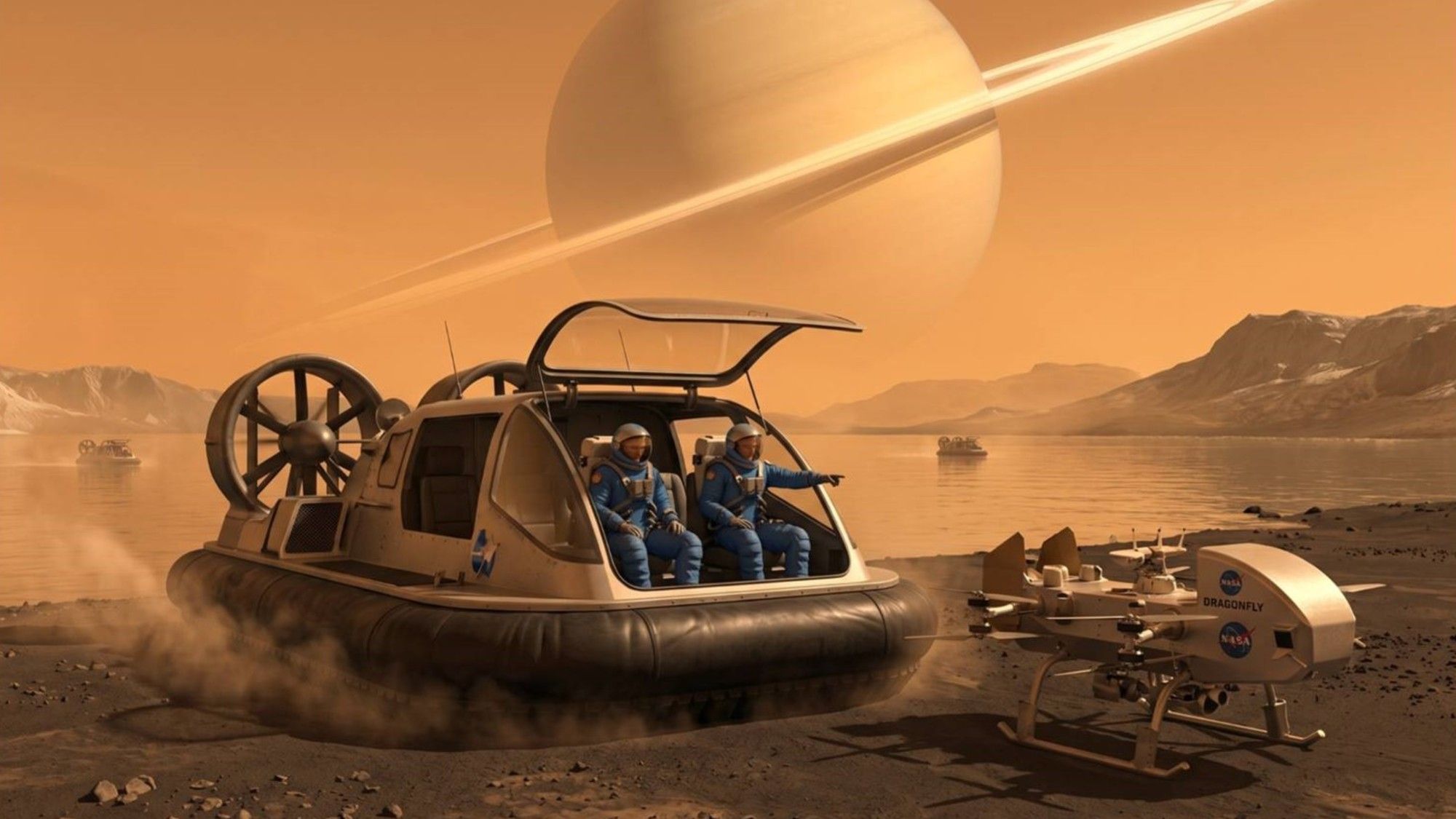
Scientists explore Titan as a viable destination for crewed human space exploration after Mars
Scientists and researchers gathered at the "Humans to Titan Summit 2026" in Boulder, Colorado to explore the feasibility of sending a crewed
 space.com·8d ago
Scientists explore Titan as a viable destination for crewed human space exploration after Mars
Scientists and researchers gathered at the "Humans to Titan Summit 2026" in Boulder, Colorado to explore the feasibility of sending a crewed
Space·8d agoScientists explore Titan as a viable destination for crewed human space exploration after Mars
Scientists and researchers gathered at the "Humans to Titan Summit 2026" in Boulder, Colorado to explore the feasibility of sending a crewed
space.com·8d ago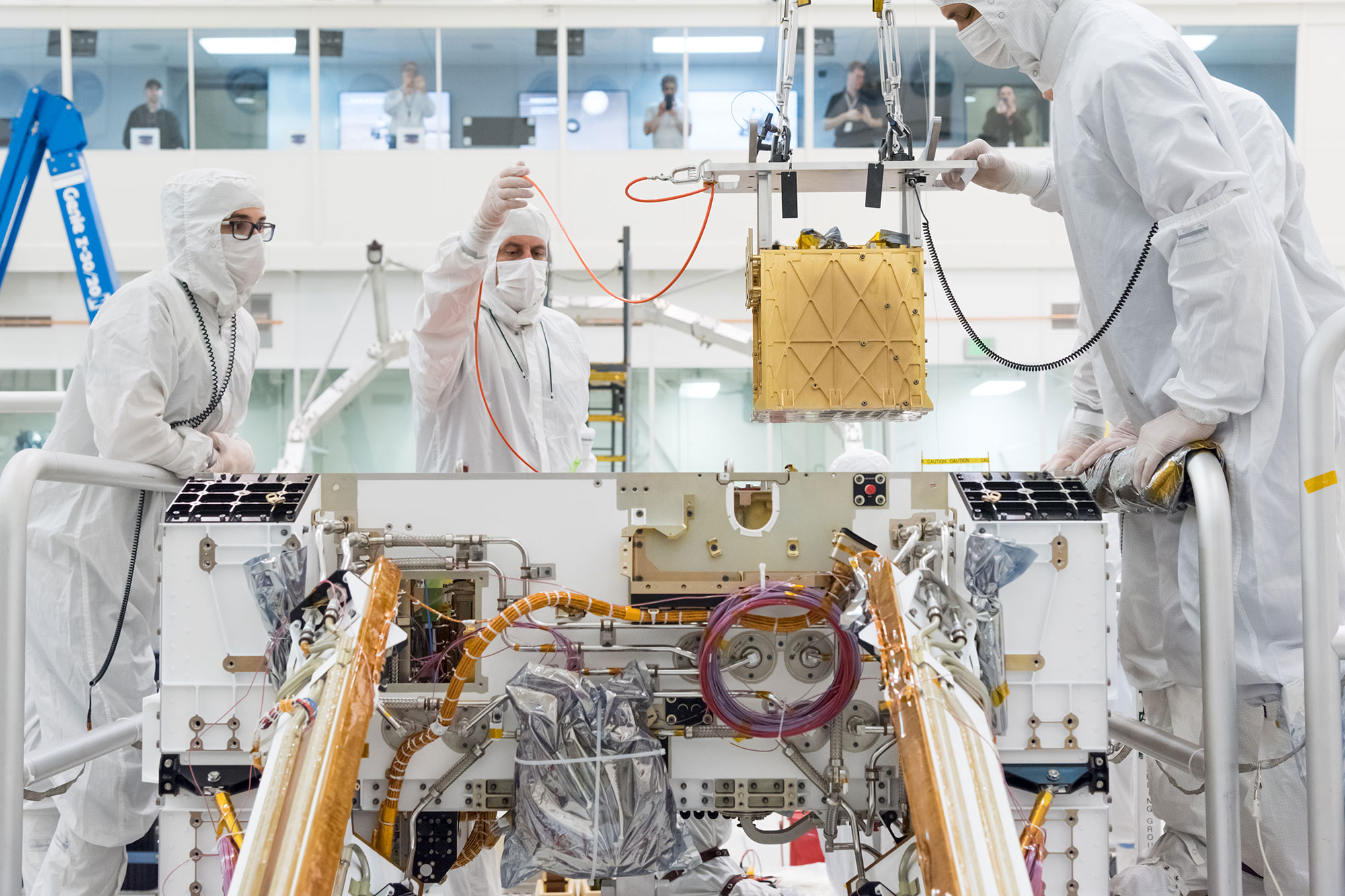
NASA's MOXIE Experiment Successfully Produces Oxygen from Mars Atmosphere
NASA's MOXIE experiment, about the size of a car battery, successfully demonstrates the ability to produce oxygen from Mars' carbon dioxide-
 nasa.gov·1mo ago
Study finds no evidence of water plumes on Jupiter's moon Europa
New analysis of nearly a decade of Hubble Space Telescope observations of Jupiter's moon Europa shows no strong evidence for water plumes th
 sciencenews.org·1mo ago
Scientists adapt ecological analysis methods to detect potential life on icy moons like Enceladus and Europa
Scientists are using ecological methods to study icy moons like Saturn's Enceladus and Jupiter's Europa, which likely have subsurface oceans
 theconversation.com·1mo ago
Researchers explore plasma technology for lunar agriculture
Researchers from Tohoku University and JAXA are exploring the use of plasma technology to enable lunar agriculture. Since the Moon's soil la
 leonarddavid.com·7d ago
Martian Organic Geochemistry: Contextualizing Recent Organic Molecule Discoveries in the Search for Life's Origins
This review article examines recent findings of organic molecules in martian meteorites and from Mars rover missions, contextualizing them w
 astrobiology.com·18d ago
Comments
Sign in to join the conversation.
No comments yet. Be the first.