
























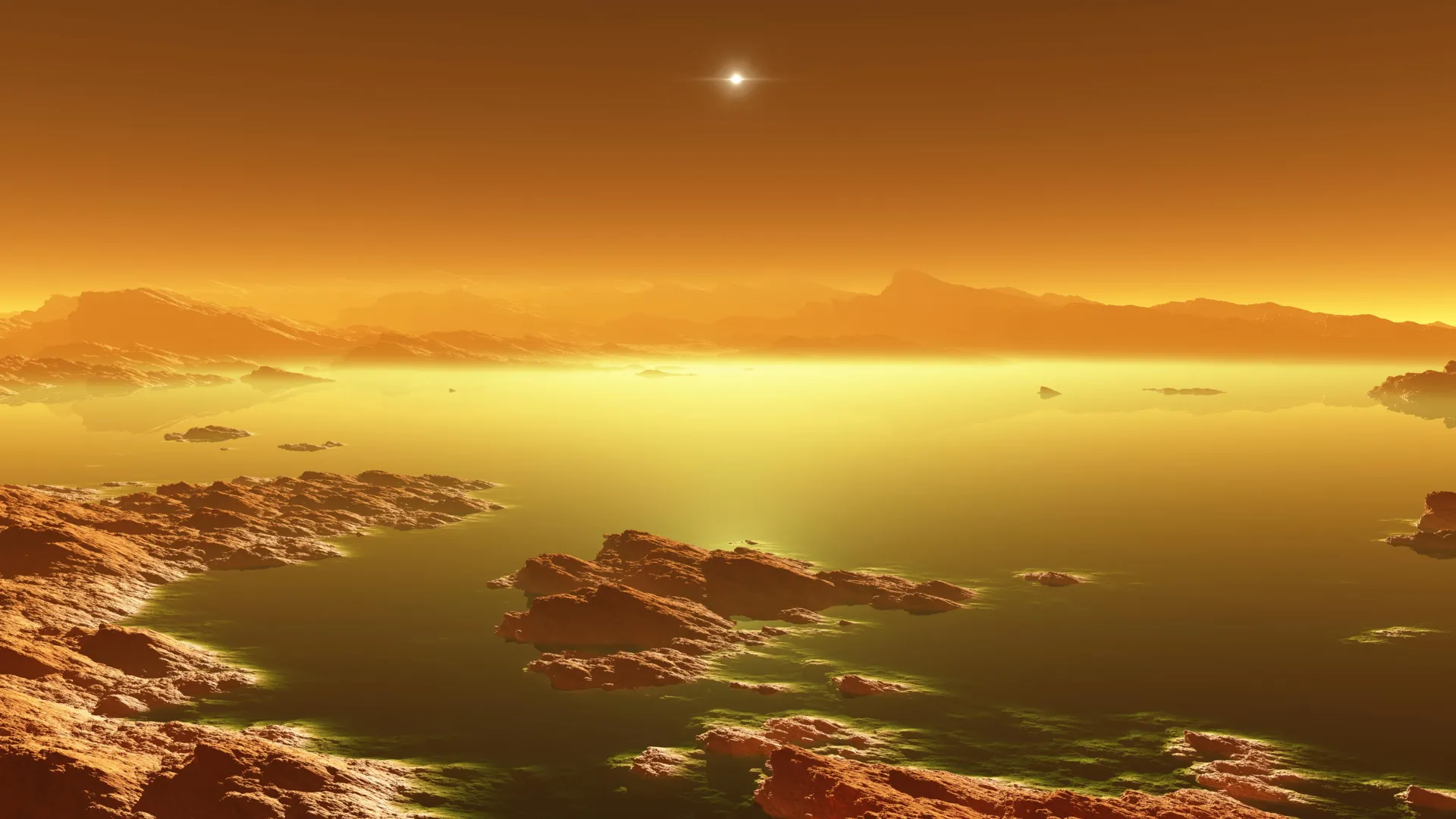
Titan has rivers, rainfall, lakes and a slow hydrological cycle exactly like Earth’s, except that every drop of it is liquid methane and the rock the rivers run over is water ice
Saturn's moon Titan is the only other world with rivers, rain and seas, built from liquid methane running over water-ice bedrock at minus 179 degrees Celsius. The post Titan has rivers, rainfall…
Read the full articleYou might also wanna read

NASA research suggests Titan's hydrocarbon lakes could naturally form primitive cell-like structures
Saturn’s moon Titan may be more alive with possibilities than we thought. New NASA research suggests that in Titan’s freezing methane and et

Titan's Resource Potential: Hydrocarbons, Water, and In-Situ Utilization for Space Exploration
Saturn's moon Titan is a unique environment in the solar system. It is the only moon with an atmosphere, composed primarily of the gases N2
 arxiv.org·3d ago
Ramparts Around Lakes on Titan Impact Winds and Methane Evaporation
Enora Moisan et al 2025 Planet. Sci. J. 6 220 The presence of hills around lakes on Titan decreases the rate of methane evaporation from the
How can there be ice on the Moon?
“I have a question about ice on the Moon. How is this possible?” — Olaf, age 9, Hillsborough, North Carolina We’re lucky to live on a water
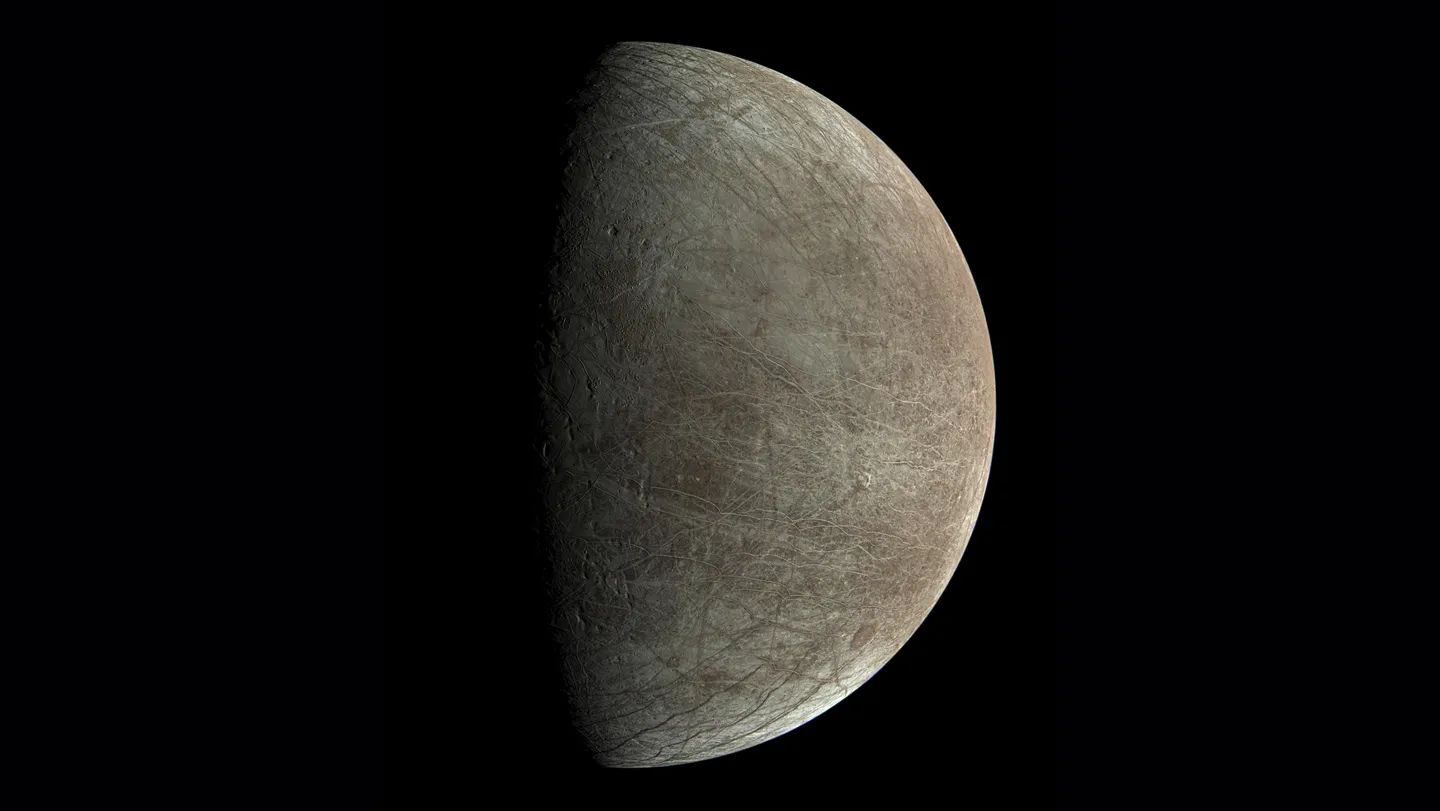
Study finds no evidence of water plumes on Jupiter's moon Europa
The debate could reopen in 2030 when NASA’s Europa Clipper spacecraft gets the closest view of the icy moon’s surface.
 sciencenews.org·1mo ago
Mars once had rivers, lakes, and possibly oceans, and it lost all of them for one reason — its molten core cooled, its magnetic field died, and the solar wind stripped the planet’s air into space.
Mars wasn't always frozen and barren. Billions of years ago it had flowing rivers, standing lakes, and possibly oceans. It lost all of it be
Comments
Sign in to join the conversation.
No comments yet. Be the first.