





















Global fungal networks span 110 quadrillion kilometers, researchers find
By
Derek Harrison

Toasted golden, schmeared with insight. Top of the rack.
Summary
Researchers have quantified the global length and mass of arbuscular mycorrhizal fungal networks for the first time. These underground fungal webs span 110 quadrillion kilometers globally—enough to stretch nearly a billion times the distance from Earth to the sun. The networks form symbiotic relationships with plant roots, supplying nutrients like phosphorus and nitrogen in exchange for carbon, sequestering 1 billion tons of carbon annually underground. The study, published in Science, also mapped the ecosystems where these fungal networks are densest.
Key quotes
· 2 pulledHidden underground around the world lie 110 quadrillion kilometers of arbuscular mycorrhizal fungal networks—webs of ultra-thin threads that, if connected in a single line, would stretch almost a billion times the distance between the Earth and the sun.
These fungal communities form intimate relationships with the roots of plants, which they provide with nutrients like phosphorus and nitrogen in exchange for carbon, 1 billion tons of which the networks sequester underground annually.
You might also wanna read


Global quantification of arbuscular mycorrhizal fungal network density and biomass
This article presents a scientific study on the global density and biomass of arbuscular mycorrhizal fungal (AMF) networks. AMF form symbiot
 science.org·1d ago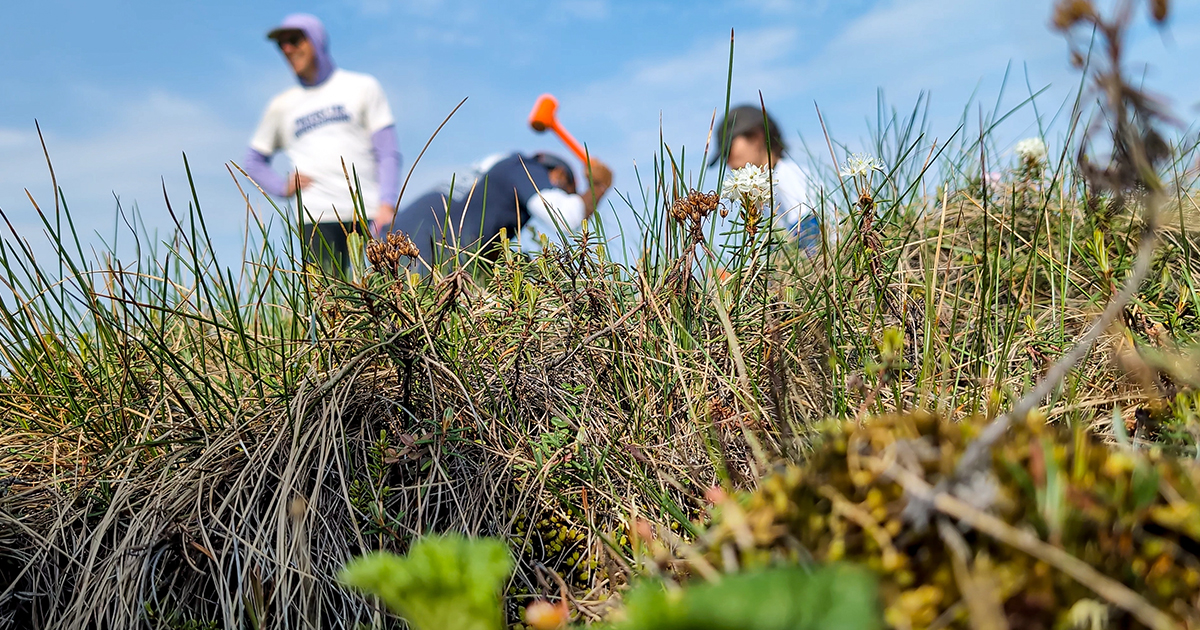
Arctic Research Expedition Studies Underground Fungal Networks and Carbon Storage
A team of biologists led by Michael Van Nuland embarks on an Arctic road trip along Alaska's Dalton Highway to study the critical undergroun
 quantamagazine.org·2mo ago
Fungi Gain Recognition for Their Essential Ecological and Economic Roles
The article highlights the growing recognition of fungi's crucial ecological and economic importance after being historically overlooked. It
 e360.yale.edu·3mo ago
Mushrooms communicate with each other using up to 50 'words', scientist claims

Geothermal Amoeba Sets New Upper Temperature Limit for Eukaryotes at 63°C
Researchers have discovered a novel geothermal amoeba, Incendiamoeba cascadensis, that divides at 63°C (145.4°F), establishing a new record
 biorxiv.org·6mo ago
Chernobyl's Radiation-Eating Fungus Could Help Shield Space Travelers from Cosmic Rays
Scientists discovered a black fungus growing in the Chernobyl nuclear disaster site that appears to feed on radiation. Research shows these
 bbc.com·6mo ago