





















Scientists develop self-protecting molecular ink that prints corrosion-resistant copper electronics
By
Soumya Sagar, special to C&EN

Kettled twice. Extra chewy, extra trustworthy.
Summary
Scientists have developed a molecular ink that can be printed and cured at low temperatures (below 150°C) under ambient air, transforming into highly conductive copper that is also corrosion-resistant. The ink uses smart organic molecules that create a self-protecting armor during the curing process, enabling printed copper electronics that resist decay without requiring additional protective coatings. This breakthrough could significantly impact printed electronics manufacturing by simplifying production and improving durability.
Key quotes
· 2 pulledScientists have synthesized a molecular ink that cures under ambient air below 150 °C and transforms into a highly conductive, corrosion-resistant form of copper.
By enlisting smart organic molecules that weave a self-protecting armor during the cur
You might also wanna read

Innovative Approach Embeds Electronic Components in 3D Printed Objects
3D printers have revolutionized the ability to create physical objects from digital designs, but adding smart features like digital processo
spectrum.ieee.org·11mo ago

Lead-Free Organic-Inorganic Halobismuthate Material Developed for Large Piezoelectric Effect
Researchers have developed a lead-free organic-inorganic halobismuthate material with significant piezoelectric properties, offering a promi
 pubs.acs.org·5mo ago
Oregon State University Researchers Develop Iron Nanomaterial That Selectively Destroys Cancer Cells
Researchers at Oregon State University have developed a novel iron-based nanomaterial that targets and destroys cancer cells from within. Th

Fungal Electronics: Living Electronic Devices Made from Mycelium
Fungal electronics is a new field of living electronic devices made from mycelium (fungal networks) that can change their electrical impedan
 arxiv.org·2mo ago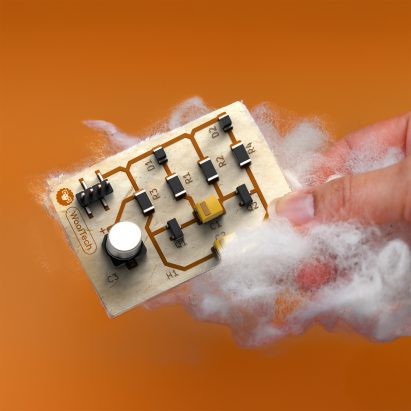
WoolTech: Sustainable Wool-Based Biomaterial Replaces Traditional Electronics Wiring
Designer Hinna Khan has developed WoolTech, a novel biomaterial made from wool that replaces traditional wiring, plastic, and circuit boards
 Dezeen·10mo ago
UC Santa Barbara researchers develop liquid battery material that stores solar energy as heat for years
Researchers at UC Santa Barbara, led by Associate Professor Grace Han, have developed a novel material that absorbs sunlight, stores the ene