
























Solid-state air conditioners emerge as promising alternative, but efficiency questions remain
A wave of unconventional coolers are making their way to the air-conditioning market—and aiming to dial down its emissions.
Read the full articleYou might also wanna read

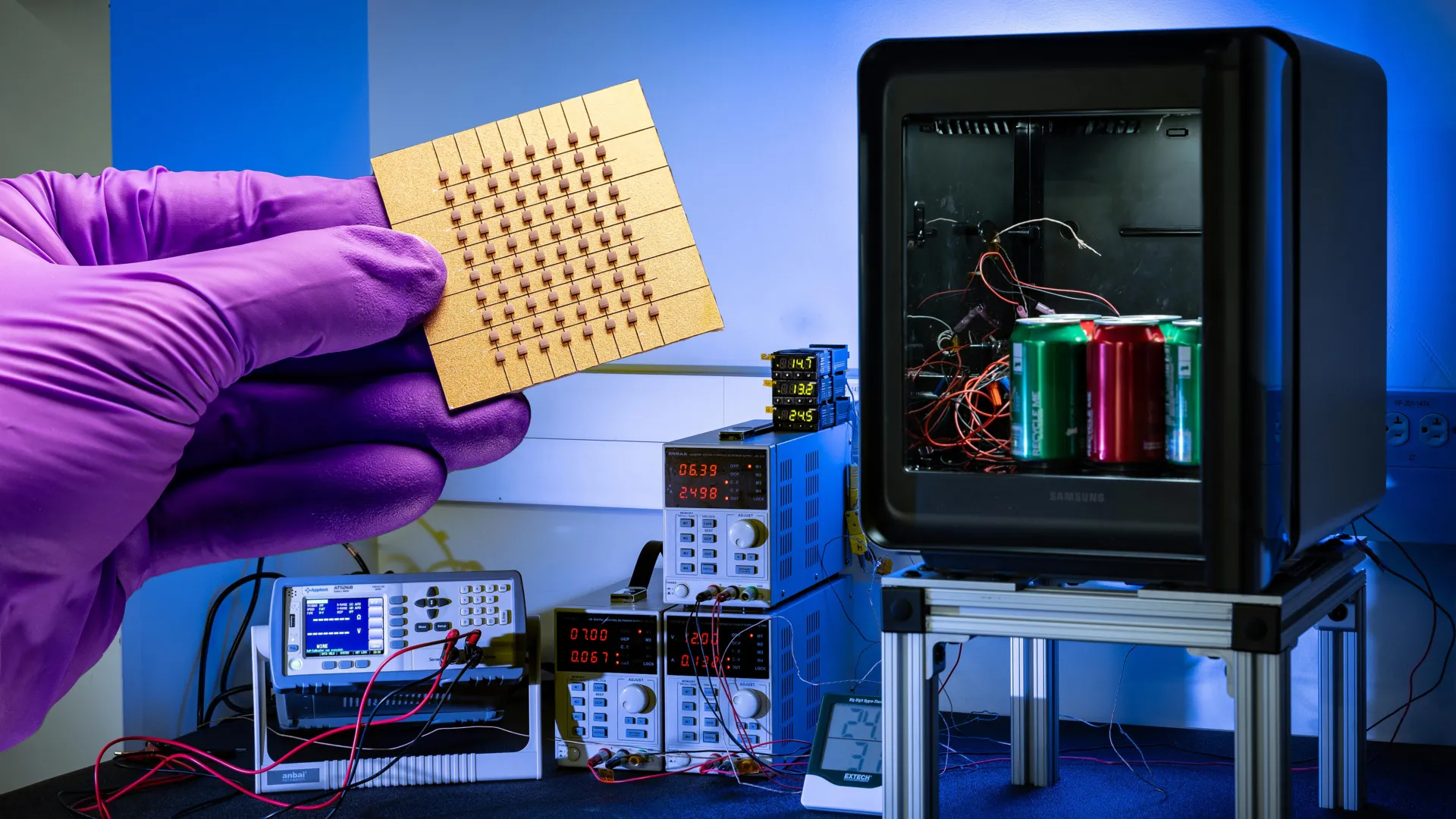
Johns Hopkins Researchers Develop Thermoelectric Cooling Technology with Double Efficiency
CHESS thin-film materials nearly double refrigeration efficiency compared to traditional methods. Scalable and versatile, they promise appli

AI-Designed Thermal Meta-Emitters Offer Natural Cooling for Buildings and Spacecraft
Researchers have developed advanced materials capable of naturally cooling buildings, significantly reducing energy consumption and lowering
 universal-sci.com·16d ago
Evaporative Cooling in Data Centers: Why the Industry Hesitates to Move On
Evaporative cooling still dominates data centers, but with rising liquid cooling adoption, is the industry ready to embrace more sustainable

Samsung and Johns Hopkins Develop Refrigerant-Free Peltier Cooling Technology
On June 28, Samsung Electronics, together with the Johns Hopkins University Applied Physics Laboratory (APL), published a paper on next-gene
news.samsung.com·11mo ago
The overlooked wiring problem in the clean-energy transition
As more households add solar panels, batteries and heat pumps, researchers at Purdue found that running them all on DC power — not the AC cu

SSDs are hot: Why AI demands micro-cooling
As AI workloads evolve, solid-state drive (SSD) designs are bumping against a critical limitation: heat. The post SSDs are hot: Why AI deman
Comments
Sign in to join the conversation.
No comments yet. Be the first.