
























The Unintended Effects of Interest Rate Caps: Credit Rationing for Risky Borrowers
1mo ago
Source
 libertystreeteconomics.newyorkfed.orgThe Unintended Effects of Interest Rate Caps: Credit Rationing for Risky Borrowersnewyorkfed.org
In imperial China, 3 percent was the maximum legal monthly loan rate; charging more was punishable by 40 to 100 blows with the “ light cane .” (Rockoff 2003 ) Centuries later, many U.S. states are imposing the same cap (without corporal penalties) on alternative credit providers, such as payday, installment, and auto-title lenders, with the goal of lowering credit costs and delinquency for the high-risk borrowers that rely on these funding sources. A concern, however, is that lenders will simply refuse to lend to these borrowers at lower interest rates. Our recent Staff Report studies how interest rate caps have played out in several states that recently adopted them. Using household-level data from a major credit bureau, we find that loan balances for the riskiest borrowers declined substantially relative to counterparts in states without caps. Despite taking on less debt, these borrowers did not experience an improvement in delinquencies.
You might also wanna read


Education Department cuts student loan interest by 1 point for some borrowers as delinquencies rise
The Education Department announced a temporary 1 percentage point interest rate cut for some federal student loan borrowers who use automati
 cbsnews.com·15d ago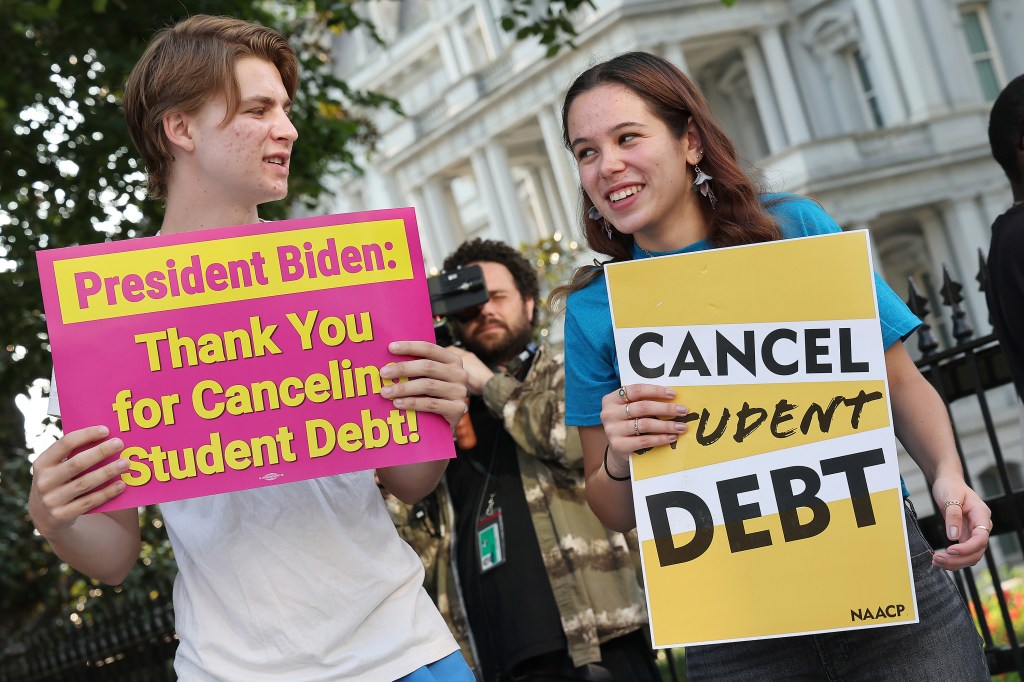
Research suggests pandemic student loan forgiveness may have worsened borrowers' financial outcomes
A new research paper argues that pandemic-era student loan forgiveness and payment moratoriums may have paradoxically made borrowers worse o
 bostonherald.com·6d ago
Education Department to offer larger auto-pay interest rate discount for student loan borrowers starting July 1
The U.S. Department of Education announced a temporary increase in the auto-pay interest rate discount for federal student loan borrowers, e
 n.pr·16d ago
Untitled
pbs.org·10d ago

Private credit faces painful reckoning as cheap capital era ends
The article argues that the private-credit market, shaped by a decade of low interest rates and abundant liquidity, is now facing a painful
 econ.st·1mo ago
Private credit faces painful reckoning as cheap capital era ends
The article argues that the private-credit market, shaped by a decade of low interest rates and abundant liquidity, is now facing a painful
econ.st·28d ago
Comments
Sign in to join the conversation.
No comments yet. Be the first.