
























The UI/UX Security Paradox: How Simpler Interfaces Can Strengthen Cyber Defenses
By
HackMoN Ai
Summary
This article explores the "UI/UX Security Paradox" — the idea that reducing friction and cognitive load in user interfaces actually strengthens cybersecurity. It argues that traditional security approaches that add complexity (more clicks, more authentication steps) lead to user fatigue, errors, and workaround attempts, ultimately weakening defenses. A study of registration form design shows that cleaner, intuitive interfaces with fewer interactions can improve conversion rates by up to 50% while simultaneously creating more secure systems by minimizing user mistakes and security bypass behaviors.
Source
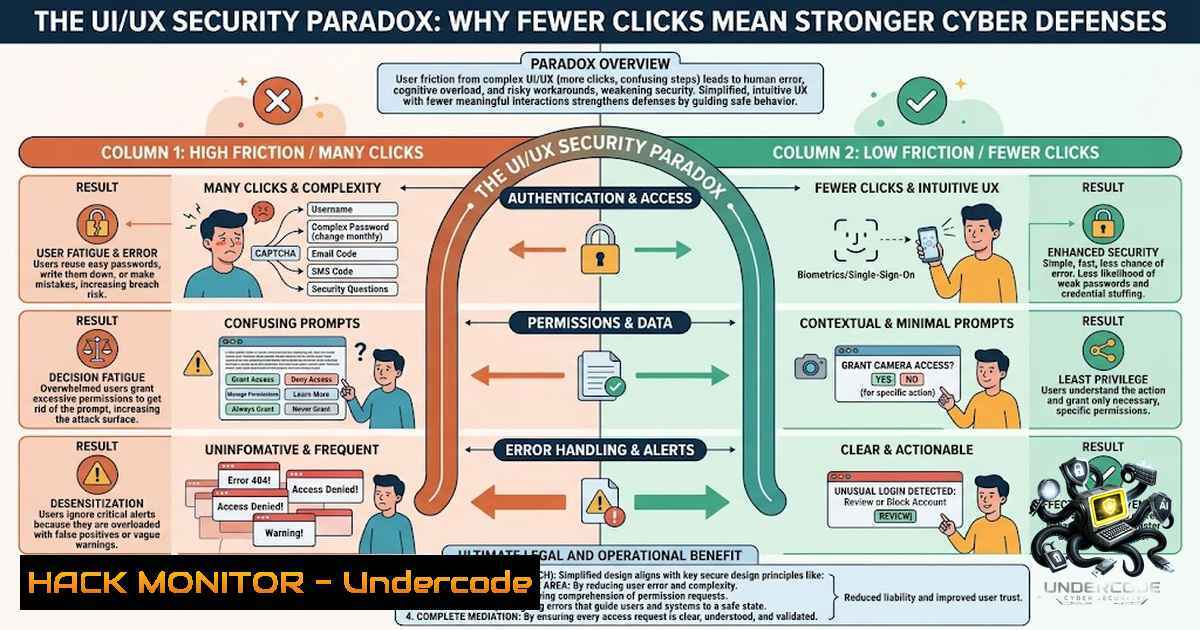
 bskyThe UI/UX Security Paradox: How Simpler Interfaces Can Strengthen Cyber Defensesundercodetesting.com
Key quotes
· 3 pulledUser experience (UX) and security have traditionally been viewed as opposing forces—each additional authentication factor or security control seemingly adding friction that users resent.
Reducing cognitive load and minimizing user interactions not only improves conversion rates by up to 50% but also creates more secure systems by reducing user errors, bypass attempts, and security fatigue.
When users encounter clean, intuitive interfaces with fewer interactions, they are less likely to make mistakes that compromise security.
You might also wanna read


The Role of Good UX in Protecting Older Users From Digital Scams
The article explores whether good user experience (UX) design can act as a defense against digital scams, especially for older, less tech-sa
 Smashing Magazine·1y ago
The Purpose and Pitfalls of UI Animations: When to Use Them Effectively
This article provides a critical examination of animation usage in user interfaces, arguing that while well-executed animations can enhance
 emilkowal.ski·9mo ago
Why AI-Driven Synthetic User Testing Fails: A Case for Real UX Research
The article argues against the growing trend of companies using AI-driven "synthetic" user testing as a replacement for real UX research wit
Smashing Magazine·1y ago
The Site-Search Paradox: Why Internal Search Fails and Global Search Engines Succeed
The article examines why internal site search often fails despite advanced technology, while global search engines like Google succeed. It e
Smashing Magazine·3mo ago
Security Vulnerabilities in Agentic AI Browsers: Testing Reveals Scam Susceptibility
The article examines the emerging security vulnerabilities in agentic AI browsers that autonomously browse, search, and interact online. It
 guard.io·10mo ago
The AI Productivity Paradox: Why Engineers Are More Exhausted Despite AI Tools
The article explores the paradox of AI productivity tools leading to increased exhaustion rather than reduced workload. Written by an AI inf
 siddhantkhare.com·29d ago
The AI Productivity Paradox: Why Engineers Are More Exhausted Despite AI Tools
The article explores the paradox of AI productivity tools leading to increased exhaustion rather than reduced workload. Written by an AI inf
siddhantkhare.com·29d ago
Comments
Sign in to join the conversation.
No comments yet. Be the first.