
























The UK's two-child benefit limit: examining poverty impacts, incentives, and policy choices for the next government
By
Eduin Latimer, Tom Waters
Summary
This article examines the UK's 'two-child limit' policy on universal credit and child tax credit, which denies additional payments for third or subsequent children born after April 2017. It analyzes the policy's impact on low-income families, the financial incentives and disincentives created, and the political debate surrounding it. The piece explores the fiscal costs, poverty implications, and policy options facing the next UK government, including potential abolition by Labour, Liberal Democrats, or the Green Party.
Source

 bskyThe UK's two-child benefit limit: examining poverty impacts, incentives, and policy choices for the next governmentifs.org.uk
Key quotes
· 3 pulledLow-income families typically receive an additional £3,455 a year of universal credit (or child tax credit) for each child they have.
The 'two-child limit' means that claimants do not receive an additional amount for third or subsequent children born after 5 April 2017.
The Liberal Democrats and Green Party have both committed to abolishing the limit in their manifestos, while the Labour Party have said they will abolish it 'when fiscal conditions allow'.
You might also wanna read


UK Poverty Crisis: How Inflation and Benefit Caps Are Pushing Families to Food Banks
The article examines the impact of inflation and the two-child benefit cap on poverty in the UK, focusing on families in Kent who are strugg
 theguardian.com·7mo ago
Labour Considers Making Taxpayers Fund Free Childcare for Parents Not in Work
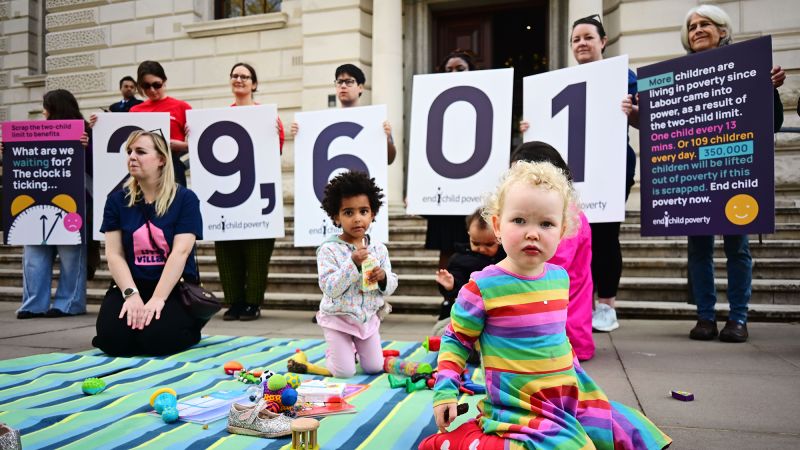
Record Child Poverty in Britain: One-Third of Children Live in Poverty Despite National Wealth
The article examines the paradox of child poverty in Britain, one of the world's wealthiest nations, where a third of children now live in p
 cnn.com·7mo ago
Next chancellor must scrap student loans three-year threshold freeze, MPs say

UK think tank warns mandatory age verification could increase risks to children online
The Foundation for Information Policy Research (FIPR) has raised concerns about UK government proposals to mandate strong age verification f
 computerweekly.com·1mo ago
Comments
Sign in to join the conversation.
No comments yet. Be the first.