
























Helioseismology Reveals Unexpected Changes in the Sun's 11-Year Magnetic Cycle
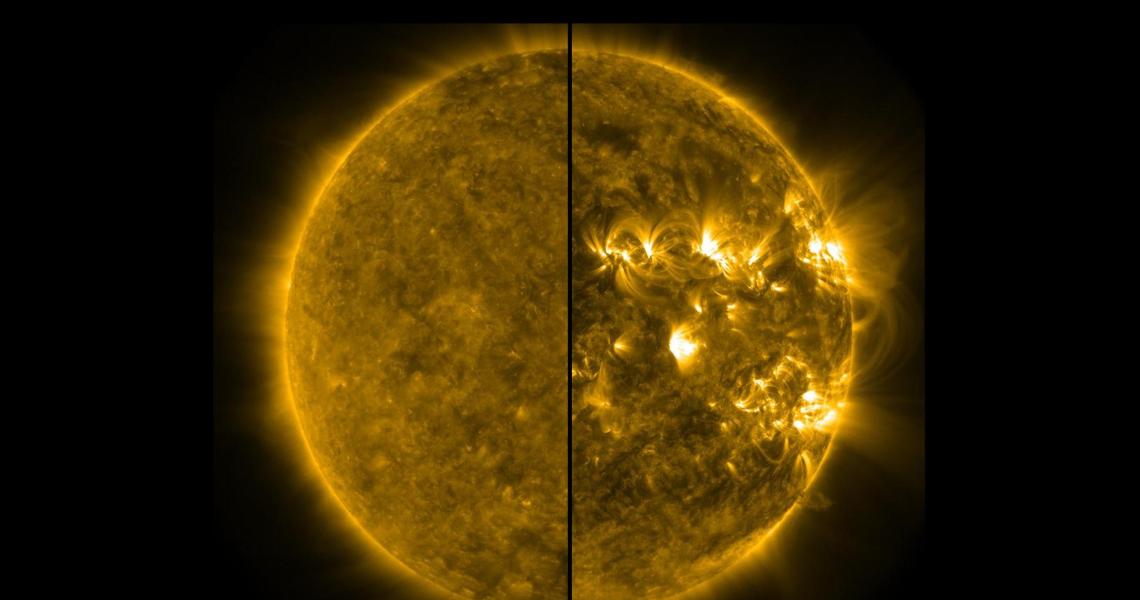
The Sun has a heartbeat. Every eleven years it swells with magnetic fury, hurling solar flares and charged particles into space, sparking auroral displays and threatening power grids, all before…
Read the full articleYou might also wanna read

NJIT Physicists Pinpoint Sun's Magnetic Dynamo 200,000 km Below Surface Using 30 Years of Acoustic Data
In an analysis of nearly three decades of solar acoustic data, NJIT physicists report evidence that the solar dynamo — the magnetic engine p
 news.njit.edu·3mo ago
A solar storm undergoes a "super expansion" on its way to Earth, baffling physicists
A solar explosion created a magnetic bubble that expanded by twenty percent as it traveled toward our planet, heating its internal gas and p
The Next Decade of Discovery in Solar and Space Physics Exploring and Safeguarding Humanity's Home in Space
Final Book Now Available Groundbreaking advances in solar and space physics have provided key insights into the dynamic physical processes o
Observing oscillations, flares and tornados on the sun
For six and a half days in July 2024, the balloon-borne solar observatory Sunrise III kept its gaze fixed on the sun. The stratospheric flig
Spot the Flares
NASA/SDO/Goddard Space Flight Center A giant sunspot seen at the edge of the Sun. The Sun is not only our closest stellar neighbor, it’s als

Selections from 2025: The Sun Changed Course in 2008
During the exceptionally deep solar minimum of 2008, researchers thought the Sun might be entering a prolonged period of low solar activity
Comments
Sign in to join the conversation.
No comments yet. Be the first.