
























How suffragist Helena Normanton used Magna Carta to argue for women's rights
By
Adia
Summary
This article examines how suffragist lawyer Helena Normanton strategically interpreted the Magna Carta as a 'sacred promise' for women's rights, framing women's suffrage as the logical completion of England's constitutional tradition. It explores how she used national teleology—reading history backwards—to legitimize women's political rights during the WSPU's escalating militancy campaign (1912-1915), which caused internal splits within the suffrage movement. The piece also touches on broader questions about who belongs in Britain's national story.
Source
 bskyHow suffragist Helena Normanton used Magna Carta to argue for women's rightssubstack.com
Key quotes
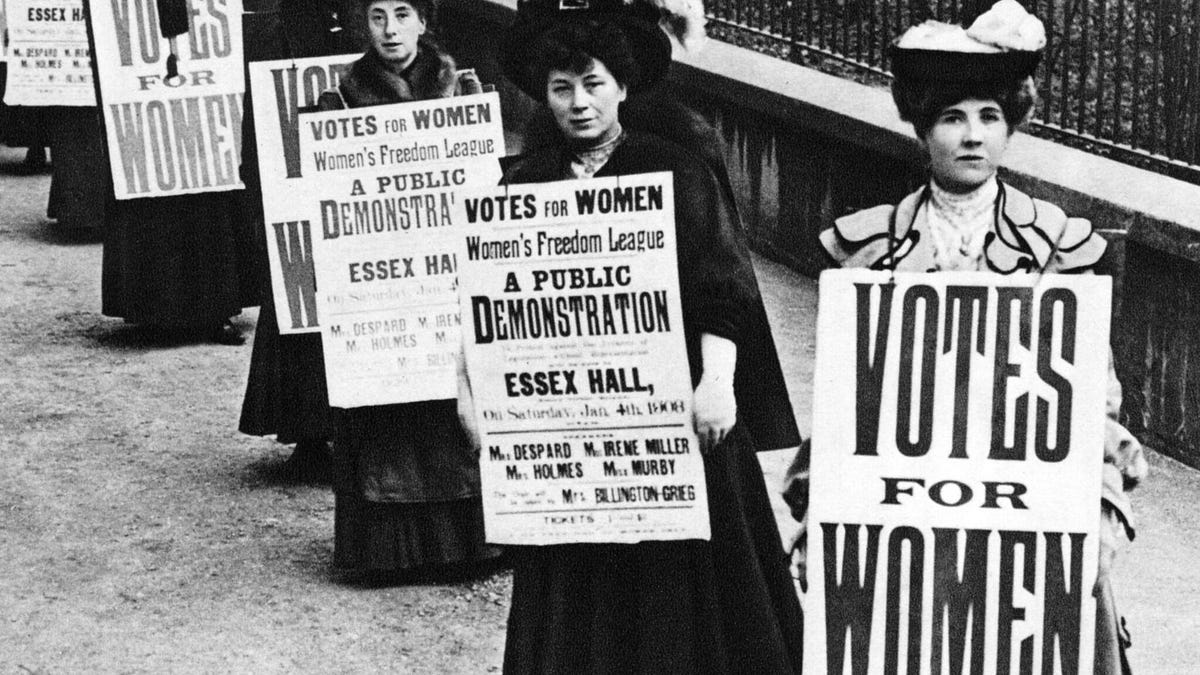
· 3 pulledHelena Normanton, through interpreting the Magna Carter as a 'sacred promise' that will one day be 'fulfilled pledge' for women, presents women's rights as a logical completion of England's constitutional tradition.
She uses national teleology, reading history backwards to legitimise the present, rationalising women's political rights to the government and the general reader attached to national history.
This was especially pertinent due to the WSPU's escalating militancy and window-smashing campaign from 1912-1915.
You might also wanna read


Thomas Paine's Revolutionary Skepticism: How 'Common Sense' Challenged Monarchy and Authority
This article examines Thomas Paine's 1776 pamphlet 'Common Sense' and its relevance to modern political skepticism. The piece uses David Cro
 theconversation.com·8mo ago
From happiness to Trump

Reconciling America's Founding Ideals With Its Historical Realities
A personal narrative exploring the tension between America's founding ideals as expressed in the Declaration of Independence and the nation'
 harpersbazaar.com·2d ago
The Political Entanglement of Mathematics: A Historical Case Study from Revolutionary Naples
This essay explores the historical entanglement of mathematics and politics through a forgotten episode in French-occupied Naples around 180
 lareviewofbooks.org·5mo ago
A satirical look at the Soviet 1936 constitution and its contrast with modern governance
The article uses a satirical comparison between the Soviet Union's 1936 constitution (which promised extensive rights and benefits) and mode
 experimental-history.com·1mo ago
Comments
Sign in to join the conversation.
No comments yet. Be the first.