
























How the Alien franchise's Weyland-Yutani explains monopsony power and low wages
By
Greg Rosalsky
Summary
This article uses the Alien franchise's fictional mega-corporation Weyland-Yutani as a lens to explain the economic concept of monopsony — when a single employer dominates a labor market and gains power to underpay and mistreat workers. It features labor economist Arin Dube, author of "The Wage Standard," who discusses how monopsony power is a significant real-world issue affecting wages and worker treatment. The piece also includes an interview with Fede Álvarez, director of Alien: Romulus, which highlights Weyland-Yutani's poor treatment of workers. The article explores policy ideas that could prevent the worker exploitation depicted in the film.
Source

 bskyHow the Alien franchise's Weyland-Yutani explains monopsony power and low wagesnpr.org
Key quotes
· 3 pulledMaybe the real monster in the Alien franchise isn't actually the killer alien. Because behind the acid blood and jump scares is an even more insidious horror: a single employer with unchecked power.
Weyland-Yutani is a sort of extreme example of what economists call a monopsony — when one employer dominates a labor market and gains power to underpay and mistreat workers.
A growing number of economists argue that monopsony power is a much bigger deal in the real world than previously thought.
You might also wanna read

The AI Job Paradox: Who Will Buy Services When Automation Eliminates Workers?
The article critiques Silicon Valley executives like Sam Altman and Elon Musk who now frame AI-driven automation as a path to a utopian futu
carette.xyz·1mo ago

The Missing Element in Agentic AI: True User Agency as Collective Bargaining
The article argues that the current narrative around "agentic AI" is missing a crucial dimension: true user agency. While AI companies marke

The Parallels Between OnlyFans and America's AI Economy: A Speculative Analysis
A speculative, science-fiction-infused essay that draws parallels between the OnlyFans creator economy and the American AI industry. The aut
 leoveanu.com·16d ago
Universal Basic Income as a Productivity Dividend for Sharing AI Economic Gains
The article argues that Universal Basic Income (UBI) is necessary to address the growing disconnect between productivity gains and worker co
 scottsantens.substack.com·3mo ago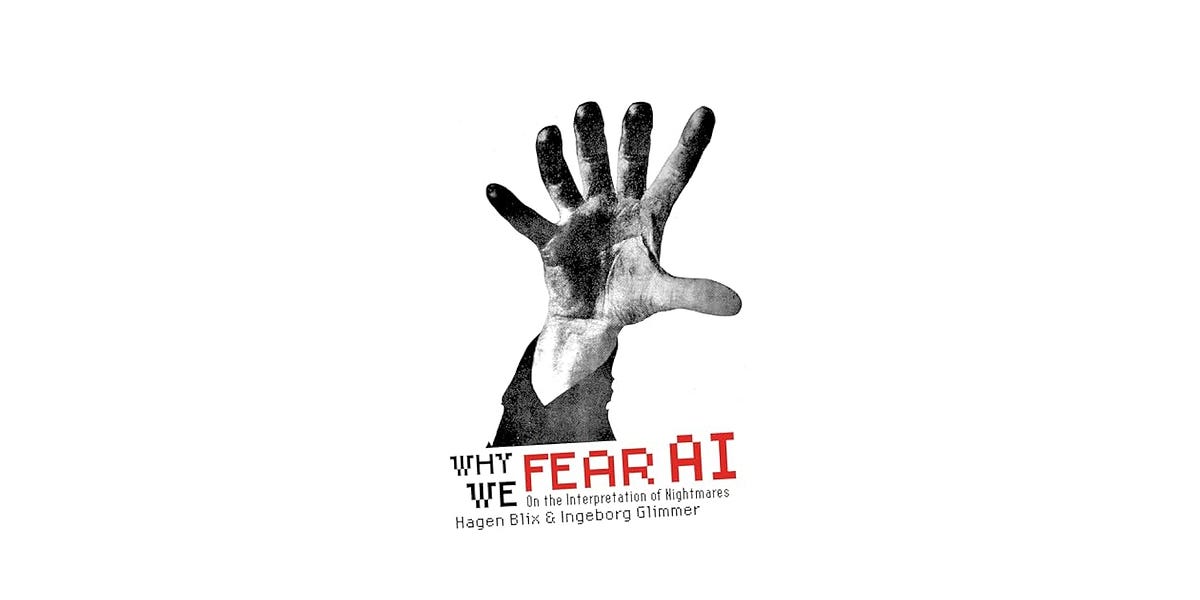
Cognitive Scientist Hagen Blix on AI as 'Class Warfare Through Enshittification'
This is an interview with cognitive scientist Hagen Blix about his book 'Why We Fear AI' where he argues that generative AI represents 'clas
 bloodinthemachine.com·8mo ago
UBI Advocates Must Challenge the Myth That Human Worth Depends on Work
The article examines the historical and contemporary debate around Universal Basic Income (UBI), tracing its origins to Thomas Paine's 1797
 thereader.mitpress.mit.edu·6mo ago
Comments
Sign in to join the conversation.
No comments yet. Be the first.