
























Confident Inaccuracy, Not Hallucination, Is the Key Barrier to AI Progress
The failure mode that stalls “AI for data” efforts or "AI on my APIs" efforts isn’t psychedelic hallucination—it’s confident inaccuracy: plausible answers that are wrong in subtle and costly ways.
Read the full articleYou might also wanna read


Cracking the AI Confidence Conundrum
AI models struggle with distinguishing unanswerable questions from those they can answer inaccurately. A new approach might just change that
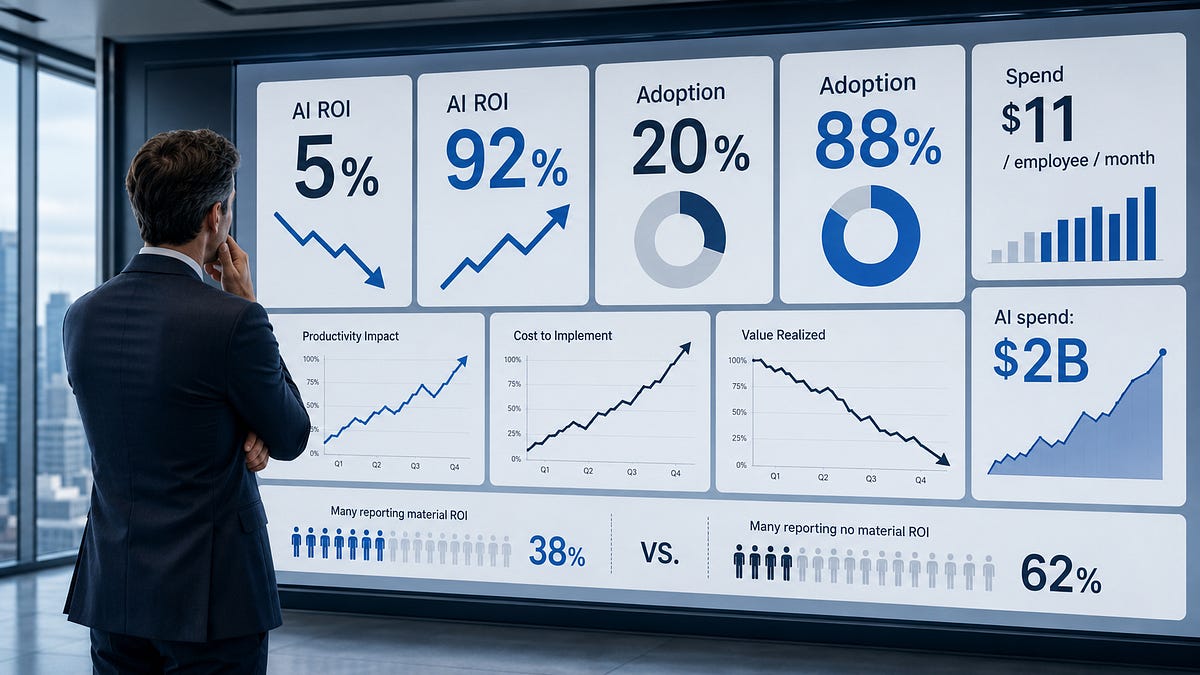
Why the Data on AI's ROI Can't Be Trusted
It depends on your firm—not the technology
 unfoldingai.substack.com·8d ago
AI tools produce fewer hallucinations but more confidently wrong answers, study warns
Confident chatbots could encourage users to stop fact-checking.
 axios.com·1mo ago
AI tools produce fewer hallucinations but more confidently wrong answers, study warns
Confident chatbots could encourage users to stop fact-checking.
axios.com·1mo agoAI 'Hallucination' Is Actually Three Distinct Problems, Not One
The term 'hallucination' is widely used to describe AI errors, but a software developer's hands-on experience suggests it conflates at least
AI Confidence: Why Precision Doesn't Always Equal Awareness
Exploring AI confidence through Signal Detection Theory reveals intriguing insights. Some models boast high confidence but lack precision. W

AI Hallucinations: A New Approach to Model Reliability
Large language models often fail to recognize their own limits, leading to confident errors. A new approach using disagreement-based signals
Comments
Sign in to join the conversation.
No comments yet. Be the first.