
























America's Refusal to Address Structural Wealth Inequality
By
Annie Lowrey
Summary
This article examines America's deep-rooted inequality problem through historical and contemporary lenses. It traces the arc from America's first millionaire (Robert Morris) to modern trillionaires, arguing that wealth concentration is not an accident but a feature of the economic system. The piece explores how structural factors — tax policy, labor market changes, financialization, and political capture — have systematically concentrated wealth at the top while leaving the middle and lower classes behind. It contends that despite periodic public outrage, America has consistently refused to meaningfully address the structural drivers of inequality, treating it as an inevitable byproduct of capitalism rather than a policy choice.
Source
 bskyAmerica's Refusal to Address Structural Wealth Inequalitytheatlantic.com
Key quotes
· 3 pulledRobert Morris migrated from England to the American colonies as a teenager and established himself in the mercantile industry.
Morris went bankrupt, spectacularly, and spent the years 1798 to 1801 incarcerated in a Philadelphia debtors' prison.
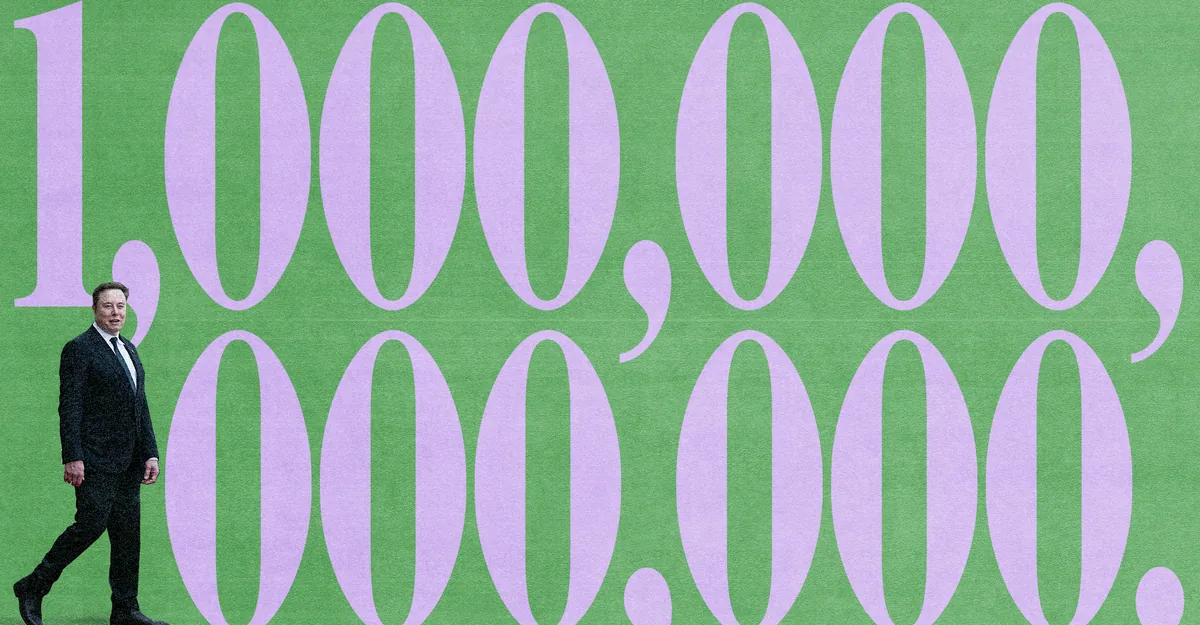
In the age of the trillionaire, inequality remains a defining challenge.
You might also wanna read


The Mathematical Nature of Wealth Inequality and AI's Disruption of Traditional Pathways
This essay argues that wealth distribution follows a power law rather than a normal distribution, making it fundamentally different from oth
 danielhomola.com·3mo ago
Why U.S. Wealth Doesn't Translate to Public Investment: The Refusal of Capital to Pay for Modernization
This article argues that the United States, despite being the wealthiest society in history, deliberately chooses not to invest in modern in
 futuredude.substack.com·13d ago
Examining the Necessity of Billionaires in Modern America
The article critically examines the necessity and impact of billionaires in society, challenging the Reaganomics "trickle-down" theory that
 bjhess.com·1mo ago
Polling Shows Americans View AI as Major Driver of Wealth Inequality
New polling data reveals that American voters increasingly view AI as a significant threat to economic equality and society, with concerns a
 gizmodo.com·3mo ago
The Growing Financial Divide Between Millennials and Their Wealthy Boomer Parents
This article explores the growing tension between millennial adults and their wealthy baby boomer parents over financial support. Through in
 thecut.com·13d ago
America's Infrastructure and Political Challenges: Examining the 'Richest Third-World Country' Concept
The article examines the provocative question of whether America can be considered 'the richest third-world country' by analyzing the countr
 noahpinion.blog·8mo ago
Comments
Sign in to join the conversation.
No comments yet. Be the first.