
























The Ortega Hypothesis: How Average Scientists Drive Scientific Progress
The Ortega hypothesis holds that average or mediocre scientists contribute substantially to the advancement of science.[1] According to this hypothesis, scientific progress occurs mainly by the…
Read the full articleYou might also wanna read

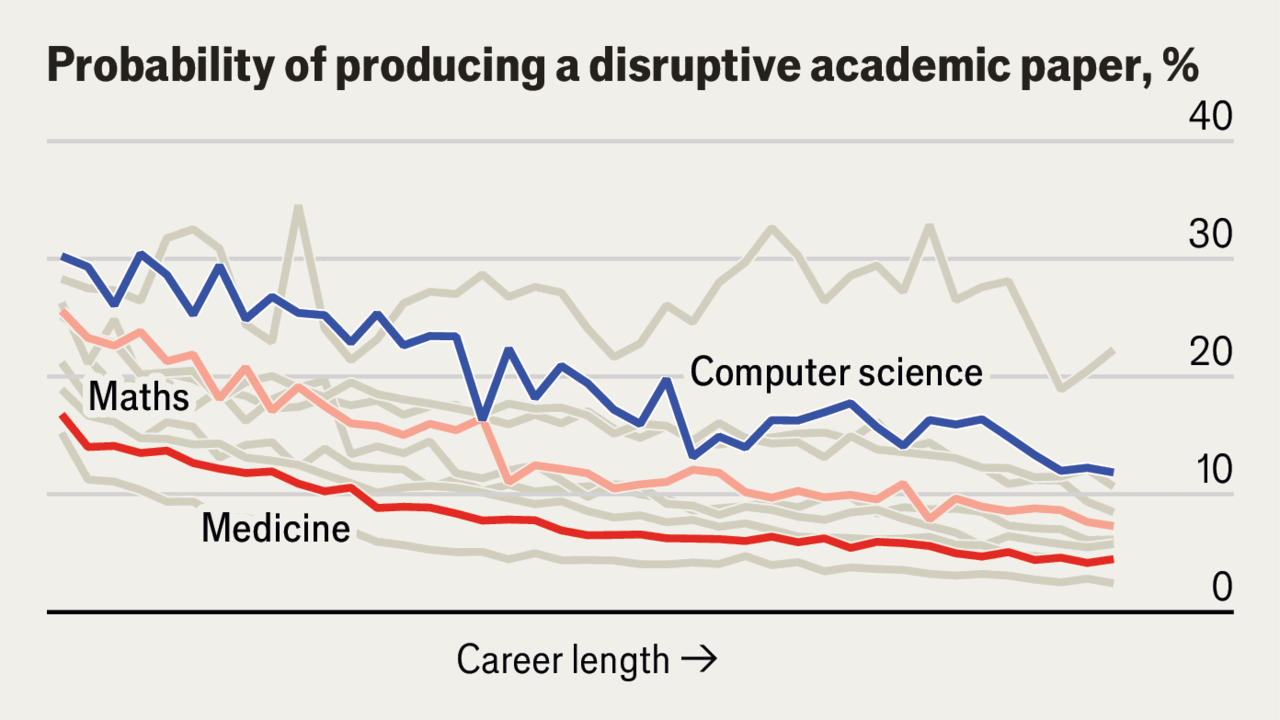
Study links aging scientific workforce to decline in breakthrough discoveries
A huge study suggests ageing scientists are part of the problem
 economist.com·1mo ago
The science of what makes a "hidden genius" — and why raw talent isn't enough
What makes some scientists culturally significant, while others remain in obscurity? Well, there’s a science to it.
 bigthink.com·7d ago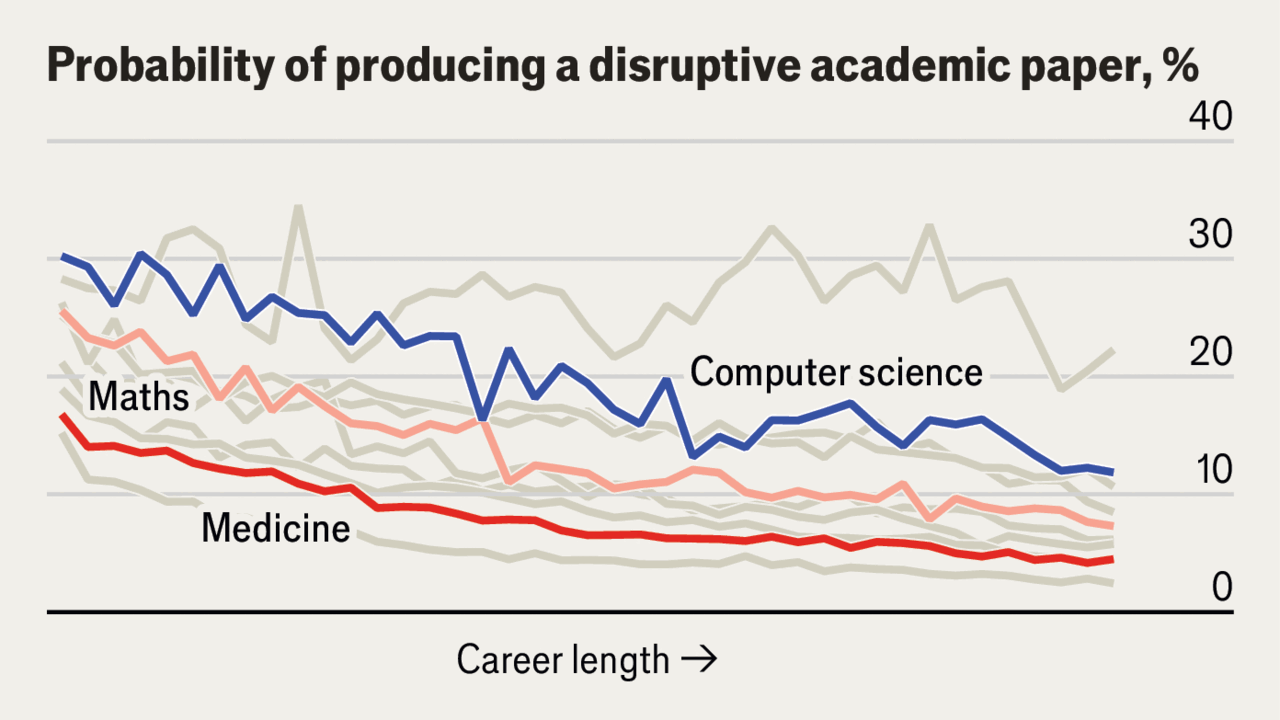
Study of 12.5 million scientists links aging researcher workforce to declining scientific breakthroughs
A huge study suggests ageing scientists are part of the problem
 economist.com·1mo ago
Which Entrepreneurs Boost Productivity?
Why do some entrepreneurs drive economic growth while others do not? This piece discusses new work that studies entrepreneurs using a compre
libertystreeteconomics.newyorkfed.org·6mo ago
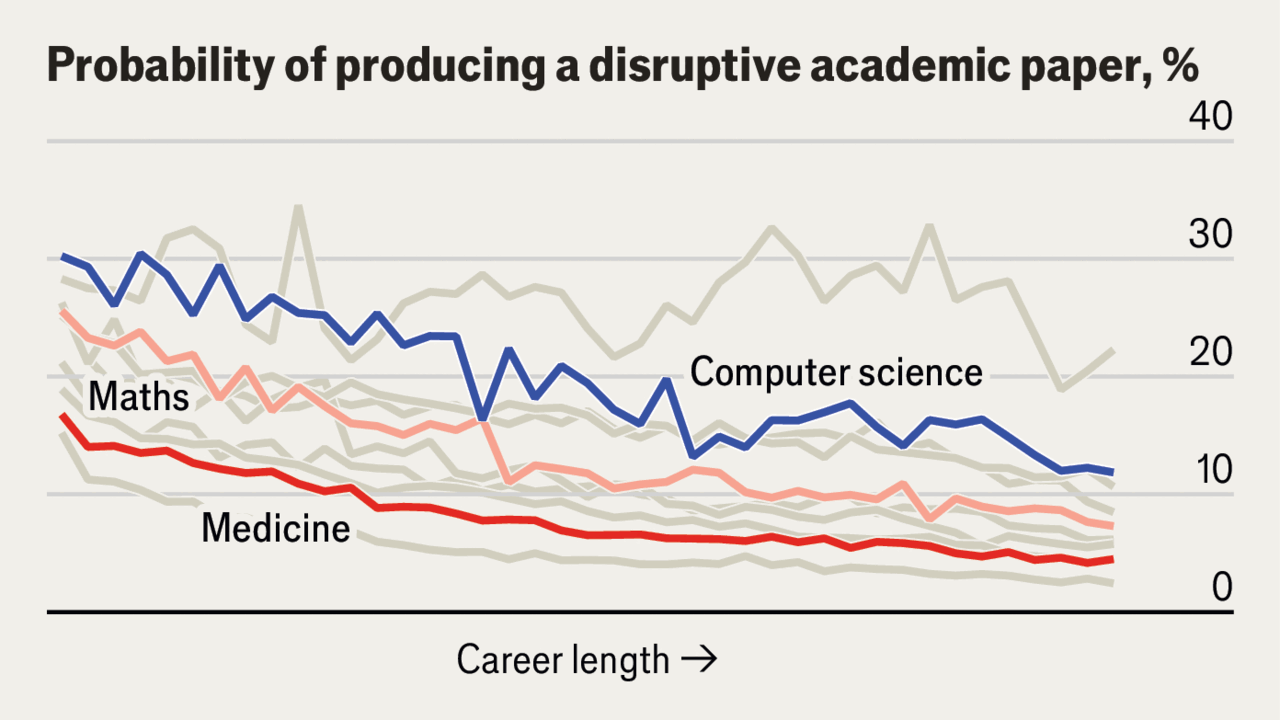
Study links declining scientific breakthroughs to aging researchers
A huge study suggests ageing scientists are part of the problem
economist.com·20d ago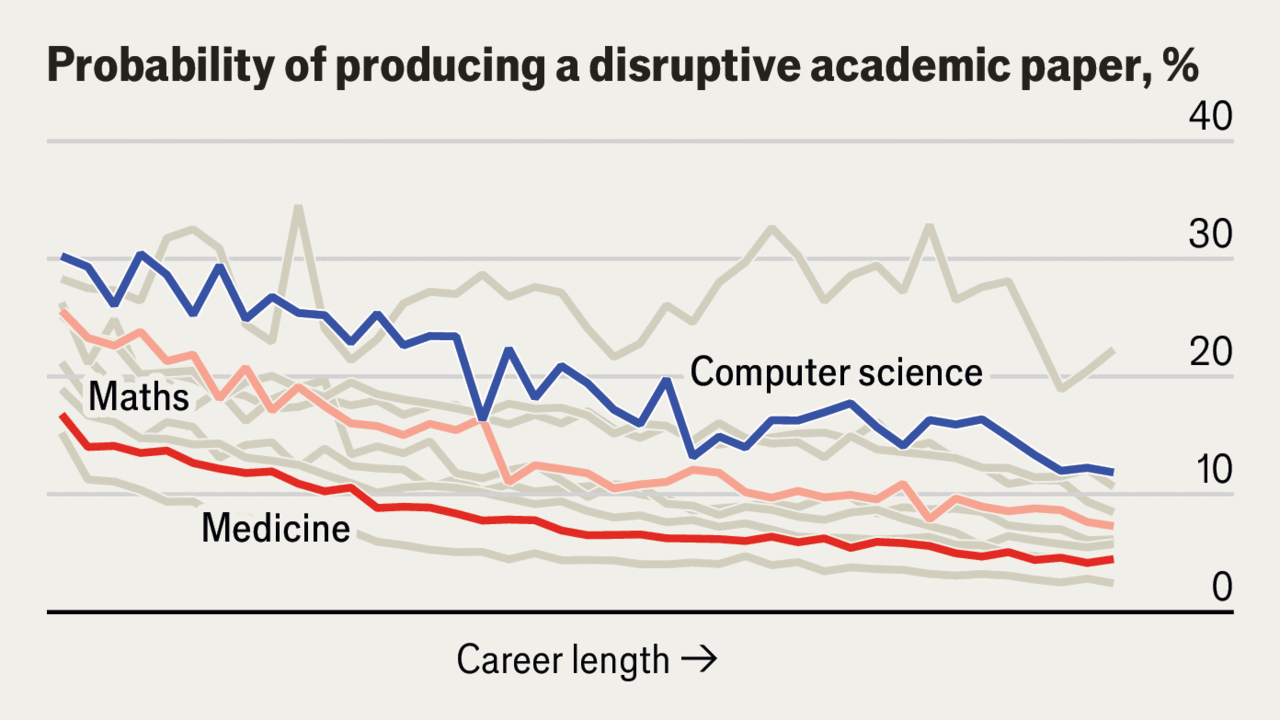
Study links declining scientific breakthroughs to aging researchers
A huge study suggests ageing scientists are part of the problem
economist.com·17d ago
Comments
Sign in to join the conversation.
No comments yet. Be the first.