
























How female Mallard ducks evolved vaginal anatomy to control insemination
By
Mieke Roth
Summary
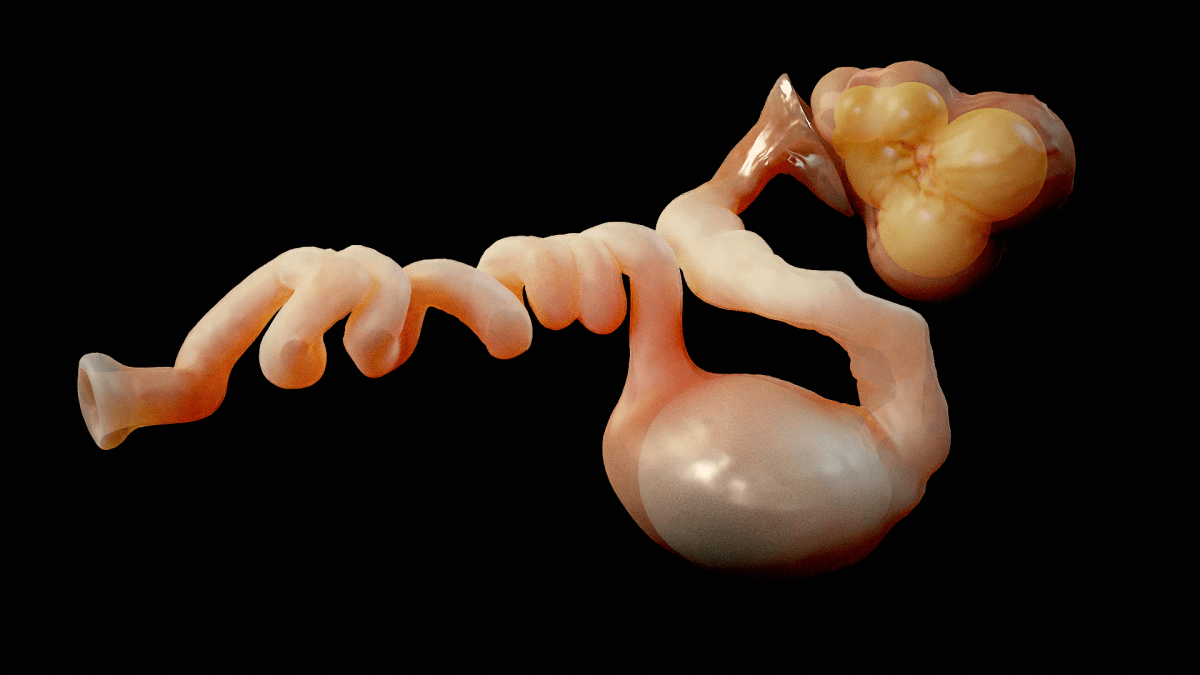
This article describes the anatomical adaptations of the female Mallard duck's reproductive tract, which has evolved to give females control over insemination. Male ducks frequently attempt forced copulation, but the female's vaginal structure has dead-end passages that make forced insemination difficult. Only 3% of duck inseminations result from forced copulation. When a female willingly mates, she uses muscle contractions to facilitate successful insemination. The article references an 8-year-old 3D model of the reproductive tract.
Source
 bskyHow female Mallard ducks evolved vaginal anatomy to control inseminationmiekeroth.com
Key quotes
· 4 pulledMale ducks are notorious for attempting 'forced copulation' with females.
So females have evolved vaginas that make it hard for a male duck to actually inseminate them, if they don't want it to, by forcing it towards the dead ends.
Only 3% of duck inseminations come from forced copulation.
When a female does want to mate with a male, she will contract and relax internal muscles that scientists think help make sex easier.
You might also wanna read

Male Ghost Sharks Evolve Forehead Teeth for Mating Purposes
Male ghost sharks (chimaeras) have evolved a unique forehead appendage called a tenaculum that contains real, retractable teeth used for mat
 news.ufl.edu·10mo ago
Raptorial insect forelegs evolved repeatedly but never converged on one winning design

The Extravagant Courtship Dances of Male Animals: From Hummingbirds to Peacock Spiders
The article discusses the elaborate and often bizarre courtship dances of various male animals, from hummingbirds and sage-grouse to peacock
 Defector·20d ago
Understanding the Reality of Male Chick Culling in the Egg Industry and the Emergence of In-Ovo Sexing Technology
The article discusses the common misconceptions about the egg industry, particularly the fate of male chicks, and introduces in-ovo sexing t
optimistsbarn.substack.com·11mo ago
Study reveals how innate factors and development shape migratory songbirds' wintering destinations
This scientific study investigates how innate factors and developmental processes (ontogeny) determine the nonbreeding (wintering) areas of
 scim.ag·11d ago
Study reveals how innate factors and development shape migratory songbirds' wintering destinations
This scientific study investigates how innate factors and developmental processes (ontogeny) determine the nonbreeding (wintering) areas of
scim.ag·11d ago
Comments
Sign in to join the conversation.
No comments yet. Be the first.