
























The Four-Color Theorem: A Historical Account of the 1852-1976 Mathematical Proof Journey
Robin Wilson
Read the full articleYou might also wanna read


Researchers mathematically formalize Schrödinger's century-old theory of color perception
Researchers have finally resolved a key problem in a 100-year-old theory of color, showing that the qualities we perceive in colors are intr
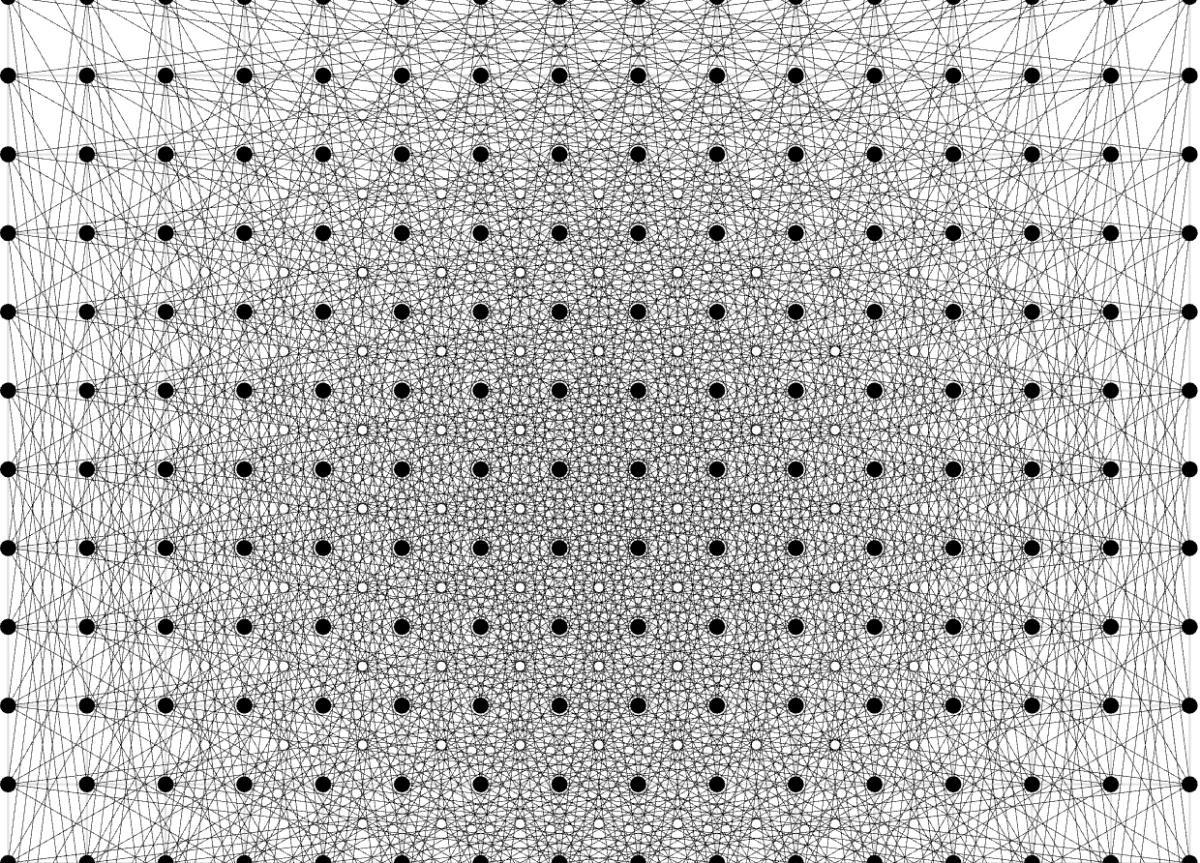
OpenAI claims new reasoning model disproves 1946 Erdős geometry conjecture, but credibility questioned after past false claims
OpenAI claims its reasoning model disproved a geometry conjecture unsolved since 1946 — and this time, the mathematicians who exposed its la
 mexnews.online·7d ago
An AI Just Solved a Geometry Problem That Stumped Mathematicians for 80 Years — and It Wasn't Even Trying
On May 20, 2026, OpenAI announced that a general-purpose reasoning model autonomously disproved Erdős's unit distance conjecture — an open p
OpenAI's generative AI disproves Paul Erdős's 80-year-old mathematical conjecture
In 1946, the mathematician Paul Erdős published a short paper containing a seemingly simple question [1], yet it has occupied generations of
 lbscience.org·1mo ago
OpenAI's GPT-5.6 Sol Ultra produces proof of 50-year-old Cycle Double Cover Conjecture in under an hour
OpenAI's GPT-5.6 Sol Ultra produced a proof of the Cycle Double Cover Conjecture in under an hour, using 64 subagents working in parallel. T
 the-decoder.com·5d ago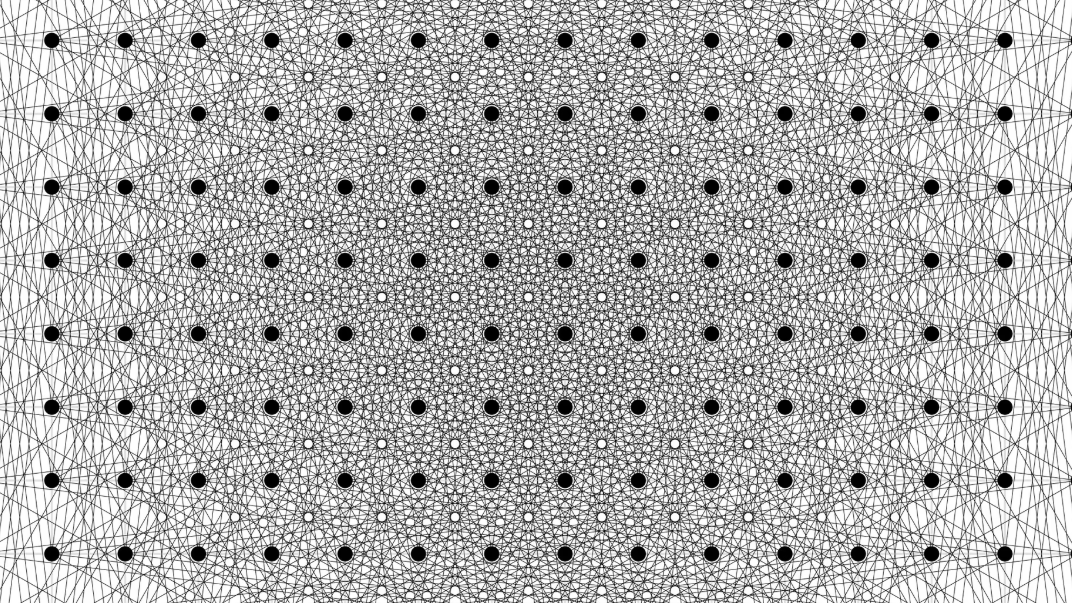
OpenAI's AI model solves 80-year-old Erdős math problem, verified by mathematicians
The closest the field has come to solving the planar unit distance problem, first proposed in the 1940s, was in 1984. Now, OpenAI claims an
 livescience.com·1mo ago
Comments
Sign in to join the conversation.
No comments yet. Be the first.