





















The Adoption Challenge of DSPy: Why a Promising AI Framework Faces Resistance
By
sbpayne

Front-window bakery material. Catches the eye, delivers the goods.
Summary
The article examines why DSPy, an AI engineering framework that promises significant benefits for building and maintaining AI systems, hasn't gained widespread adoption despite its advantages. It acknowledges that companies using DSPy report benefits like faster model testing, better system maintainability, and more focus on context rather than technical plumbing. However, the main barrier to adoption is that DSPy's abstractions are unfamiliar and require developers to think differently about AI engineering, which creates resistance when people just want to solve immediate problems rather than learn new paradigms.
Key quotes
· 4 pulledFor a framework that promises to solve the biggest challenges in AI engineering, this gap is suspicious.
They can test a new model quickly, even if their current prompt doesn't transfer well. Their systems are more maintainable. They are focusing on the context more than the plumbing.
DSPy's problem isn't that it's wrong. It's that it's hard. The abstractions are unfamiliar and force you to think a little bit differently.
Any sufficiently complicated AI system contains an ad hoc, informally-specified, bug-ridden implementation of half of DSPy.
You might also wanna read


Why Most AI Strategies Fail: Lessons From a Company-Wide Two-Week Pause for AI Adoption
The article discusses why most AI strategies fail in organizations — treating AI as something to install rather than a skill to practice. Th
 bit.ly·4d ago
Public Skepticism Grows as Companies Push AI Integration
The article discusses the growing disconnect between companies enthusiastically adopting AI technology and public skepticism about its value
 The Verge·2mo ago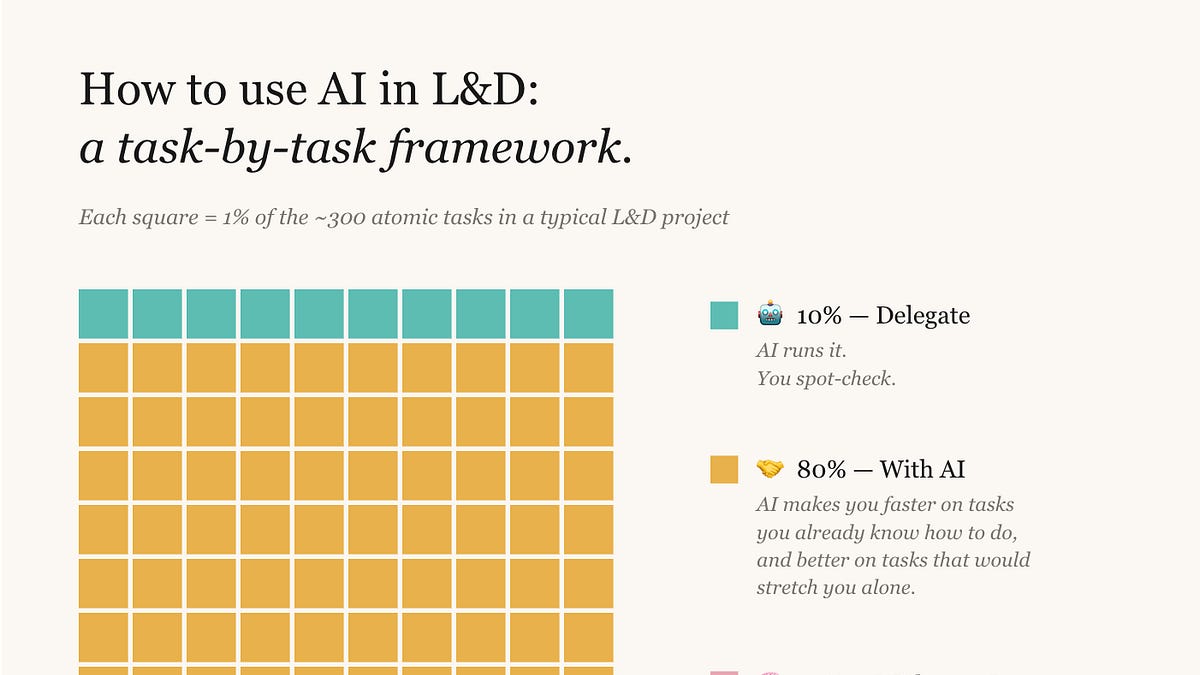
A practical framework for deciding when to use AI in L&D workflows
The article addresses the confusion L&D teams face regarding AI adoption, caught between executive pressure to use AI everywhere and complia
 drphilippahardman.substack.com·3d ago
AI Adoption Doesn't Have to Mean Layoffs: Schneider Electric's Productivity-First Approach
The article challenges the prevailing CEO mindset that AI adoption should primarily focus on job elimination. It highlights Stanford's Erik
 nytimes.com·2d ago
Why most businesses fail to achieve AI adoption at scale despite heavy investment
Despite heavy investment in AI, most organizations struggle to achieve enterprise-wide adoption and tangible business impact. Only 32% of or
 weforum.org·1d ago
Why the AI Application Layer Still Has Room for Innovation Despite Lab Dominance
The article addresses the anxiety among founders and prospective employees about whether there is any viable AI application layer left to bu
 a16z.news·4d ago