
























The 6 yr Radio Light Curve of the Tidal Disruption Event AT2019azh
M. Burn et al 2025 ApJ 993 207 A long-term radio study finds that a Sedov–Taylor model can describe the evolution of a tidal disruption event without late-time rebrightening; this event is likely to…
Read the full articleYou might also wanna read

NSF VLA Reveals Supermassive Black Holes Emit Radio "Burps" Years After Destroying Stars
Astronomers using the U.S. National Science Foundation Very Large Array (NSF VLA) have found that when a supermassive black hole tears apart
 public.nrao.edu·24d ago
Astronomers Discover New Class of Long-Period Radio Transients in the Milky Way
Just a few years ago, a strange signal was received from the plane of the Milky Way.
 sciencealert.com·1mo ago
Untitled
🌌 🧪 For two decades now, #astronomers have been recording short-lived extremely energetic radio signals dubbed fast radio bursts. ✍🏼 New
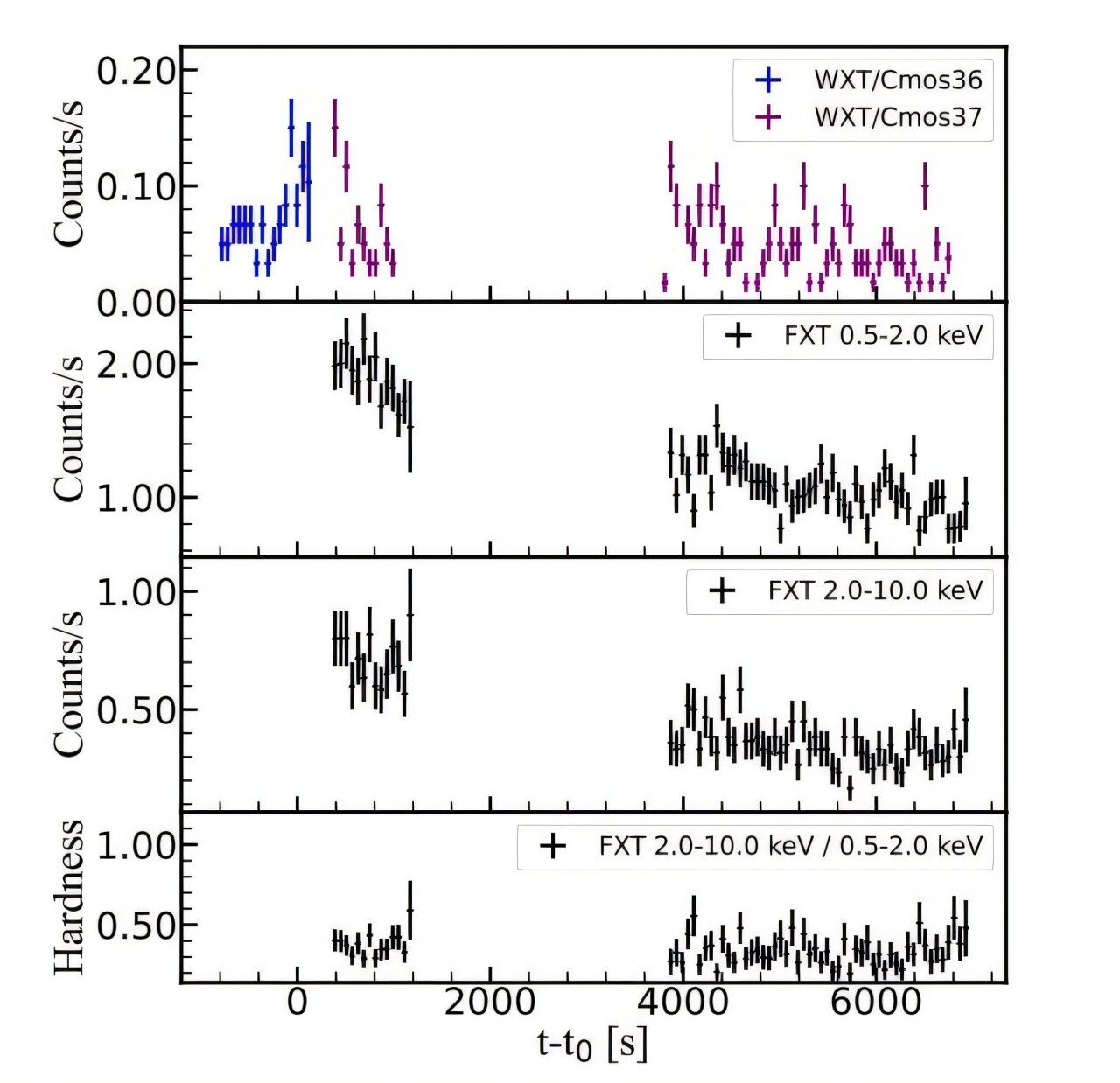
Einstein Probe Detects X-ray Flare from Nearby Star 150 Light Years Away
Using the Einstein Probe (EP), astronomers have detected a new X-ray transient event, which turned out to be an X-ray flare from the star PM
 phys.org·6mo ago
LuSEE-Night: Lunar Radio Telescope to Study Cosmic Dark Ages from Moon's Far Side
A radio telescope on the moon's far side could change our understanding of the universe. Learn how LuSEE-Night plans to listen to the cosmos
 spectrum.ieee.org·5mo ago
Microlensing Event in the Large Magellanic Cloud May Reveal Primordial Black Hole
Very interesting: On the night of 18 December 2019, a star in our satellite galaxy, the Large Magellanic Cloud, briefly got brighter. Not dr
 twelvemountains.com·1mo ago
Comments
Sign in to join the conversation.
No comments yet. Be the first.