
























Mayo Clinic Q&A: What young men should know about testicular cancer risk and awareness
By
pattymiller
Summary
A Mayo Clinic Q&A explains that testicular cancer, while uncommon (about 9,800 cases per year), most commonly affects men aged 15-45. The article covers risk factors (undescended testicle, family history, previous cancer in one testicle), emphasizes awareness over worry, and provides educational information for young men about recognizing signs and understanding their risk.
Source

 Twitter / XMayo Clinic Q&A: What young men should know about testicular cancer risk and awarenessmayocl.in
Key quotes
· 3 pulledTesticular cancer isn't common — about 9,800 men are diagnosed each year and 1 in 250 may be diagnosed in their lifetime — but it most commonly affects men between the ages of 15 and 45.
It's not something to worry about; however, it is something to be aware of.
In addition to your age, you're at a higher risk of testicular cancer if you:
You might also wanna read


Global rise in early-onset cancers demands new prevention-focused research framework
Early-onset cancers (diagnosed before age 50) are rising rapidly worldwide, with 75% of 42 countries reporting increases in six cancer types

Study finds appendix cancer rates tripled and quadrupled among Generation X and Millennials
A study published in the Annals of Internal Medicine reveals that appendiceal cancer cases have tripled for Americans born between 1976-1984
 news.vumc.org·5d ago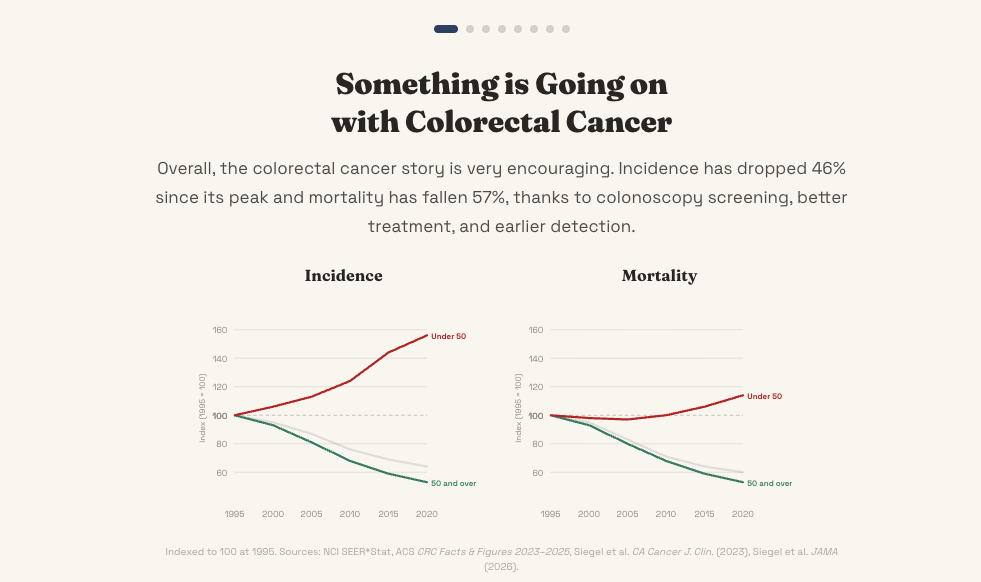
Data Analysis: The Rising Incidence of Colorectal Cancer in Younger Adults
This interactive data journalism piece examines the concerning rise of colorectal cancer among younger adults, exploring population trends,

Examining the reported rise in colorectal cancer among younger adults: A skeptical look at the evidence
The article examines the reported rise in colorectal cancer (CRC) among young people, critically analyzing various proposed explanations inc
 dynomight.net·1mo ago
Colorectal Cancer Now Leading Cause of Cancer Deaths for Americans Under 50
Colorectal cancer has become the leading cause of cancer death for Americans under 50, according to an American Cancer Society analysis. The
 theguardian.com·3mo ago
Prostate cancer screening debate continues as experts seek more accurate detection methods
Prostate cancer screening remains a complex issue. While PSA tests can help detect cancer, widespread screening of asymptomatic men is not r
 bbc.co.uk·23d ago
Comments
Sign in to join the conversation.
No comments yet. Be the first.