
























Terrain Diffusion: A Diffusion-Based Framework for Infinite, Real-Time Terrain Generation
For decades, procedural worlds have been built on procedural noise functions such as Perlin noise, which are fast and infinite, yet fundamentally limited in realism and large-scale coherence. We…
Read the full articleYou might also wanna read


ArtiFixer: Using Auto-Regressive Diffusion Models to Improve 3D Reconstruction Quality
ArtiFixer: Enhancing and Extending 3D Reconstruction with Auto-Regressive Diffusion Models
ArtiFixer: Using Auto-Regressive Diffusion Models to Improve 3D Reconstruction Quality
ArtiFixer: Enhancing and Extending 3D Reconstruction with Auto-Regressive Diffusion Models
Real-Time Generation of Infinite Interactive Worlds
The ABot-World team has introduced an interactive world generation system that runs on consumer GPUs using the LongForcing method. The trans

Autoregressive latent diffusion for 3D molecule generation
arXiv:2607.09277v1 Announce Type: new Abstract: Three-dimensional (3D) molecule generation has been dominated by diffusion models, which ach

[ICML 2026] High-accuracy sampling for diffusion models and log-concave distributions
Authors: Fan Chen, Sinho Chewi, Constantinos Daskalakis, Alexander Rakhlin

RynnWorld-4D: A 4D Embodied World Model for Physically Grounded Scene Evolution and Robotic Control
RynnWorld-4D Website
 alibaba-damo-academy.github.io·7d ago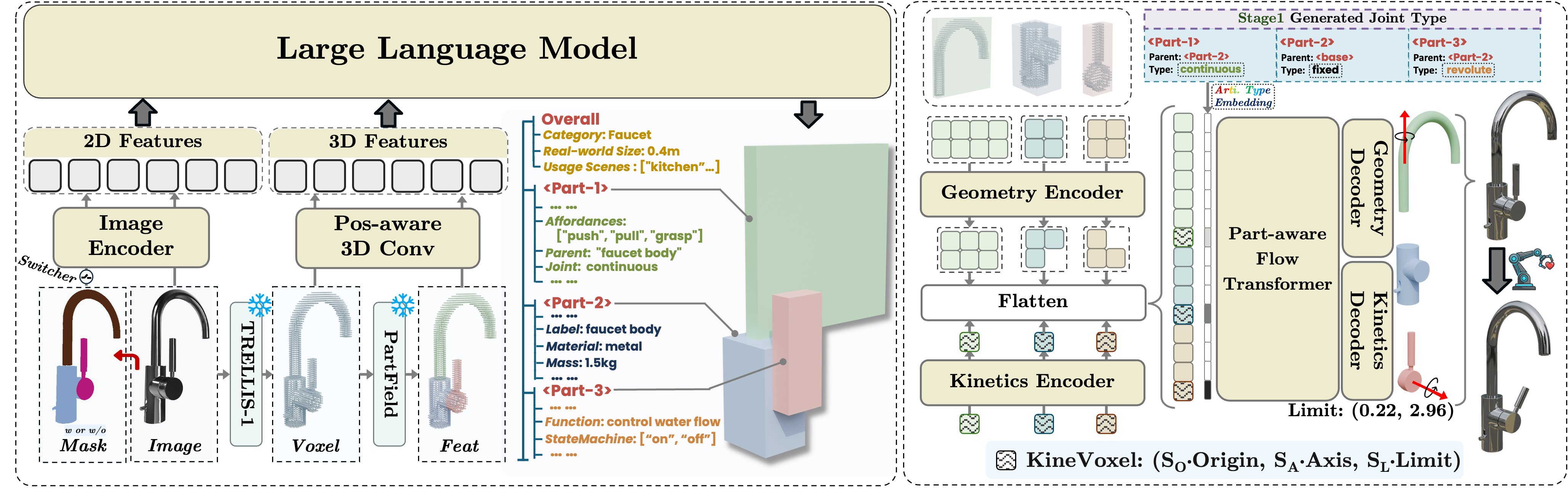
PhysForge: A Framework for Generating Physics-Grounded 3D Assets for Interactive Virtual Worlds
PhysForge: Generating Physics-Grounded 3D Assets for Interactive Virtual World
 hku-mmlab.github.io·23d ago
Comments
Sign in to join the conversation.
No comments yet. Be the first.