
























Synthetic Data in AI Acquisitions: Ownership, Provenance, and Due Diligence Considerations
By
Richard Assmus
Summary
This article examines the unique legal and transactional risks associated with synthetic data in AI company acquisitions. Unlike real-world training data, synthetic data—created or transformed by AI models—presents distinct challenges around ownership, provenance, and due diligence. The piece explores how synthetic data may not fully escape privacy and copyright concerns, discusses the importance of tracing data lineage, and provides guidance for acquirers on evaluating synthetic data assets during M&A transactions. It covers key diligence considerations including model chain-of-title, contractual restrictions, regulatory compliance, and valuation implications.
Source

 bskySynthetic Data in AI Acquisitions: Ownership, Provenance, and Due Diligence Considerationsjdsupra.com
Key quotes
· 3 pulledSynthetic data may appear to sidestep many of the privacy and copyright concerns associated with real-world training data, but it introduces its own set of legal and transactional risks.
The provenance of synthetic data—understanding how it was generated, from what source material, and under what terms—is critical to assessing its value and risk in an acquisition.
Due diligence on synthetic data requires a deeper look at the model chain-of-title and the contractual framework governing the data's creation and use.
You might also wanna read

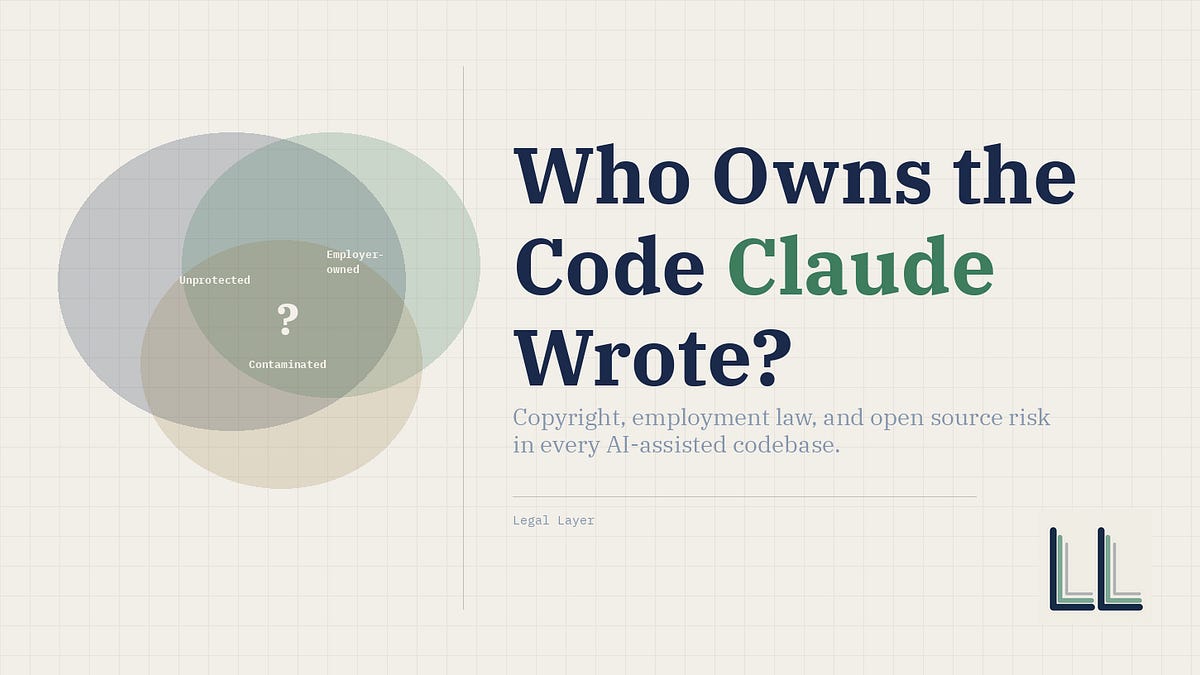
The Unsettled Legal Questions Around Ownership of AI-Generated Code
The article examines the unresolved legal questions surrounding ownership of AI-generated code. It argues that copyright ownership depends o
 Legal Layer·2mo ago
Open Source in Generative AI: Technology, Market Competition, and Legal Boundaries
This article examines the intersection of open source principles and generative AI from technological, economic, and legal perspectives. It
 networklawreview.org·7d ago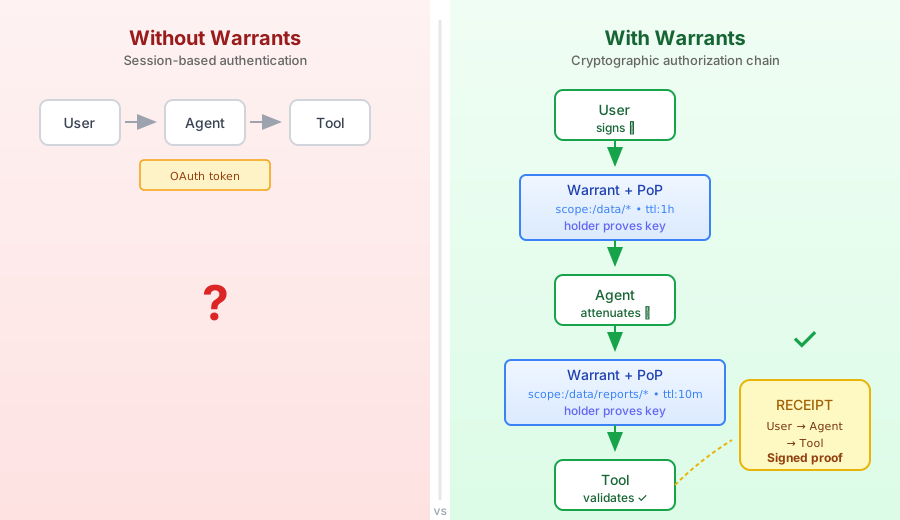
AI Hallucinations as Legal Defense: The Accountability Gap in Corporate AI Use
The article examines the emerging legal and accountability challenge of AI hallucinations being used as a defense in corporate settings. It
Managing Intellectual Property Risks When Using AI-Generated Code in Professional Development
This article addresses the legal risks and intellectual property concerns when using AI-generated code in professional software development.
 augmentedswe.com·8mo ago
AI Companies' Copyright Dilemma: Scraping Data vs. Fair Use
The article criticizes AI companies for scraping vast amounts of online content, including text, photos, and videos, to train their models w
 jskfellows.stanford.edu·10mo ago
Autodata: Using AI agents as data scientists to generate high-quality synthetic training data
This paper introduces Autodata, a method that uses AI agents as data scientists to create high-quality synthetic training and evaluation dat
 arxiv.org·10d ago
Autodata: Using AI agents as data scientists to generate high-quality synthetic training data
This paper introduces Autodata, a method that uses AI agents as data scientists to create high-quality synthetic training and evaluation dat
arxiv.org·10d ago
Comments
Sign in to join the conversation.
No comments yet. Be the first.