
























 Baker's Take
Supreme Court Rules Birthright Citizenship Is Constitutional, Rejects Trump Challenge

By
Mr Bagel
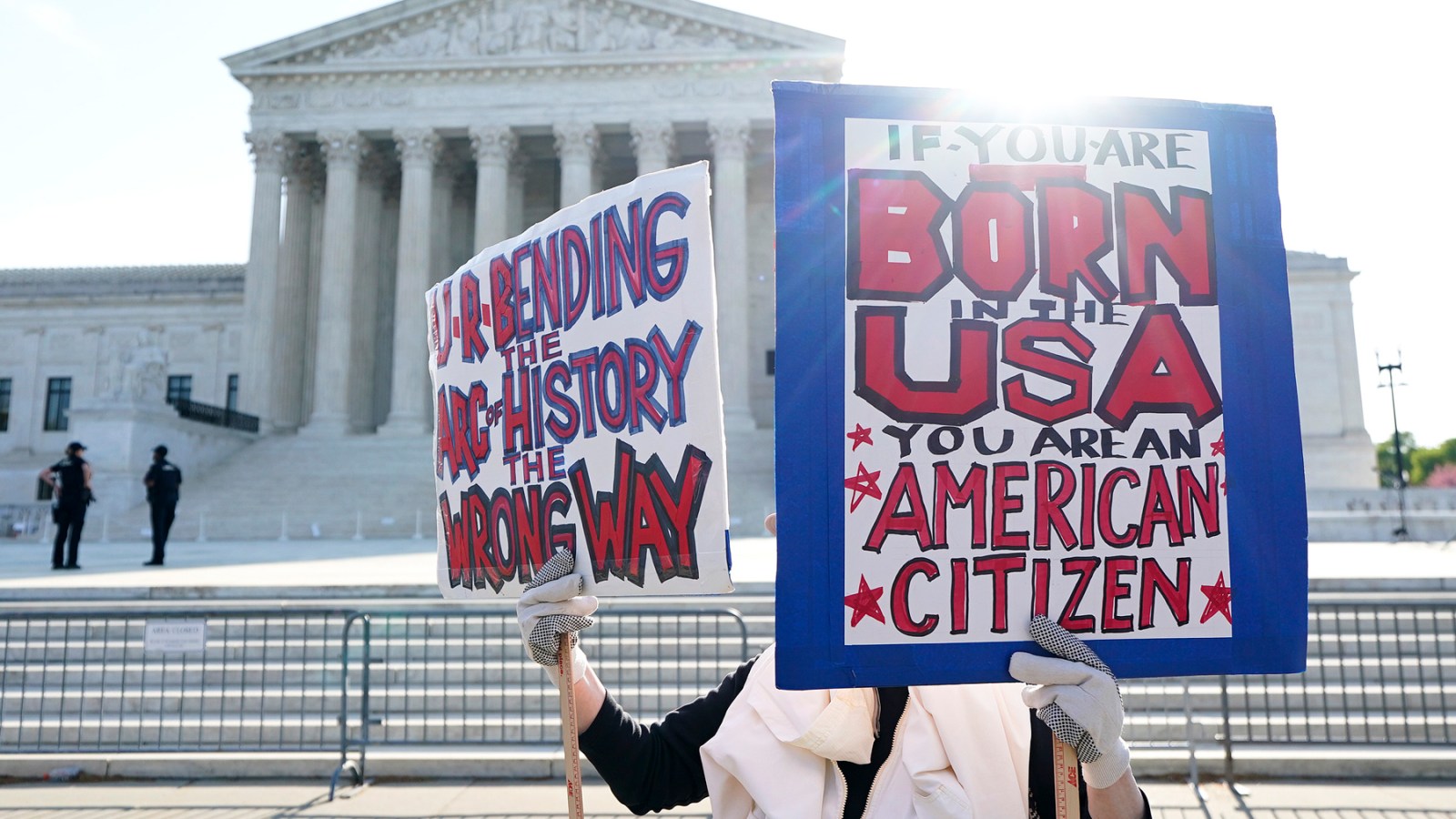
The Supreme Court has upheld birthright citizenship, ruling that children born in the United States to parents who are unlawfully or temporarily present are citizens at birth. The decision affirmed the Fourteenth Amendment's guarantee and struck down a previous executive order from former President Donald Trump that sought to end the practice. Rolling Stone reported that the ruling dealt a significant legal blow to Trump's anti-immigration policies and agenda.

Chief Justice John Roberts wrote the majority opinion, which was joined by four other justices. According to Deadline, Roberts wrote that citizenship is "the right to have rights" and that the Framers extended that promise to every free-born person in the land. "the right to have rights" :: Deadline
The opinion directly rejected the legal reasoning behind Trump's executive order, which had argued that the Fourteenth Amendment's citizenship clause did not apply to children of undocumented or temporary immigrants. Rolling Stone noted that the court's ruling reaffirmed a long-standing interpretation of the amendment.
The decision is expected to have wide-ranging implications for immigration policy and the status of hundreds of thousands of children born annually in the United States. Both Rolling Stone and Deadline reported that the ruling affirms the principle that anyone born on U.S. soil is a citizen, a standard that has been in place since the amendment's ratification in 1868.
Deadline highlighted Roberts's framing of the issue as a matter of fundamental rights, while Rolling Stone emphasized the political consequences for Trump's broader anti-immigration agenda. The court's ruling effectively blocks any future attempts to restrict birthright citizenship through executive action alone.
The reporting
2 outlets covered this story. Each links to the original.

Comments
Sign in to join the conversation.
No comments yet. Be the first.