
























Supernovae, Shocks, and Spindown: A Possible Origin Story for Ultra-Long-Period Pulsars
New research suggests that ultra-long-period pulsars might begin their lives as massive stars in close binary systems. The post Supernovae, Shocks, and Spindown: A Possible Origin Story for…
Read the full articleYou might also wanna read
Stellar Pulsations Shape Supernova Explosions: New research challenges the standard models of final moments of massive stars.
A new study published in The Astrophysical Journal Letters has found that the pulsations experience by red supergiant stars in the final sta
A last dance before death: Binary stars and the origins of interacting supernovae
When massive stars die, they unleash some of the most powerful explosions in the universe. Yet not all supernovae are created equal. Some co
Many black holes had past lives, new research shows
When a star dies, a black hole is born. This has been the textbook origin story for most black holes. At the end of a massive star’s life, i
Astronomers witness the birth of a magnetar for the first time
A strange "chirping" signal from a distant supernova has revealed the birth of a magnetar, confirming that these incredibly magnetic neutron


Faint radio signals detected from previously silent 'Blue Eye' neutron star for the first time
The hushed pulsar, nicknamed Blue Eye, was a previously radio-silent neutron star.
 space.com·3d ago
Faint radio signals detected from previously silent 'Blue Eye' neutron star for the first time
The hushed pulsar, nicknamed Blue Eye, was a previously radio-silent neutron star.
space.com·3d agoFaint radio signals detected from previously silent 'Blue Eye' neutron star for the first time
The hushed pulsar, nicknamed Blue Eye, was a previously radio-silent neutron star.
Space·3d ago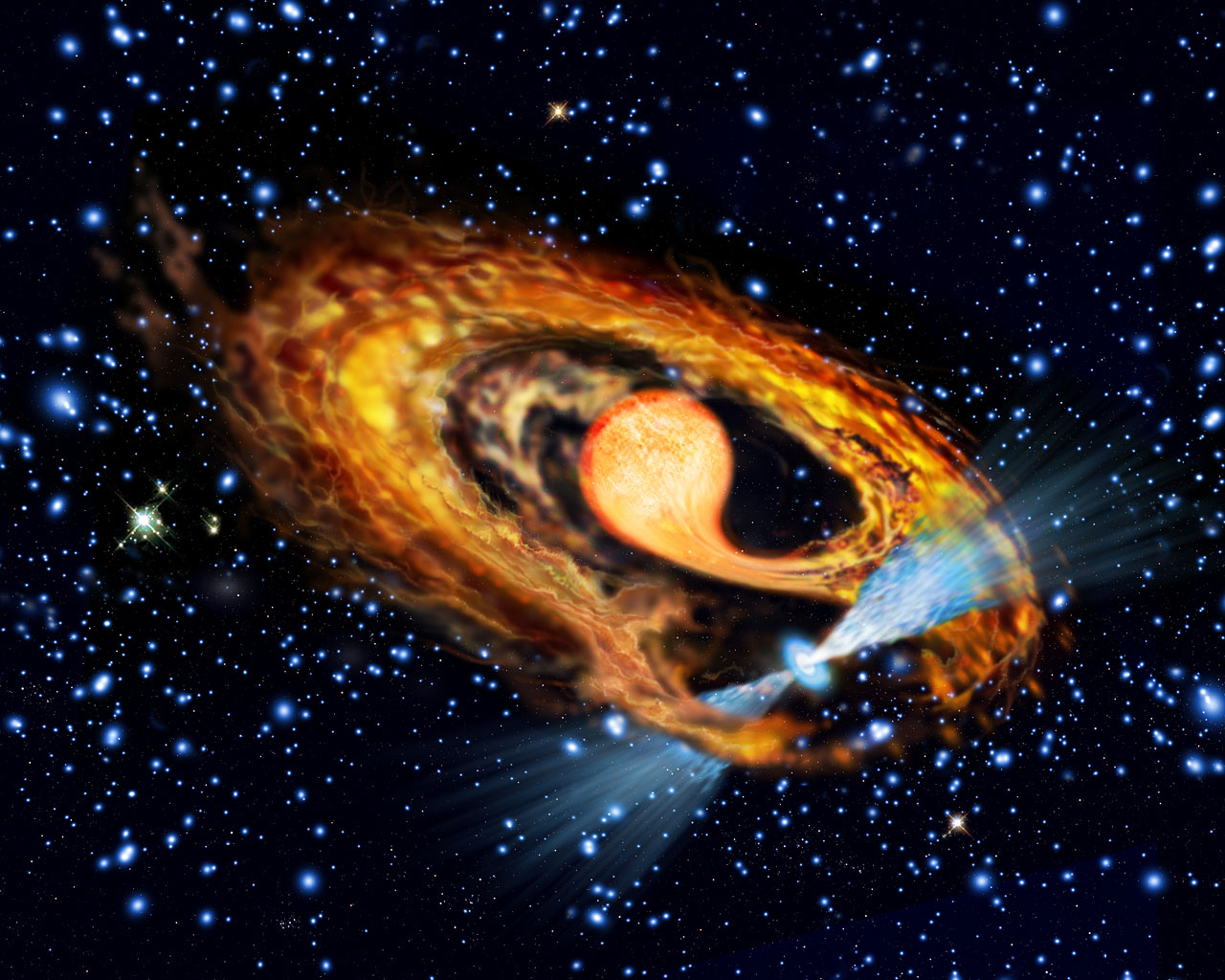
Six New Millisecond Pulsars Discovered Using FAST Telescope Data Stacking
Researchers have discovered six faint millisecond pulsars by stacking FAST radio observations.
 aasnova.org·1mo ago
Six New Millisecond Pulsars Discovered Using FAST Telescope Data Stacking
Researchers have discovered six faint millisecond pulsars by stacking FAST radio observations.
AAS Nova·1mo ago
Comments
Sign in to join the conversation.
No comments yet. Be the first.