
























How sugar cane cultivation drives environmental destruction worldwide
By
Orry Baum
Summary
This article argues that sugar cane, as the world's leading agricultural crop by mass, represents a major but overlooked environmental threat. While public attention focuses on fossil fuels and plastic waste, sugar cultivation drives deforestation, biodiversity loss, water depletion, and soil degradation across tropical regions. The piece draws on a Tel Aviv University study suggesting that reducing global sugar consumption to recommended levels could free millions of acres of farmland for more nutritious crops and ecosystem restoration. It examines the environmental toll of sugar production — from the destruction of Brazil's Atlantic Forest and the Everglades to water-intensive irrigation in India — and critiques the food industry's role in pushing sugar into processed foods. The article calls for policy interventions, consumer awareness, and agricultural reform to address what it frames as a dual crisis of public health and environmental sustainability.
Source
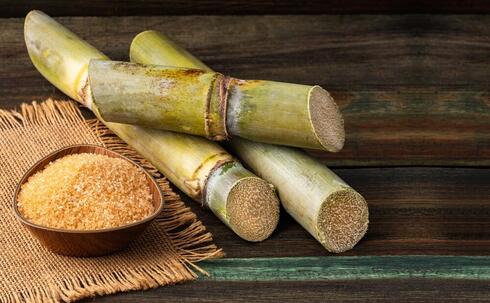
 Twitter / XHow sugar cane cultivation drives environmental destruction worldwideynetnews.com
Key quotes
· 3 pulledThe world's leading agricultural crop by mass is not a vegetable, fruit or nutritious grain, but sugar cane, which alone accounts for about one-fifth of global agricultural production.
Cutting global sugar consumption to recommended levels could free millions of acres of farmland, opening the way for more nutritious crops, ecosystem restoration and sustainable industries.
While attention is fixed on smokestacks and vehicles, the fields tell another story.
You might also wanna read


Climate change threatens global food security as key breadbasket regions face simultaneous crop failures
The article examines how modern agriculture's global interconnectivity, while beneficial, creates vulnerability by concentrating food produc
 the-14.com·21d ago
Big food companies turn to regenerative agriculture amid climate concerns, but experts remain divided
Global agriculture and food supply chains account for nearly a third of total greenhouse gas emissions, while also being among the sectors m
 cnn.com·6d ago
The Bittersweet Legacy of Sugar: Colonization, Forced Labor, and Global Inequality
This article explores the dark history of sugar, tracing its origins in Southeast Asia and examining how it became intertwined with coloniza
 foodculturebites.com·18d ago
Study: Small-scale farmers play a larger role in global food production than previously estimated
Research challenges the conventional understanding of who produces the world's food, arguing that previous studies skewed perceptions by mea
 newint.org·24d ago
Climate change threatens global food supply as key breadbasket regions face simultaneous crop failures
The article examines how the modern global food system relies on a small number of key agricultural regions (breadbaskets) like the North Am
 theconversation.com·20d ago
Systematic review identifies climate change and conflict as top threats to global staple crops, maps resilience strategies
A systematic review published in Humanities and Social Sciences Communications analyzed 105 studies to identify major threats to global stap
 news-medical.net·20d ago
Comments
Sign in to join the conversation.
No comments yet. Be the first.